
- Bottom Line: A fun, playful binding with premium components making entry and exit super fast.
- Pros: Better-than-average design, Quick adjustment, Solid construction
- Cons: No long-term testing on a new product
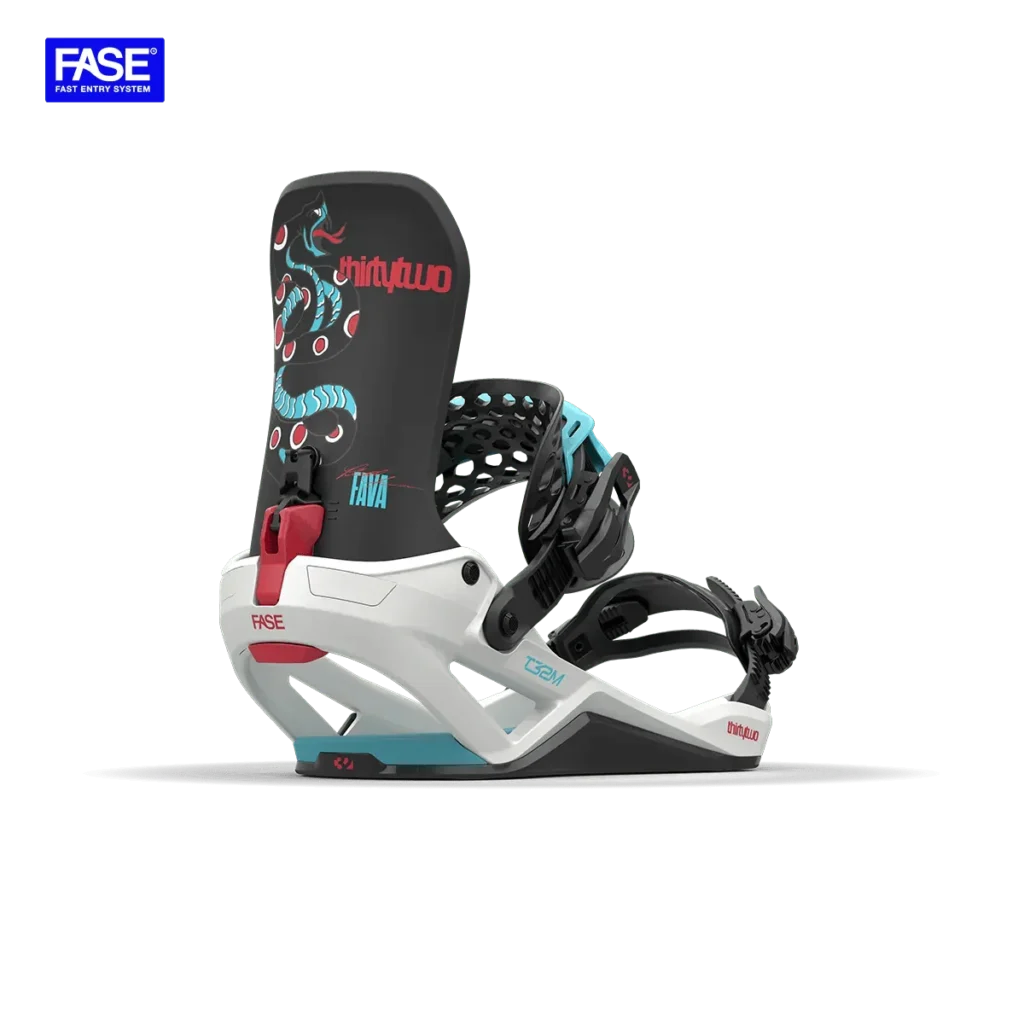
ThirtyTwo T32M FASE Bindings: First Impressions
Specs: Quick-release highback, double-beam heelcup, fast ankle strap
Pro Models: Pat Fava (featured here), Scott Stevens, Chris Bradshaw
Best For: All-mountain shredding
Overall Feel: Responsive, yet durable, with super fast ankle strap adjustments
I’ll get it out of the way now that I’m a fan of ThirtyTwo. Over the years I’ve worn a number of their boots, including a stint at over 19,000 feet on a slog up Mount Logan in the Yukon. I had a lifty-issue Mt. Seymour TM-2 model that made teammates look at me twice, but I was warm and comfortable during that time. So forgive me for being biased but I do know that the brand carries a certain reputation for rider-tested quality that has earned my respect over the decades.
This year ThirtyTwo decided to enter the bindings game. Their first offering is a playful (in both look and feel), easy to get in and out workhorse that checks all the boxes. If you want an easier time getting into bindings, these have been my favorite FASE system so far. After trying them out in all kinds of conditions this year, it’s safe to say that ThirtyTwo has done their research and knows what is needed for a good pair of snowboard bindings.
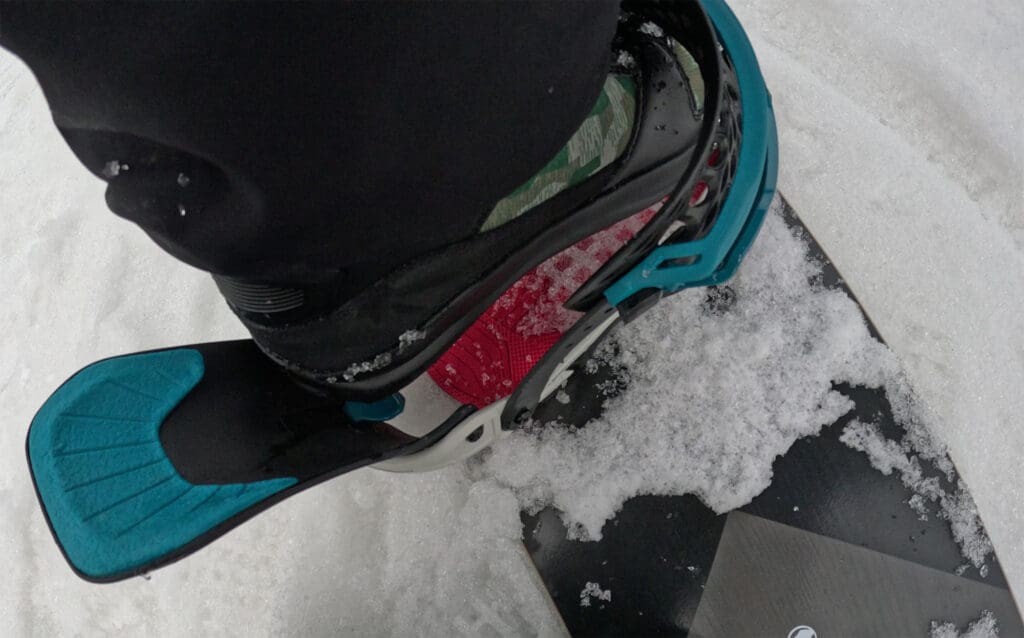
Notable Features of the T32M FASE Bindings
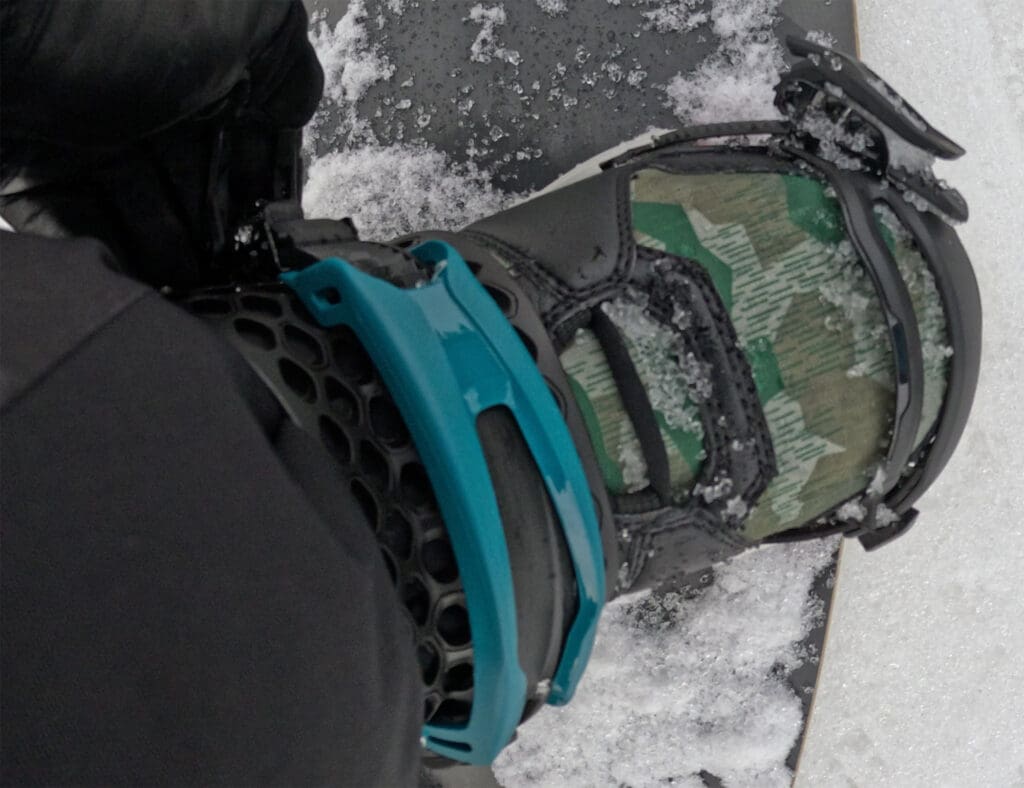
All FASE bindings have the same mechanics, but different construction on the heel cup and baseplate which is up to the manufacturer. This is where the differences in bindings lie. And to ThirtyTwo’s credit, they have engineered a solid binding that has juuust enough flex to be responsive, but can still take a beating and feel solid through high-velocity turns and massive bails.
The comfort in these bindings is worth noting. With a foam footbed that covers up the hardware, they had enough response to be noteworthy compared to other bindings that maybe just have plastic underfoot. The cushioning is responsive, yet not so soft that it sacrifices energy on the turn.
While FASE bindings are new this year, I have also had a chance to test the Jones Mercury FASE as well. The two bindings are actually fairly different once you get past the entry system.
ThirtyTwo Vs. Jones: Which FASE Binding is Best?
You may have seen the other review I did for the Jones Mercury FASE bindings, which also got a mostly postive review. But between the two, which one is better suited?
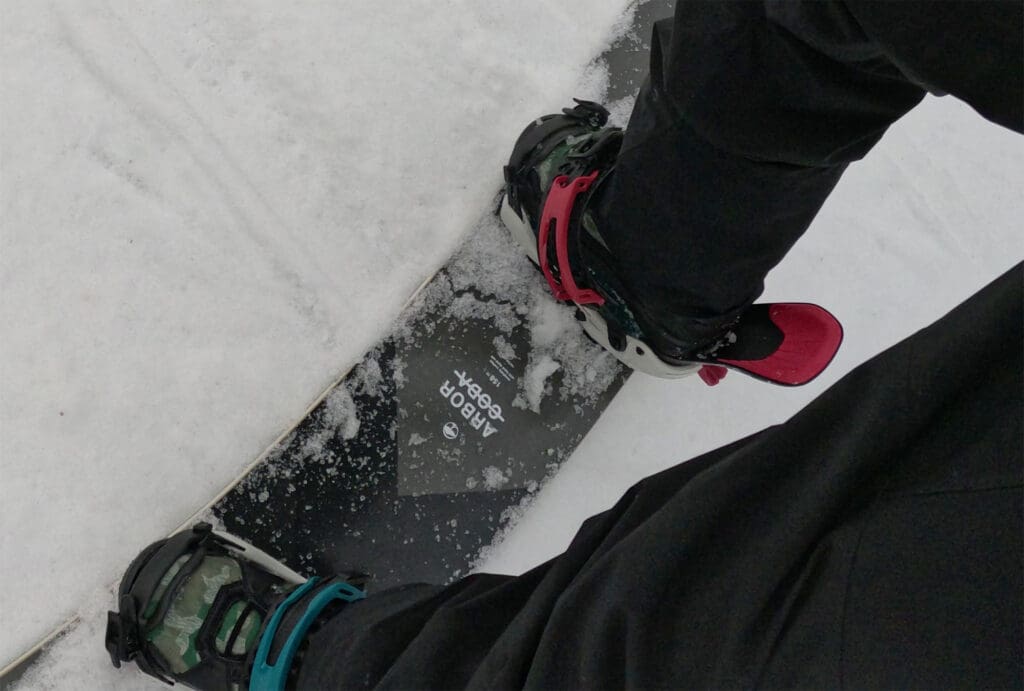
I found the Jones bindings a bit stiffer and not so easy to get in and out of. So the ThirtyTwo bindings are a better all-around pair of snowboard bindings, with the big advantage going to ThirtyTwo for the fast entry system. The ankle strap was much more smooth and effortless to allow for a good second or two advantage. Pile that up over time, and it’s significant.
The Jones Mercury FASE felt better suited to riding fast on big, open slopes. So for powder and freeriding, I’d choose the Mercury. But for freestyle and all-mountain, ThirtyTwo T2M all the way.
Drawbacks to the ThirtyTwo T32M FASE Bindings
There wasn’t too much I could say that was negative about these bindings, to be honest. The construction is top-notch and everything worked as it should. The quick ankle strap was excellent and is a true time-saver once you get the hang of it. Over time, those 10 seconds you save on each transition will add up and provide plenty of extra time riding vs. strapping in.
If there was one thing to say is a “drawback”, it’s that these are more of an all-mountain binding to take anything that comes its way, but not necessarily a specialty binding such as freeriding or park. So if you are a one-trick pony, whether powderhound or park rat, you might want something more suited to that discipline. But for those who like a little bit of everything, this is a great piece of equipment.
Final Thoughts on FASE Bindings
FASE was the everyman’s response to Burton’s StepOn system. It’s a great innovation but still offers the same physics of a traditional two-strap binding. So if you are a purist that likes their standard boots, FASE gives you a few more options and ease of use vs. legacy bindings. It’s not a total game-changer like the marketing folks may try and convince us. However, it’s a definite time-saver that will help you make more friends with skiers and newly-christened StepOn loyalists.
Is it worth abandoning your current setup? It depends. If you were due for new bindings anyway, these are an excellent choice for versatility, durability, and ease of strapping in and out. But if you are happy with your current setup, it’s not going to be a huge difference beyond the time saved. Still, the bindings are excellent quality and a fantastic first introduction for ThirtyTwo to enter the snowboard binding arena.

Steve Andrews is a lifelong adventurer since before he could walk. A skier since age 2, snowboarder since 11, he began his guiding career in 2007. He has a passion for teaching people how to fish, and helping them discover their own power in the mountians. He started Alpine Islands to give people a different take on achieving mastery in the wild (hint: you’re never a master of Mother Nature). He lives in Horseshoe Bay, British Columbia with his partner and two kids.