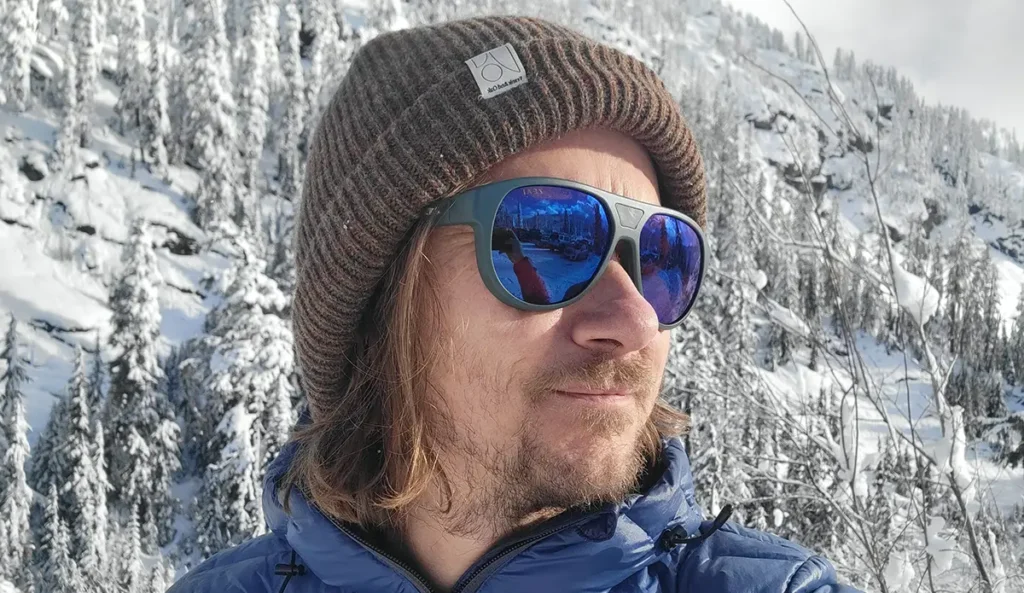
Tested by
Steve Andrews
Where
Coast Mountains, BC · Japan
How long
2 Years
Jackets Tested
22
Jackets In This List
6
In this guide
- At a glance
- Best All-Around
- Best Relaxed Fit
- Best for Skinning Up
- Best Grassroots Jacket
- Best Hybrid Resort/Backcountry
- Best Packable
- How to choose
- Caring for your shell
- FAQ
- Final thoughts
This page uses affiliate links to help pay the bills. I only recommend products I’ve tested in the field and actually enjoy. Read the Alpine Islands Gear Review Policy for more info.
Choosing the right jacket for backcountry skiing or snowboarding is more than a fashion statement. Hopefully that’s the last thing on your mind. But when it comes down to it, a proper hardshell jacket can be a possible life-saver to keep you warm and dry in critical moments. Or at the very minimum it’ll keep you out enjoying the elements longer than if you had something that didn’t protect you.
Safety aside, a good hardshell also optimizes movement, while also preventing overheating on the skintrack. It must also allow freedom to move abruptly, and of course, handle copious amounts of snow. Since we live in an unpredictable climate, it would probably be good if it could also transition well between bombproof protection and easy ventilation.
As a backcountry educator running courses in the unpredictable Coast Mountains of BC, I view a hardshell as a critical piece of safety equipment. From breaking trail in heavy coastal snowpacks to digging pits in the freezing wind, these are the jackets that have survived the absolute worst conditions Mother Nature could throw at them.
Bottom Line: For a minimalist jacket that stretches and packs easily, the Patagonia Stormstride is my pick. Every other jacket here earns its spot by doing one thing especially well, whether that’s a roomier cut, an ultralight build for the skin track, a rider-designed independent, or a bombproof shell with extra girth for the resort.
Why You Should Trust This Guide
Evaluating backcountry gear requires more than just reading the manufacturer’s tags. It requires putting the equipment through rigorous, high-stakes conditions. As a certified CAA basic avalanche educator and guide with the Canadian Ski Guide Association operating in the unpredictable terrain of the Coast Mountains, gear is viewed primarily as life-saving safety equipment. From slogging up 19,000 feet on Mount Logan to scouting lines in Japan to managing groups during 50cm storm cycles in Whistler, these jackets have been tested in heavy, wet coastal snow, freezing winds, and high-output skin tracks. This is more than a review… it’s a boots-on-the-ground assessment from actual backcountry travel in harsh mountain environments.

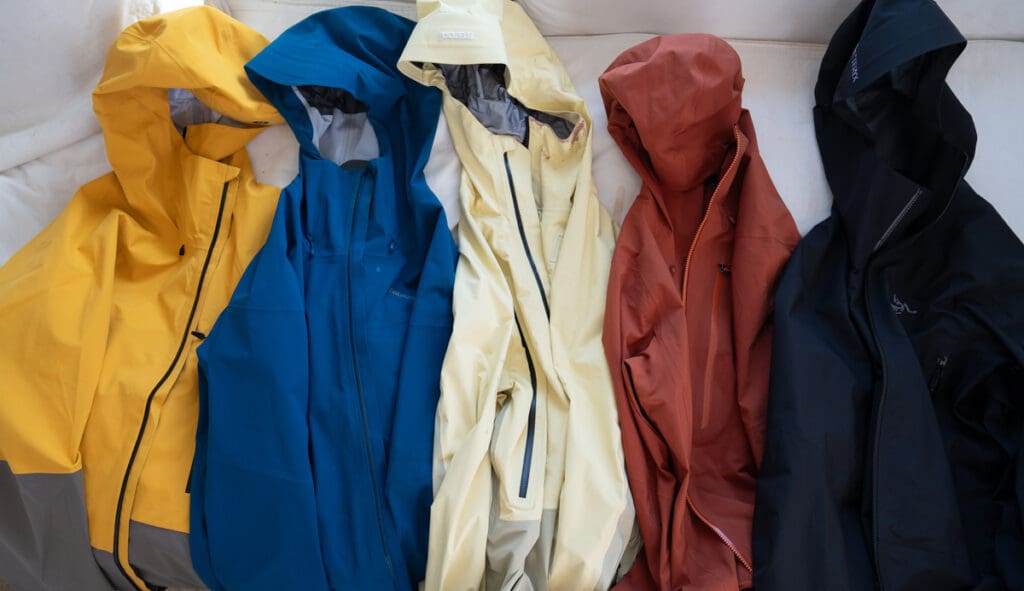
Backcountry Hardshells at a Glance
| Jacket | Award | Membrane | Weight | RECCO | Price (USD) |
|---|---|---|---|---|---|
| Patagonia Stormstride | Best All-Around | 3L H2No Performance Standard | 580 g | Yes | ~$519 |
| Marmot Orion GORE-TEX | Best Relaxed Fit | 3L GORE-TEX (recycled) | 522 g | Yes | ~$500 or less |
| Burton [ak] Kalausi | Best for Skinning Up | 3L GORE-TEX C-Knit | 690g | Yes | ~$400 (hard to find) |
| Forum 3L Backcountry | Best Grassroots Jacket | 3L stretch, 20K/20K | 900g | Not listed | ~$425 |
| Arc’teryx Sabre | Best Hybrid Resort/Backcountry | 3L GORE-TEX ePE | 705 g | Yes | $630 |
| 7mesh Guardian Terra | Best Packable | 3L GORE-TEX PRO ePE | 390 g | Yes | $699 |
Specs verified October 2026
Best All-Around Hardshell Jacket: Patagonia Stormstride
Patagonia is a brand name that carries high expectations. People spend the money to be responsible consumers, as well as get a guarantee that if it breaks, they’ll fix it. On top of all that, it needs to work. And after using it over the past year in the Coast Mountains of BC, the report is… it does work. In fact, it works exceptionally well.
The H2No material is proprietary to Patagonia, and works perfectly well compared to the much higher name recognition of Gore. The stretchy fabric moves with the body, allowing for a more slimmer fit without sacrificing any performance. The chest pockets are large enough for skins to keep warm, and the jacket protects as it should.
This is a no bells-or-whistles type of hardshell, which is exactly what we want in the backcountry. The less fluff, the better. It’s small enough to pack up on the ascent, or you can keep it on and just open the vents if need be. There wasn’t too much to want on this jacket, although a second internal stash pocket would be nice. But the price is right and the performance is right up there with the best of them, giving this jacket our nod for the best all-around backcountry hardshell.
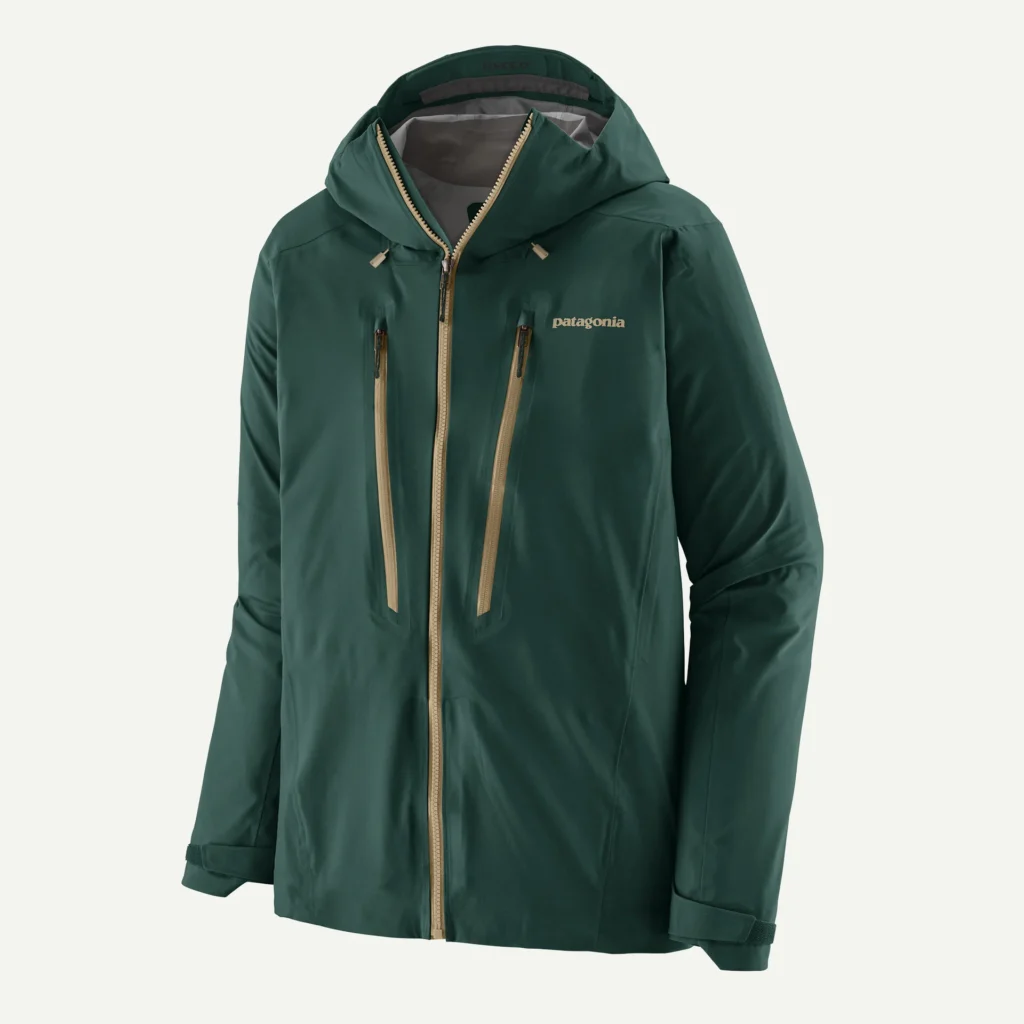
Patagonia Stormstride
~$519 USD
| Bottom line | Good Stretch |
|---|---|
| Membrane | 3L H2No Performance Standard, 100% recycled Pertex Shield nylon face |
| Weight | 580 g |
| Fit | Slim |
| Pockets | Two zip chest pockets, interior zip device pocket, interior drop-in skin pocket |
| Vents | Pit zips |
| RECCO | Yes |
| Tested | Coast Mountains, BC — Two years |
Worked
- Large chest pockets
- Legendary repair policy
Didn’t
- Only one internal stash pocket
Best Relaxed Fit Hardshell Jacket: Marmot Orion Gore-Tex
3L Gore-Tex has become the standard for weatherproof/windproof protection in the elements. Problem is, the name and quality demands a bit of a premium price. For those on a budget, there shouldn’t be a sacrifice for protection. Thankfully, Marmot offers a shell that checks all the boxes for performance, breathability, and protection from the elements with a price tag that is much lower than some of the trendier brand names on this list.
Yes, $500 is still a price that for most people you want to really love it and wear it for many years. But this jacket fits that bill. It’s light, protective, even stylish for most… while at the same time offering all the necessary features that one would want for a backcountry hardshell. It’s on the roomier side as well, and the relaxed fit means bigger turns without feeling encumbered by material.
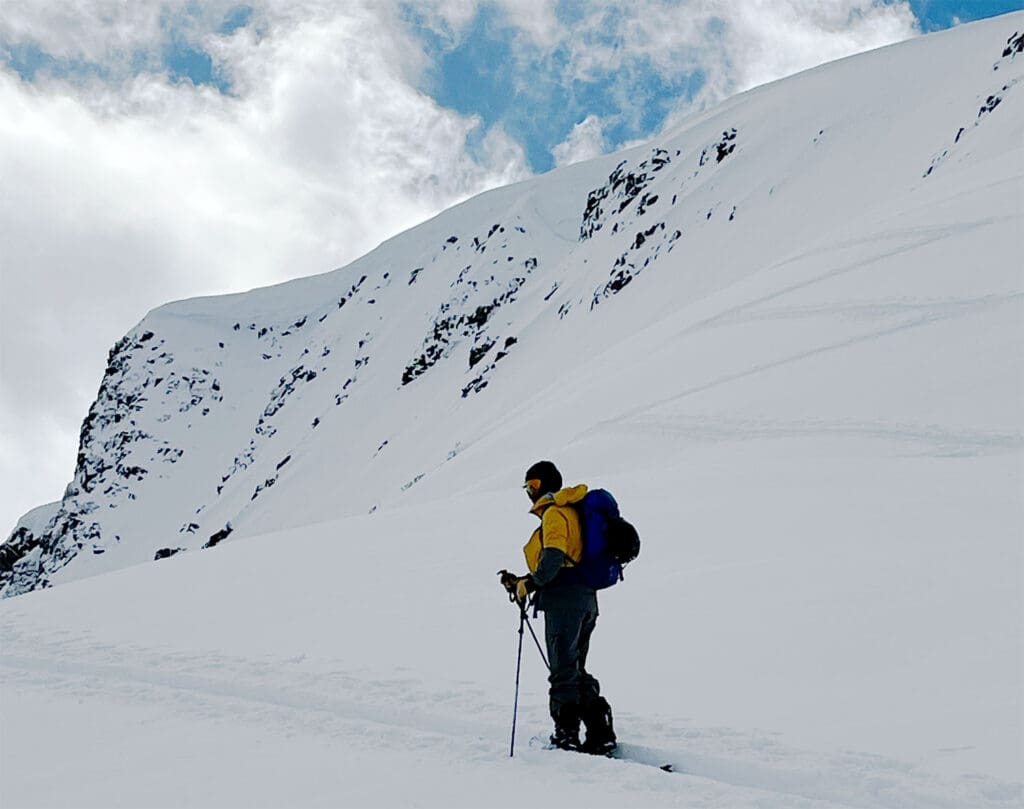
Marmot Orion GORE-TEX
~$500 USD [Currently on sale]
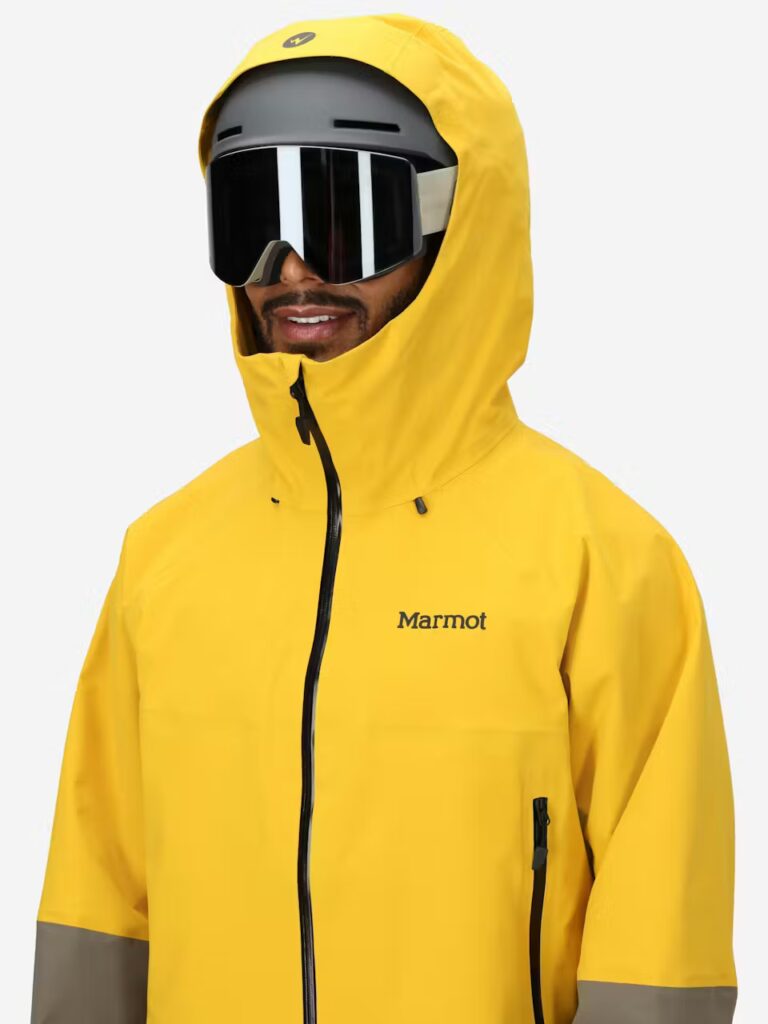
| Bottom line | Excellent jacket with intentional design |
|---|---|
| Membrane | 3L GORE-TEX, recycled |
| Weight | 522 g (Fall 2025 version) |
| Fit | Regular, per Marmot |
| Pockets | Two zip hand pockets (pack- and harness-accessible), interior zip pocket, interior mesh skin pocket, wrist pass pocket |
| Vents | Two-way pit zips |
| RECCO | Yes |
| Tested | Blackcomb, BC |
Worked
- Lightweight
- Recycled materials
- Relaxed fit
Didn’t
- Only one internal stash pocket
If you would like to know more, check out a more in-depth review of the Orion jacket here.
Best Hardshell For Skinning Up: Burton [AK] Kalausi
Burton’s Kalausi could also be given the award for “Most Innovative”, as it has some design features that don’t exist in any other jackets. For one, the zipper is angled, rather than centred. While this may seem like a fashion statement, it’s also functional. No longer will the zipper be smack dab in the face, especially when riding down.
The chest pockets are also some of the largest tested, which double as vents in a brilliant design move. You can tell that whoever designed this jacket is a proper backcountry shredder, as all the features are examples of forward-thinking innovation.
But perhaps the best part of the Burton Kalausi jacket is the material. The Gore-Tex C-knit fabric is incredibly lightweight and flexible, yet still is waterproof and breathable like other Gore-Tex. It’s like comparing titanium and steel… both are strong and protective but one is much lighter. You of course have to pay the price for this, and it’s not as durable, but the tradeoff is a lightweight shell that still gets an A for performance.
This jacket is a few years old, but is now selling for a steal on Evo… making it an affordable jacket at over half off the original retail price.
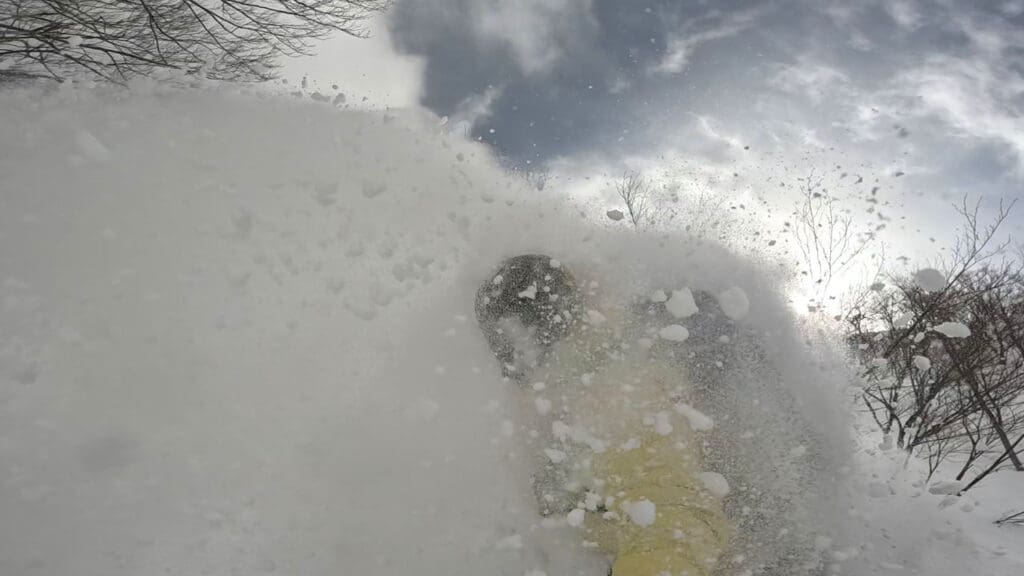
Burton [ak] Kalausi GORE-TEX 3L
~$400 CAD (Discontinued, try to find used)
![Burton [ak] Kalausi GORE-TEX 3L backcountry snowboarding jacket, studio product photo](https://alpineislands.com/wp-content/uploads/2026/02/Burton-AK-Kalausi-backcountry-snowboarding-jacket-760x1024.webp)
| Bottom line | Lightweight with innovative design |
|---|---|
| Membrane | 3L GORE-TEX with C-Knit stretch backer, 30D nylon face |
| Weight | 690g |
| Fit | Regular, unisex sizing |
| Pockets | Zip chest pockets, zip mid-body pocket, interior mesh dump pocket |
| Vents | Chest pockets double as core vents |
| RECCO | Yes |
| Tested | BC, Baker, Japan |
Worked
- Super lightweight
- Large chest vents/pockets
Didn’t
- Fairly flimsy, more prone to wear and tear
Best Grassroots Jacket: Forum Backcountry Jacket
Forum is a brand that ushers nostalgia to a certain cohort of over-40 snowboarders who came of age during snowboarding’s golden era of the late 90’s and early 2000’s. At the helm of the infamous Forum 8 team was Peter Line, the leader of The Resistance whose silhouette of a fist in the air is now iconic in the realm of classic snowboard movies.
Line resurrected the brand after being killed by Burton post-buyout, but some may argue is better than ever now, with Line and a few others putting all their blood, sweat, tears, and love into the brand to be rider-driven. Line is also a designer who put his decades of snowboarding prowess into an outerwear line, adding features that only a real snowboarder would know is necessary.
From the stretch fabric to the rubberized zippers and pack-friendly pit vent placement, this jacket is as technical as it is stylish. The 20k waterproofing is still plenty good for most situations outside a downpour… but let’s hope you’re not riding the backcountry in the rain too often. Breathability was as good as it gets, despite working hard on some hikes it never got sweaty. That’s a huge win, especially in the backcountry.
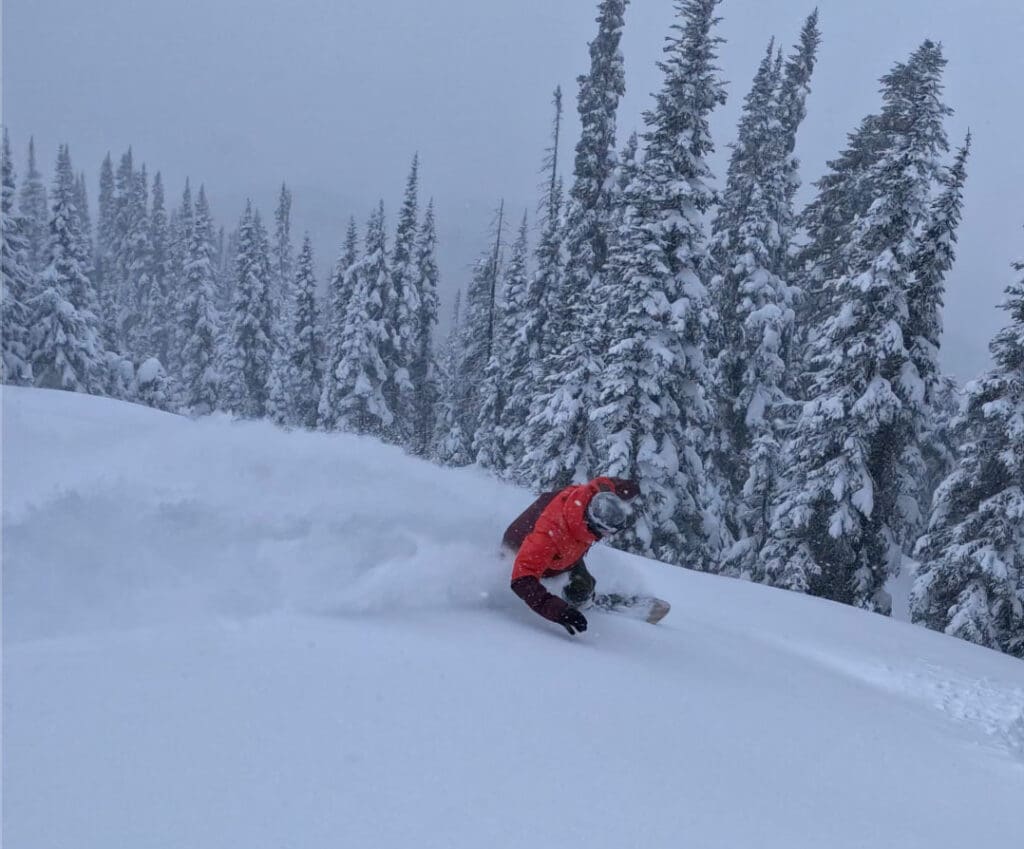
Forum 3L Backcountry Jacket
~$425 USD
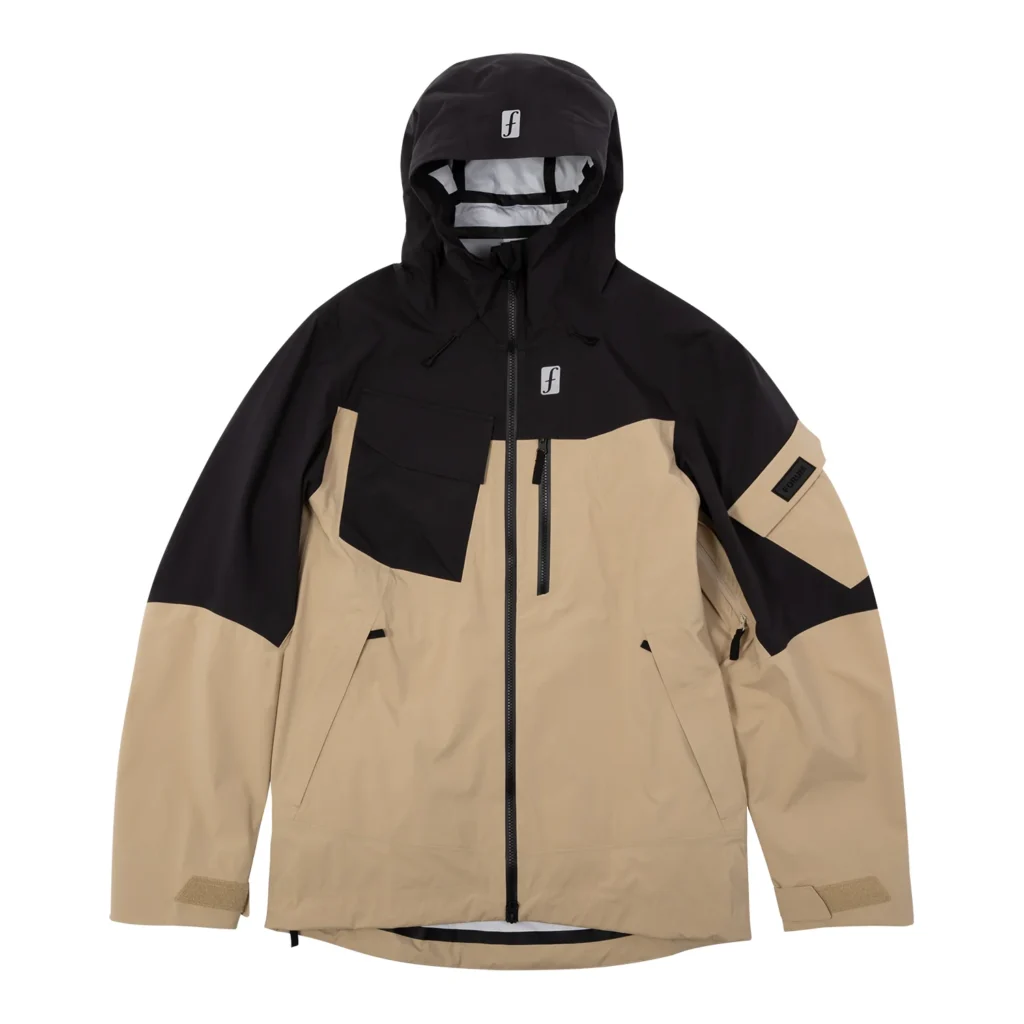
| Bottom line | Excellent jacket with intentional design |
|---|---|
| Membrane | 3L stretch fabric, 20K waterproof / 20K breathable |
| Weight | 900g |
| Fit | Relaxed, ergonomic |
| Pockets | Two zip chest pockets (one with device sleeve), two zip hand pockets, arm pass pocket, interior mesh dump pocket |
| Vents | Pack-friendly asymmetrical underarm zip vents |
| RECCO | No |
| Tested | Whistler Backcountry |
Worked
- Well thought out design
- Just enough stretch to be flexible
Didn’t
- Material frays on heavy use
- On the heavier side
Best Hybrid Resort/Backcountry Jacket: Arc’teryx Sabre
It’s quite funny to see how much Arc’teryx has grown from a niche climbing brand to a fashion statement on the streets of New York and Tokyo. One may scoff at their vaulting into the big leagues and buyout by multinational Amer Sports. But one thing is for certain: The brand still knows how to make quality outerwear.
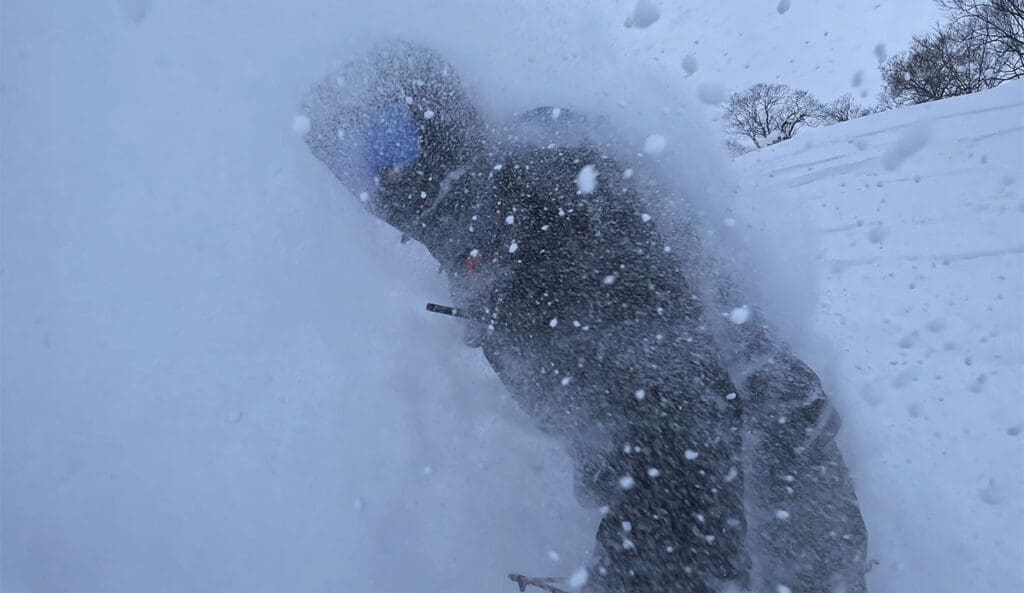
The Sabre has become one of the staple jackets for performance in skiing or snowboarding. It works, and works well. The hood has to be one of the best for keeping the snow out while still maintaining the field of view, and the protection you get from the elements is second-to-none. New this year is the new Gore-Tex ePE fabric. After using it for the majority of two weeks in Japan (that included a dreaded wet warm-up), the report on the new material is that it’s as good as ever.
We decided on showcasing the Sabre and not the more backcountry-inclined Rush for a few reasons: one is that the Rush costs slightly more for less features (albeit lighter), and the other is that we have plenty of other lightweight jackets on this list. And if we are going to maintain brand consistency, the shining feature of Arc’teryx gear is how durable it is. For that reason, this is a great choice if you still like to ride a chairlift and don’t mind sacrificing some ounces for added protection in places where it gets wet and windy. Right now it’s on sale, and you can usually find a used one online since it’s a popular model. It’s well worth the investment and it’ll last many seasons to come.
If you want to learn more about the Sabre, check out this in-depth review.
Arc’teryx Sabre Jacket
$900 CAD, $630 USD
| Bottom line | Bombproof |
|---|---|
| Membrane | 3L GORE-TEX ePE, 80D recycled nylon face, flannel backer |
| Weight | 705 g |
| Fit | Regular |
| Pockets | Two chest, arm, one internal stash |
| Vents | Pit zips |
| RECCO | Yes |
| Tested | Japan, BC |
Worked
- Environmentally friendly materials
- Solid construction
Didn’t
- A bit rigid and on the heavier side compared to others in the list
- Fit is a bit thin
Best Packable Hardshell Jacket: 7mesh Guardian Terra
7MESH is different. It’s designed in Squamish, BC and owned by the people who are part of it. They are outdoors people themselves who have been in the industry and want to make technical outerwear that they can enjoy on the daily, in the environment they live in.
They got their start in cycling and summer wear, but have now introduced the Guardian jacket as their first winter hardshell that can withstand the variability of the wet coastal climate of the Coast Mountains in British Columbia. I was able to test an early sample and have been really impressed thus far, taking it out on fall missions and trying my best to get in shape for the upcoming winter while testing out its movement and features.
Right away I noticed the minimalist design and how clean the lines were. Putting the jacket on, I could have free movement around the arms where other jackets can feel tight on the back. Seems like there’s enough room in the upper body without feeling baggy, while the waist trims up nicely.
It’s one of the lightest Gore-Tex Pro jackets I’ve tried, giving optimum protection when it’s storming but enough ventilation and airflow when skinning to not be massively overheating. It’s a solid jacket that will last a very long time, and I’m stoked to see this as an offering to a crowded market where it offers great protection in a small package.
![[***] describe this field shot of the 7mesh Guardian Terra jacket in the Sea to Sky](https://alpineislands.com/wp-content/uploads/2026/10/7mesh-guardian-terra-jacket-review.jpg)
7mesh Guardian Terra Jacket
~$850 CAD (check current)
| Bottom line | An impressive first winter hardshell from 7mesh: light, packable, and built to wear with a pack. |
|---|---|
| Membrane | 3L GORE-TEX PRO ePE, 70D, 100% nylon 6.6 |
| Weight | 390 g |
| Fit | Relaxed; 7mesh’s longest jacket |
| Pockets | 2 harness-friendly hand pockets, 2 internal dump pockets, 1 zippered internal pocket, sleeve pass pocket |
| Vents | Underarm and bicep zips |
| RECCO | Yes (back of hood) |
| Tested | Early sample; Sep–Oct 2026, Sea to Sky, BC |
Worked
- Lightweight and packable
- Great weather protection
- Large hood
Didn’t
- Hood cinch can get loose
- Hood doesn’t conform to your head without a helmet or hat, so turning your head blocks your view
If you want to learn more about the Guardian Terra, check out this in-depth review. 7mesh offered this jacket as a free sample to test, with no obligation for what I say about it, positive or negative.
Buyer’s Guide: What to Look for in a Backcountry Hardshell
1. Membrane and Heat Management (3L vs 2L)
In the backcountry, managing your body heat is a safety issue. A 3-Layer (3L) uninsulated shell allows you to dump heat rapidly on the uptrack. If you sweat out your layers on the ascent, you will freeze when you stop to assess a slope or look for surface hoar. Save the 2-Layer insulated jackets for the resort.
2. Pocket Placement for Packs
A jacket is only useful if you can access its features while wearing a touring backpack. You want high chest pockets that remain accessible above your backpack’s waist belt. These are crucial for storing your radio or keeping your skins warm against your chest during a transition. Many jackets offer an internal space to stash gear, like Marmot’s Orion, but sizes vary with each piece, so it totally depends on what you like to carry and where. Venting is another issue, and the 7Mesh Guardian Terra gives a thoughtful nod to being able to open the vent with a pack on.
3. Master the Art of Layering
A hardshell is just a barrier against the wind and snow; it doesn’t provide the warmth. The secret to a comfortable backcountry day is what you wear underneath. You need a system that wicks moisture away from your skin and traps heat when necessary. Start by dialing in your foundation with the best baselayers for skiing and snowboarding, and then add a highly breathable midlayer, like this backcountry-specific hoodie, before throwing your hardshell on top.
4. Materials
Most jackets now have been made without PFAS, the “forever chemicals” that end up in the ecosystem and future generations will ridicule us for. New innovations such as the Arcteryx Sperro SV are a positive step, but there is still a long way to go. It’s important to seek out repairability, on a good hardshell jacket to extend its life. The more we can keep it out of the landfill, the better. Bonus points if they start out with recycled materials and can recycle them afterward.
How To Care for Your Hardshell Jacket
Jackets won’t be all spic and span forever, jah willing. The more you take it out the more it compromises the features that help protect it from the elements. Here are a few steps to help you keep it going.
Wash the Jacket
Don’t be a raggy dirtbag. Wash the jacket. It will get rid of dirt and oil and other crap that will eat away at it over time. The rule of thumb is to usually do it every 10 days of use. It’s not a big deal. Just be sure to use the dryer again to reactivate the Durable Water Repellent (DWR) coating.
Re-Apply DWR
Whenever you wash, add a fresh coat of DWR to the shell to reinvigorate the waterproofing. There are spray on versions and there are versions that can be added to the wash cycle.
Patch Early
The old saying stands… “A stitch in time saves nine”. Well sometimes a patch is better than a stitch, and a hardshell jacket is a prime example of this. Patch kits are cheap and it’s easy to do on your own. Doing it early will prevent further tearing down the line.
Frequently Asked Questions
Should I wear a 3-layer or 2-layer jacket for backcountry skiing?
For touring, I go with an uninsulated 3-layer shell. It dumps heat fast on the uptrack so you don’t sweat out your layers, and you add warmth underneath when you stop. Insulated 2-layer jackets make more sense at the resort.
Do you need Gore-Tex for backcountry skiing?
No. Gore-Tex is the benchmark, but proprietary membranes like Patagonia’s H2No held their own in my testing. Fit, venting, and pocket placement matter just as much as the name on the membrane.
Is 20K waterproofing enough for backcountry skiing?
For most snow days, yes. The 20K-rated Forum jacket was plenty for everything short of a real downpour, and if you’re touring in the rain, waterproofing is the least of your problems.
Does a RECCO reflector replace an avalanche beacon?
No. A RECCO reflector is passive and can only be found by organized rescue teams carrying a RECCO detector, which usually arrive long after the window for a live recovery. In avalanche terrain you still need a transceiver, probe, shovel, and partners trained in companion rescue. An AST course is where that starts.
How often should you wash a hardshell jacket?
My rule of thumb is about every 10 days of use. Tumble dry afterward to reactivate the DWR, and follow the care label on your specific jacket.
Final Thoughts
Finding the right backcountry hardshell is nothing to gloss over. It’s a significant investment that will also protect you from the elements, regulate heat, and help you enjoy your time on the snow a bit better, especially throughout crappy weather. All of the jackets featured in this guide are worthy of a purchase, it’ll just come down to your personal preference, style, and wants/needs of the jacket.
If you have any further questions, please ask us a question, we’re happy to connect with the community. And speaking of community, come join a group of backcountry adventurers on our Mighty Networks space to help make the journey into backcountry skiing or splitboarding one that is shared with good people who care about having the best day ever in the mountains, and doing it all again safely.
Want to see more? Check out our Gear Review page for more in-depth reviews that aren’t bought and paid for by big companies. Support independent media! Cheers!

Steve Andrews is a lifelong adventurer since before he could walk. A skier since age 2, snowboarder since 11, he began his guiding career in 2007. He has a passion for teaching people how to fish, and helping them discover their own power in the mountians. He started Alpine Islands to give people a different take on achieving mastery in the wild (hint: you’re never a master of Mother Nature). He lives in Horseshoe Bay, British Columbia with his partner and two kids.