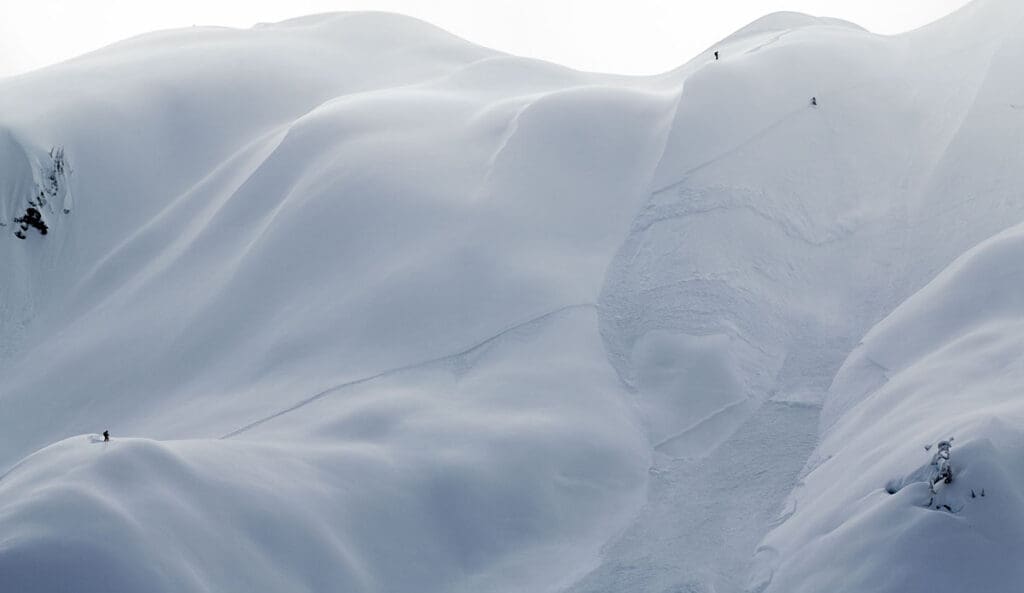
When reading an avalanche bulliten, you might come across the term surface hoar when it comes to discussing avalanche problems or troublesome layers. This can be one of the most annoying and deadly features of a snowpack. Read on to learn more about how surface hoar forms and how to mitigate the risk if you find it in the snowpack.
What is Surface Hoar?
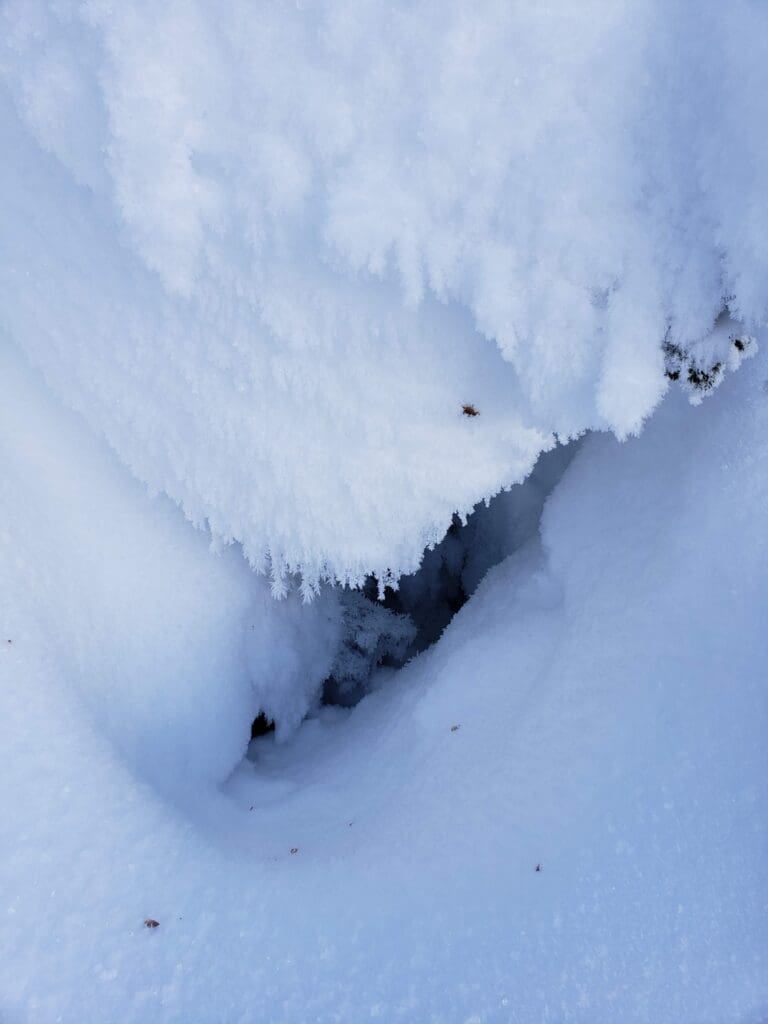
Surface hoar forms when frost crystals develop on top of the snowpack during clear, cold, and calm nights, similar to dew freezing on grass. While surface hoar looks beautiful and harmless when it’s exposed, once it gets buried by new snow, it can become one of the most dangerous layers in the snowpack. This weak layer can persist for days, weeks, or even longer, depending on conditions, and it can be the perfect trigger for large, destructive avalanches.
The Formation of Surface Hoar
Surface hoar forms much like frost on a cold window. When the air near the surface of the snow is still and temperatures are low, moisture in the air freezes into delicate, feathery crystals on the snow’s surface. These crystals remain loose and poorly bonded to the snowpack. When fresh snow buries the surface hoar, it becomes hidden—but its weak structure remains. Think of it as a fragile layer of feathers under a heavy quilt—unstable and prone to collapse when pressure is applied.
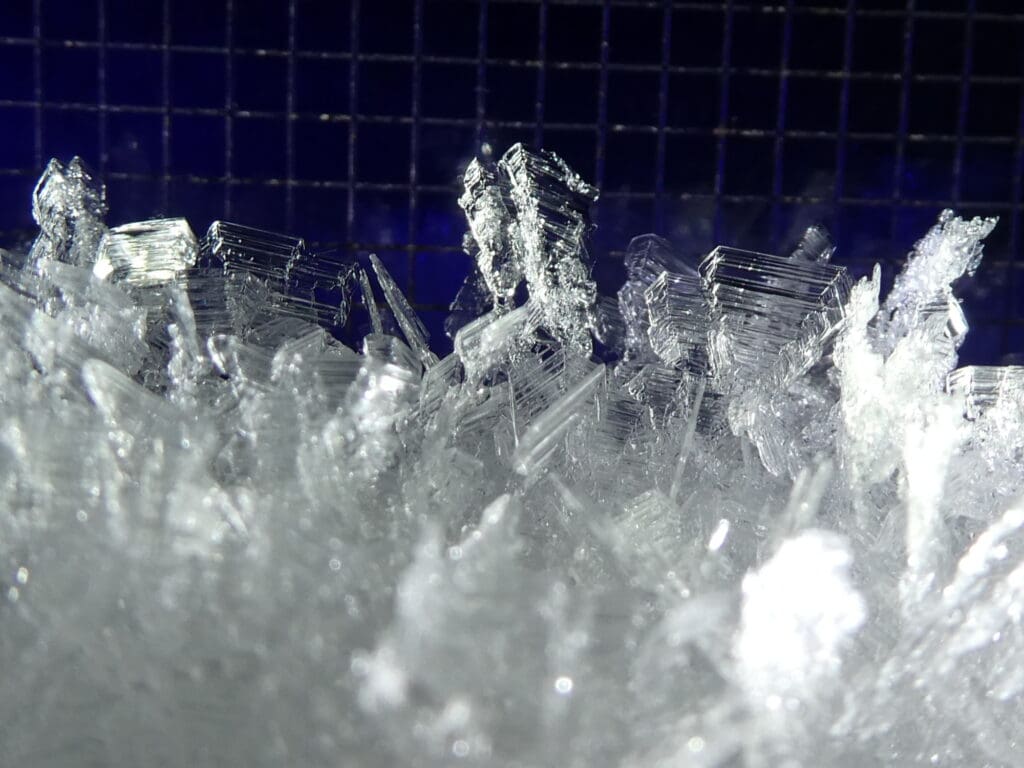
Buried Surface Hoar
Once surface hoar is buried, it acts as a weak interface between the layers of snow. Snow above this layer may seem stable on the surface, but buried surface hoar creates a persistent weak spot in the snowpack, just waiting for the right trigger to cause a catastrophic failure. Even long after it has been covered, it can still be responsible for large avalanches, especially in colder climates where snow remains dry.
Metaphor: Surface Hoar as Nature’s Fragile Trap
Imagine a house built on a foundation of glass. Everything seems solid, but a crack in the glass will send the entire structure tumbling down. Buried surface hoar is that fragile glass, lurking beneath what seems like a solid, stable snowpack. All it takes is a slight trigger: a skier’s weight, a snowmobile passing by, or the additional weight of new snow to break that weak layer and release a massive avalanche.
Signs of Buried Surface Hoar
Buried surface hoar is tricky to detect because, once buried, it’s no longer visible. However, here are some clues to watch for:
- Previous Surface Hoar Observations: If you noticed surface hoar during a cold, clear period and it was followed by new snowfall, assume that it’s now a buried weak layer.
- Avalanche Reports: Check the local avalanche reports and bulletins. They will often mention buried surface hoar as a persistent weak layer in the snowpack.
- Snow Pit Tests: When digging a snow pit, look for layers with large, feathery crystals. These are often the telltale signs of buried surface hoar. A quick compression test can also reveal the weak bond between the hoar layer and the overlying snow.
How to Stay Safe in Surface Hoar Conditions
Buried surface hoar can be one of the most persistent and dangerous avalanche hazards, so it’s important to be aware of how to stay safe:
- Track Weather Patterns: Pay attention to clear, cold weather followed by snowfall. This is the ideal condition for surface hoar formation, which means a buried weak layer is likely to form soon after.
- Check Avalanche Bulletins: Always read the avalanche forecasts in your area. If buried surface hoar is mentioned, be extra cautious, as it can remain a hazard long after it’s buried.
- Dig Snow Pits: A snow pit can reveal surface hoar layers. Be thorough in your tests and look for any signs of weak bonding between layers.
- Ride Conservatively: If buried surface hoar is a concern, stick to lower-angle slopes or terrain that is less likely to trigger large avalanches.
- Know When to Bail: Sometimes the safest decision is to change your plans. If conditions seem sketchy, trust your gut and turn back.
To Sum it Up…
Buried surface hoar is one of the most dangerous and elusive avalanche hazards. While it may form in seemingly benign conditions, once buried, it can remain a threat for weeks. For backcountry travellers, understanding how surface hoar forms and recognizing its potential for danger is key to staying safe in the mountains.
Remember, even if conditions on the surface seem ideal, it’s what’s hidden beneath that can trigger destruction. Always be mindful of buried surface hoar, check forecasts, and make conservative decisions to keep yourself and your crew safe.
- Mammut Tree Wool Men’s Thermal Tights Review

- the 7Mesh Guardian Terra Might Be The Best Packable Hardshell Jacket Out There
- Brad Alband on His Return to Thirtytwo and the Future of Snowboarding
- Access Our Free Beacon Practice Drill App Here ➡
- Guide to Ski Touring and Splitboarding Blackcomb Mountain


Steve Andrews is a lifelong adventurer since before he could walk. A skier since age 2, snowboarder since 11, he began his guiding career in 2007. He has a passion for teaching people how to fish, and helping them discover their own power in the mountians. He started Alpine Islands to give people a different take on achieving mastery in the wild (hint: you’re never a master of Mother Nature). He lives in Horseshoe Bay, British Columbia with his partner and two kids.