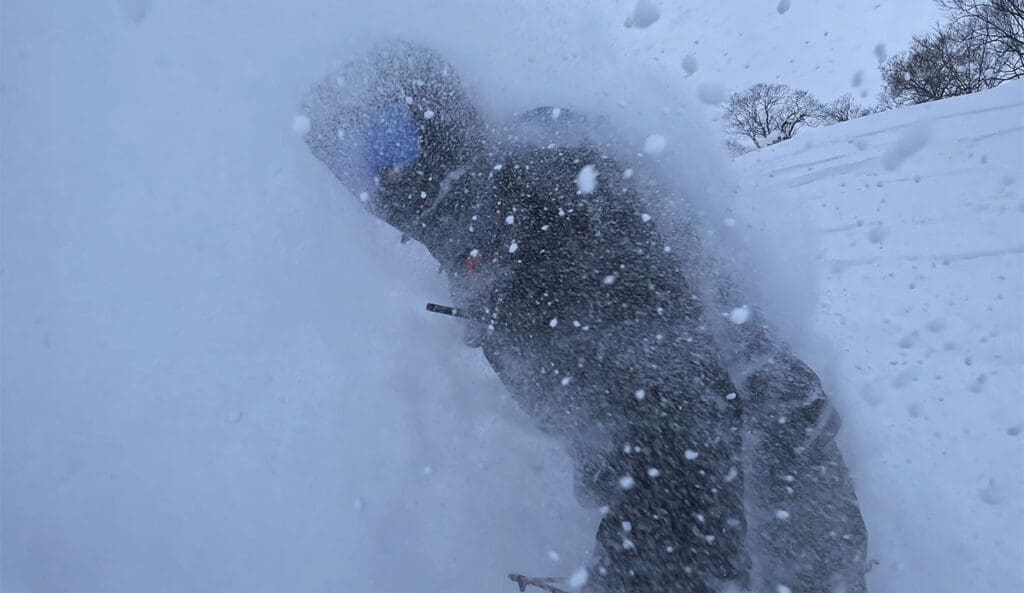
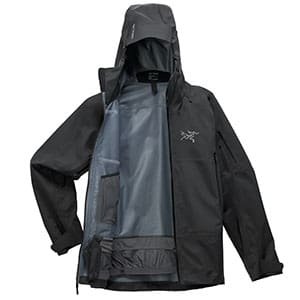
The Arc’teryx Sabre jacket has become one of the world’s go-to gore-tex shells for resort skiing and snowboarding in the past few years. This year they have updated to using the new ePe fabric, which is free of the harmful PFAS “forever chemicals” that leech into our ecosystem. After testing the jacket for the past few months in Whistler, BC and Japan, it’s safe to report that there is no sacrifice in the quality of waterproofing or breathability.
- Bottom Line: The jacket charges a premium price from a brand that has defined technical outerwear for over 20 years. While you can find a jacket with similar features for less, it’s hard to find something of similar quality and thoughtful design. The durability of this jacket means you’ll save money in the long run. If you can afford it, it’s worth the investment.
- Pros: Highly durable, well designed, bombproof, environmentally friendly materials
- Cons: A premium price tag, materials are not recycled, fit is very slim
Arc’teryx Sabre Jacket: First Impressions
Features: Taped seams, External zip pockets, internal deep pockets, powder skirt, pit vents, RECCO reflectors, easy-cinching hood
Best For: Resort riding and casual touring when the weather/snow conditions are damp
Not For: Fairweather skiers or snowboarders who only ski groomers on sunny days
Coming from Vancouver, British Columbia, I’ve known about Arc’teryx for a long time—well before they were a global brand and fashion statement. They started as a very niche technical brand, steadily rising to the top of the ranks through their quality, service, and well-thought out design.
Nowadays they are part of the global conglomerate Amer Sports group; a company that owns such brands as Salomon, Atomic, Wilson, and many more. One can lament the consolidation of brands into fewer and fewer hands, and that is an argument in and of itself. Despite that, the brand still operates out of its headquarters in North Vancouver, at the foot of the Coast Mountains.
Being from the Coast Mountains myself, I know how hard the elements can be on gear. And on first wear of the Arc’teryx Sabre, it became obvious from the get-go that this jacket (although a fairly simple design) is well thought-out to optimize protection in the harshest of environments.
Notable Features
Aside from the more environmentally-friendly Gore Tex ePe fabric, the big standout in the Sabre jacket is the design. A lot of companies will try to overdo it and offer features that nobody really needs, when it comes down to it. but every small detail in this jacket has been meticulously thought out, from the placement of the seams to have the least impact to the internal pockets having just enough stretch to keep a spare pair of goggles or gloves in easy reach. Each zipper is protected with rubber to ensure that isn’t a weak point for water to enter.
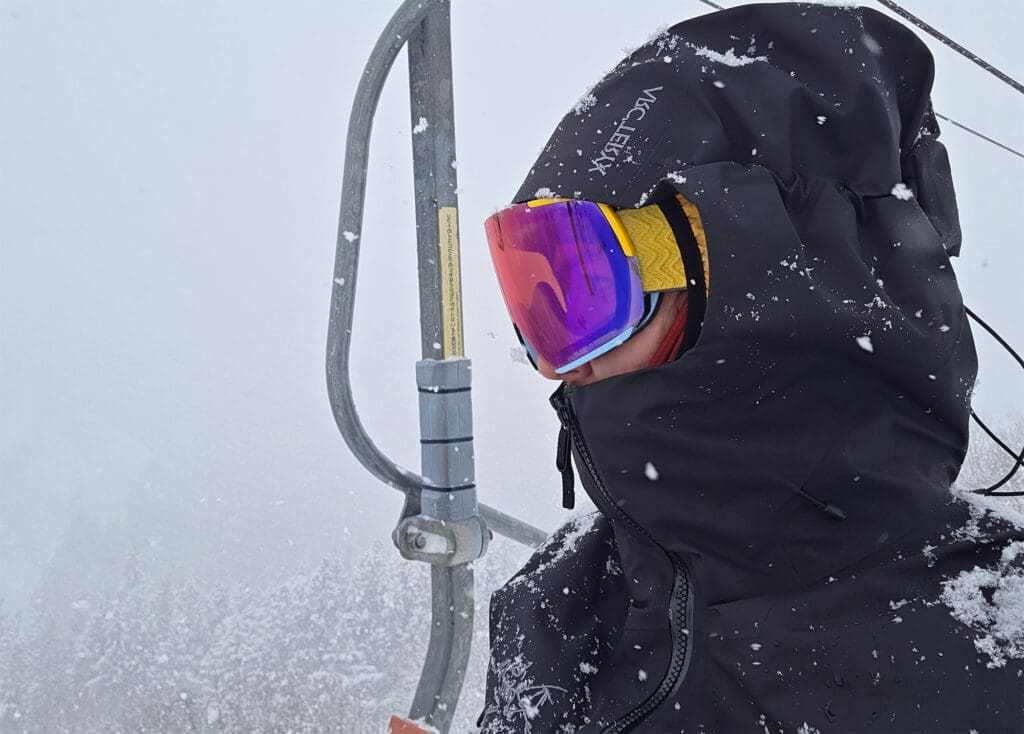
But perhaps the best part of this jacket is the cinch on the hood. Like I said—the beauty of this jacket is in the subtle differences. But the hood tightens around the head well enough that when you look to the side, it moves with you, thus not obstructing your peripheral vision. It really does work quite well.
Drawbacks
The big elephant in the room is the price. At $750 USD, it’s on the higher end of the hardshell jacket price spectrum (although not a top-shelf price). But it really is a “buy once, cry once” type situation where if you take care of the jacket, it can last you 10+ years. the premium materials and construction are in a league of their own. Haters are going to hate, but there’s a reason that Arc’teryx climbed to the top of the ranks in the past few years.
Another drawback is the fit. A size M is actually on the smaller end of what’s out there for most jackets. So unless you’re slender, you might want to size up, especially if your base layers are on the thicker side. Since this is a resort-only jacket, you’d think they would plan for a bit thicker underlayers for the time spent on the chairlift.
Sabre vs. Sabre SV
You might be deciding between the regular Sabre and it’s slightly burlier sibling, the Sabre SV. The SV stands for “Severe Weather” and holds true to that designation, with a higher-denier 200D fabric making it a bit more rigid, as well as a longer hem on the waist to keep snow out a bit better. All that does come at a cost though, and the SV is a few hundred dollars more when new.
If you really go out in all conditions and aren’t worried too much about skinning up, it might be worth the SV. The Sabre does plenty well in harsh conditions, and is a bit lighter for when you want to skin up, making it a better choice for touring or sidecountry. But if you like tree skiing and want the jacket to last many years, the SV might be a decent choice.
Final Thoughts
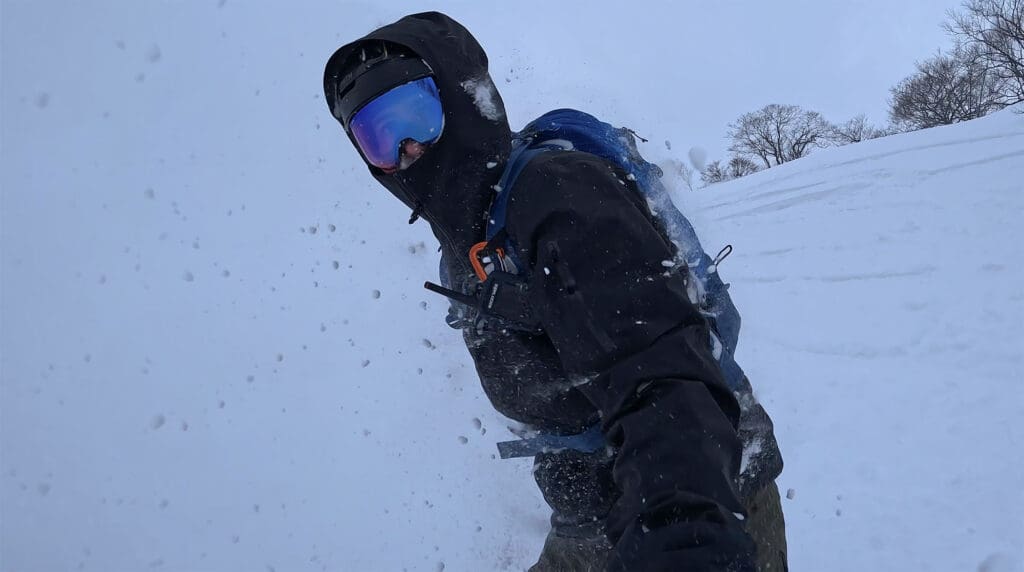
The Arc’teryx Sabre jacket is an excellent choice for skiing or snowboarding. It is fairly minimalist in its design, with each feature offered being well thought out. The jacket feels durable in all conditions, and after taking it to Japan in deep powder and in Whistler for a series of classic coastal storm cycles, I can say with confidence that this jacket is weatherproof, windproof, but won’t cause overheating.
The Sabre is among the best of the best when it comes to jackets, it’s as simple as that. After testing well over 40 jackets the past few years, I am happy to recommend this for when the weather keeps others at home.
Thanks for reading this review! We have plenty of other gear reviews on the site. There are plenty of other reviews such as baselayers to help you make better buying decisions. We take the reviews seriously, so please take a look at our gear review policy to see how we approach reviews based on ethics and thorough testing from real riders.