Author’s Note: This article stems from a core belief that has guided my work in backcountry education: there should be no gatekeepers in the mountains, only mentors. While professional guiding is a vital service, the “trust me” model is increasingly at odds with a public that is more educated and empowered than ever before. This piece is a call for a fundamental shift toward transparency, informed consent, and a “veto culture” that treats every backcountry traveler—expert or novice—as a critical part of the safety net.
I remember the day January 20, 2003 well.
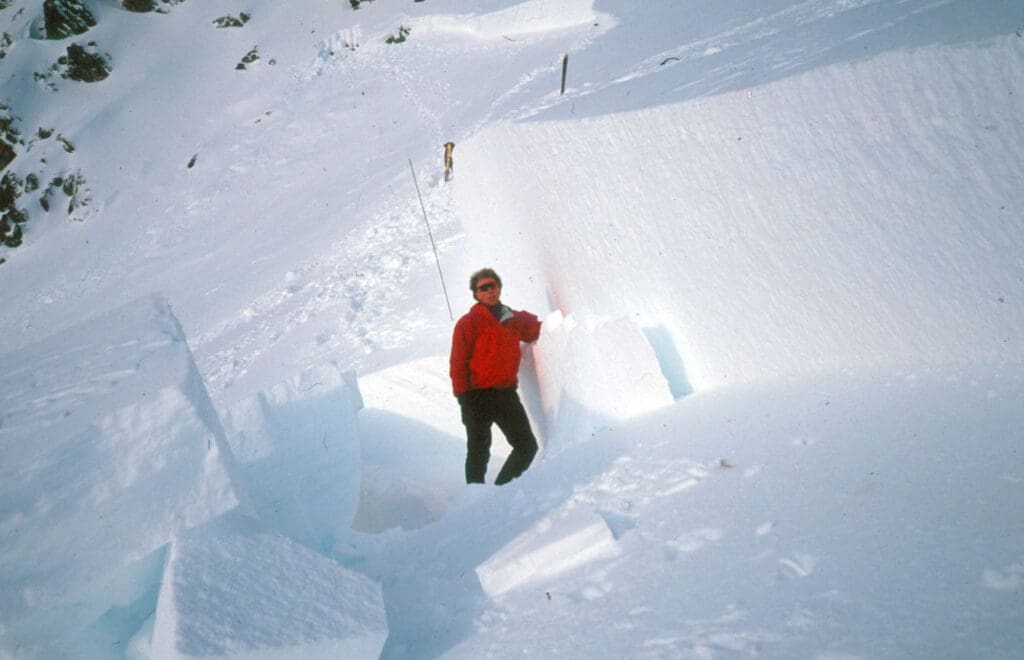
Actually, the day after is what stood out in my mind. Long before social media took over our brainwaves, the internet did not unfold events in real time. But soon enough, the news came out of a massive avalanche sliding on a persistent weak layer that buried over a dozen people including snowboard superstar Craig Kelly. He didn’t make it.
After that accident, and another tragedy only two weeks later involving a school group, the avalanche industry created massive changes in how they educate the public. AST courses became much more robust. The ATES was created to help people plan better routes. Bulletins became far more robust. It seemed like there was a big shift in how people perceive the real dangers of avalanches. For the most part, it seemed like everyone was onboard. But a key component of the guiding industry hardly changed, and that is how the guides themselves share information and make decisions for the group.
Operational Fatalities Continue
And yet, tragedies keep occurring. The list is too long to go into detail, but three events in particular come to mind.
February 20, 2016: Golden Alpine Holidays
The first is from 2016 with a ski touring group near Golden, BC. After an avalanche that involved five people buried and one dead, the wife of the deceased sued several parties to try and enact some change. The main point of her argument was that the guides in charge made the decision to ski a dangerous slope, especially given the fact that a special warning was issued that day. The warning was so imperative that media outlets including the CBC and Vancouver Sun issued public alerts. You can learn more about their story here if you have the time:
March 24, 2025: Stellar Heliskiing
Last year, tragedy unfolded in the Kootenays when an avalanche buried a group of Stellar Heliskiing clients (and the owner) while awaiting pickup. The group was out of avalanche terrain, yet still in a large avalanche path. The terrain shape had them dragged into the trees and buried, leaving four people buried with only one surviving.
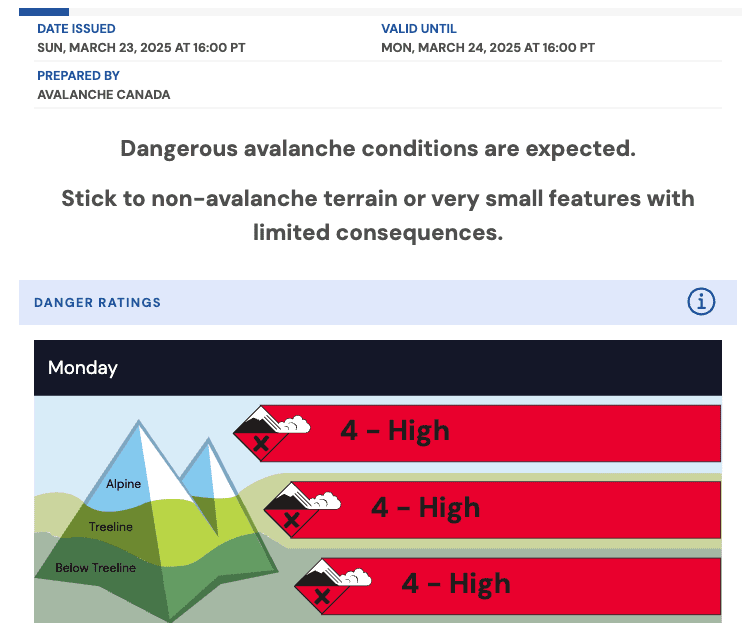
Post-incident analysis reveals a key red flag for this situation: that the avalanche forecast for that day was high, with recommendations for the terrain choice to be “Only the most simple non-avalanche terrain with no overhead hazard is appropriate at this time”.
Which begs the question… why did they gamble and lose?
The Scarcity Trap
Findings from the Stellar Heliskiing avalanche (and many other operational fatalities, especially in Canada) are not widely available to the public. This is almost certainly due to the lawyers of insurance companies controlling the narrative to protect their liability and reduce the payouts from inevitable lawsuits.
The wife of the man who died in 2016 with Golden Alpine Holidays who filed the lawsuit did so not for money (She sued for the grand sum of $1), but to finally release the records from the guides and the ACMG guiding association.
All this is to say that the operations keep their records very close to their chest, so at this point we can only speculate as to how the decision to fly into avalanche terrain while the rating was high ever became a green light.
One possible explanation could be that the owner/guide Jason Rempel made the decision based on what is known as the “Scarcity Trap”. This psychological trigger (also known as a heuristic trap) happens when the perception of a dwindling resource (in this case, time to get good snow before it warms up) impedes proper decisions.
Seeing as this group was on an expensive film shoot and that Monday morning could have been the final day to get the shots, this is a plausible reason for why they decided to continue on that day. They certainly knew about it, as reports said they were leaving the zone when the avalanche occurred. Tragically, they were just a few minutes too late and had they been picked up right before the avalanche, they would be sighing in relief rather than their families mourning the loss.
What this event exemplifies is that heuristic traps don’t care whether or not someone is a seasoned professional. In fact, one could argue that professionals are more susceptible to the scarcity trap because they have higher-ups to answer to if they call off a shoot without getting the required footage and lose money on a lost opportunity. Because of this blind spot, it’s even more imperative that more neutral minds can be involved in the decision making process and understand the risks present when they step out the door and get into the helicopter.

Frog Lake Huts
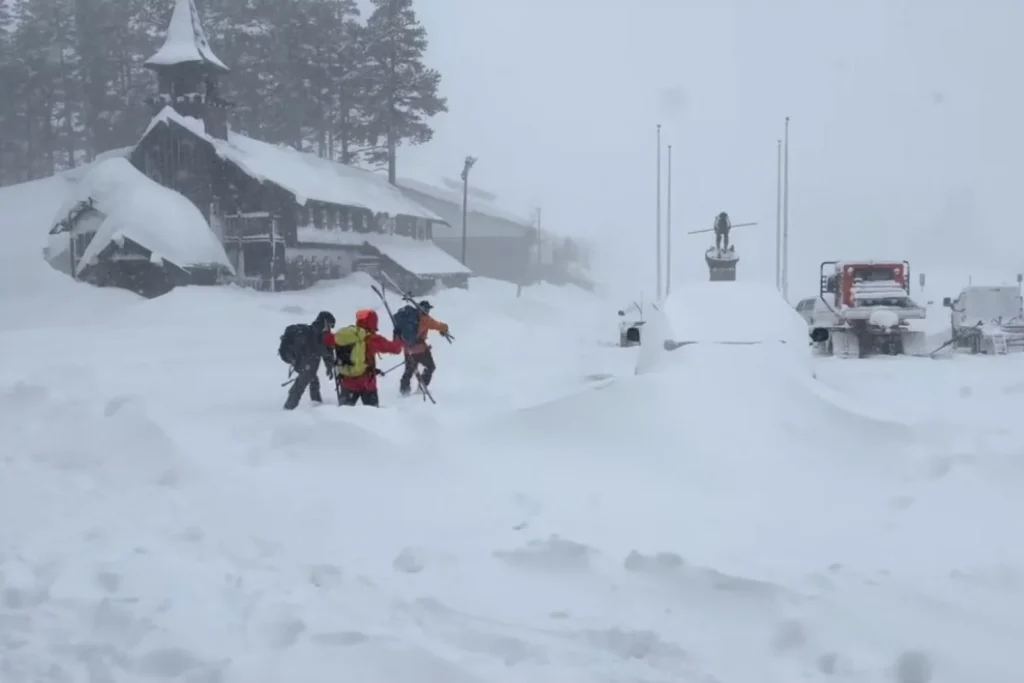
Lastly (with respect to this article), we have the event that happened last month in Donner Pass near Lake Tahoe, California. The group had left the safety of the Frog Lake huts to depart back to their cars, and in the process, crossed an avalanche path at the exact moment a major slide occurred. Nine people out of 15 ended up dying when buried in a 20’x20′ area.
Without drawing conclusions as to why, the important fact that has surfaced during the aftermath is that the guides decided to leave the warmth and protection of the huts in a closed-door meeting involving only the guides.
Critics will say that this is standard operating procedure, and that the guiding staff did not act out of what is industry standard. And that is the point of this entire argument: policy needs to change before more lives are unnecessarily lost.
Going Forward From Here
It has been 23 years since the tragedies in British Columbia that ushered in sweeping reforms for how the public gets educated on the dangers of avalanche terrain. Here in Canada, Avalanche Canada (not to be confused with the Canadian Avalanche Association for industry workers) has been given the responsibility to educate the public on understanding avalanche terrain in simple, easy-to-understand terms. For the most part, their efforts over the past two decades have been a massive success with respect to people recreating on their own.
But when people book a paid trip, especially a mechanized one, that education is suddenly sidelined. Guests are not expected to use their avalanche knowledge; instead, they are structurally locked out of the decision-making process entirely.
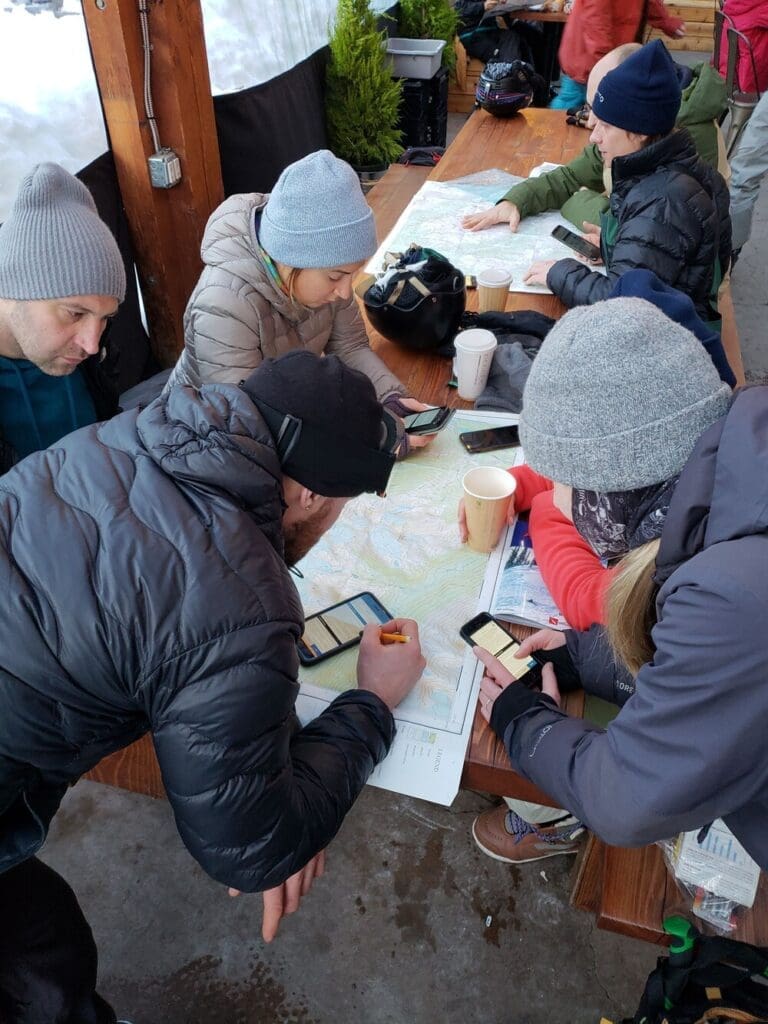
We often blame this on the “expert halo”—the idea that clients blindly defer to a guide’s authority. But how can a client defer if they aren’t even allowed in the room where the decisions are made?
The reality is much more systemic. Operations keep hazard discussions and route selections behind closed doors largely to manage legal liability and satisfy insurance requirements. Think about it: if a company openly tells its clients during a morning meeting that the avalanche danger is “High” but they have decided to fly anyway, they expose themselves to massive legal risk if a fatal slide occurs. To protect the company, operators control the narrative by simply withholding the hazard data from the guests.
But this liability shield creates a fatal blind spot. By locking the clients out to protect the company, the guides are left alone in an echo chamber where professional pressures—like the scarcity trap, sponsor demands, and the financial urge to deliver a product—can take over unchecked.
With such a fundamental shift occurring in public education over a generation, the answer is clear: anyone who travels in avalanche terrain where death is a possible consequence must be given informed consent and the right to voice their input.
Not only should they be able to voice their input, they must have the absolute power of the veto. “Trust me, bro” cannot be a valid operational pushback to a client’s hesitance. If someone feels unsafe, the group regroups or retreats. Period.
This would be a positive step forward in people taking more power over their fate. With the amount of information we have at our fingertips, collaborative routing is entirely possible, albeit uncomfortable for entrenched operations looking to streamline their workflow and protect their liability.
It’s part of a bigger argument that there should be no gatekeepers of the backcountry, only mentors and trailblazers. It’s what we are trying to achieve through our own curriculum—using a belt system and a martial arts ethos to build independent, thinking backcountry travelers rather than dependent followers. Hopefully, others can push for this reform. There’s a very good chance it will save lives down the road.
Further Reading
Historical Context
- The 2003 Backcountry Avalanche Risk Review: The foundational document that shifted Canadian avalanche safety from observation to active risk management.
- Twenty Years Later: The Legacy of 2003: A retrospective on how two tragedies birthed Avalanche Canada and the modern public bulletin system.
- Understanding the Psychology (Heuristics)
- The FACETS of Avalanche Danger: A breakdown of Ian McCammon’s famous research into the six “heuristic traps” (including Scarcity and Social Proof) that lead experts into trouble.
- The Expert Halo in the Backcountry: A video lecture/resource explaining how group dynamics often shift toward a single leader, silencing the collective intuition of the group.
Case Studies & Accountability
- The Churchill / GAH Lawsuit Follow-up: Direct context on the legal push for transparency in the 2016 Golden, BC incident.
- Backcountry Safe Initiative: (Assuming the initiative you are discussing has its own landing page or primary advocacy link) – Explore the push for independent post-incident investigations.
- Avalanche Canada Fatality Database: An interactive tool to research historic slides and understand terrain patterns across Western Canada.
Professional Standards & Ethics
- ACMG Scope of Practice and Conduct: To understand the current professional standards that guides are held to, providing context for where policy reform is needed.
- ATES (Avalanche Terrain Exposure Scale) Explained: A deep dive into how the industry classifies terrain, which you can use to argue why “Informed Consent” is now more possible than ever.
- Avalanche Canada Trip Planner – View the exposure ratings and avalanche forecast for a particular area.