
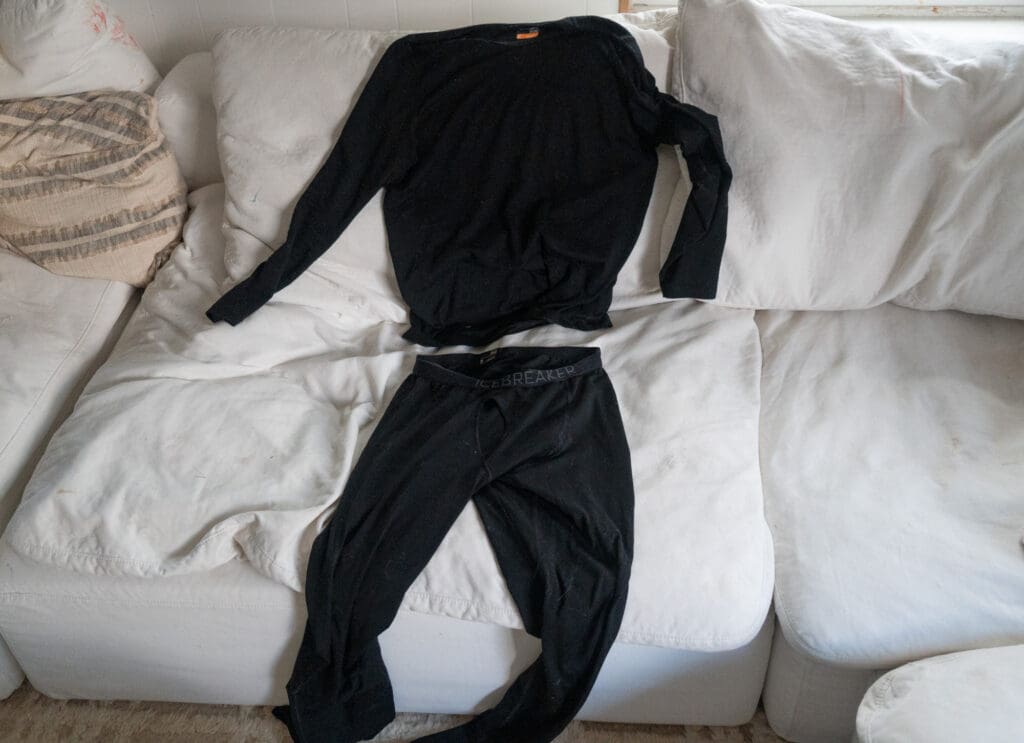
A good day skiing or snowboarding starts at home, the moment we get dressed. The right thermal base layer will make or break a day out there by providing warmth, expelling sweat, and regulating the body temperature in frigid temperatures. It might be the big turning point in a person’s skiing or snowboarding journey when realizing it’s worth investing the money in the best base layer possible for maximum comfort.
I’ve been testing the best baselayers for the past two years (officially), and decades before that through good old-fashioned trial-and-error. After testing in a massive range of conditions, from the wet coastal slopes at Mount Baker to the frigid high-alpine plateau at 5200 meters in the Yukon, I’m confident to say that I know what makes a quality base layer stand out. And one set rose above all else for comfort, mobility, performance, and odor resistance.
And that winner for all around comforta and performance is: The Icebreaker 200 Oasis. Both the tops and bottoms are excellent, and a crucial part of the kit, especially if you like to go hard. There are other amazing baselayers that are all notable in their own right, but Icebreaker’s lightweight set for its versatility and heat management. Let’s dive into it a bit more down below.
Icebreaker 200 Oasis: First Impressions
Materials: 100% Merino Wool
Weight: 200 gsm
Fit: Slim, but not tight
Pros: Great for movement and for those who sweat a lot
Cons: Sustainability page is missing, no thumb loops
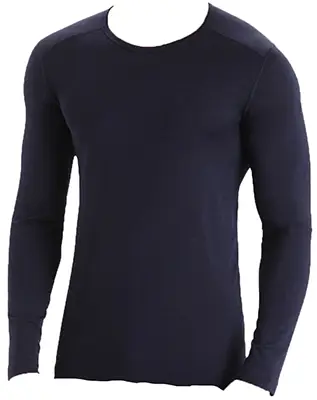
From a technical perspective, less can often be more. When we are discussing a thermal base layer, even more so. By that I mean you don’t really want anything flashy or loud sitting against your skin. So for the most part, this review is short. Both the tops and bottoms peform well in cold climates.
The Merino Wool Difference
You are probably here because you have at least heard of Merino wool, and if you have any experience with it, know that it is the real deal. It’s lightweight, odor-resistant, and warm, yet wicks moisture so that your sweat won’t freeze if you’re hiking or skinning up a mountain.
Really the only downside to Merino is the cost. It doesn’t come cheap. Yes, you can save on a two-piece polyester base layer kit from your favourite big-box retailer but it will cause overheating, and smell horrible after a few uses. You really do get what you pay for, here.
Why Icebreaker Stands Out
Although now a subsidiary of the multinational VF corporation, the company has done a good job in the “If it ain’t broke, don’t fix it” philosophy. Since being bought out in 2018, the brand has still held a standard of quality that often goes by the wayside. So they took the previous 20+ years of innovation and ran with it, positioning them (along with now-sister company Smartwool) as a leader in natural fiber apparel.
But, like any big buyout by a large corporation, the brand went through a “restructuring”, meaning laying off a bunch of the original staff to streamline their base operations. Unfortunately that’s the world we live in and for the purposes of this review, we kinda have to go with the old adage, “don’t hate the player, hate the game”.
But despite the mass consolidation, the brand is certified by the Responsible Wool Standard (RWS), meaning they have standards for how the wool is sourced. You’d hope so in this day and age but it’s nice to know that they are at least cognizant of the need to source their matierial with a code of ethics.
Drawbacks
As mentioned earlier, there really isn’t much do complain about when it comes to the fit, materials, and construction for the Icebreaker 200 Oasis. For people wanting active performance in a colder climate, it’s a fantastic choice. The 200 gsm limitation means that it’s not going to be super warm if you’re not moving around much or don’t have a good insulating layer above it. That’s more simple science than a knock on the brand.
Speaking of which, I was definitely disappointed to see a vacant Sustainability page on their website at the time of this writing. This is a bit of a red flag, yet not surprising for a large corporation. To me it’s a clue that sustainability might not exacly be their top priority. Maybe I’m wrong and I invite anyone from Icebreaker to steer me to somewhere that may indicate the opposite.
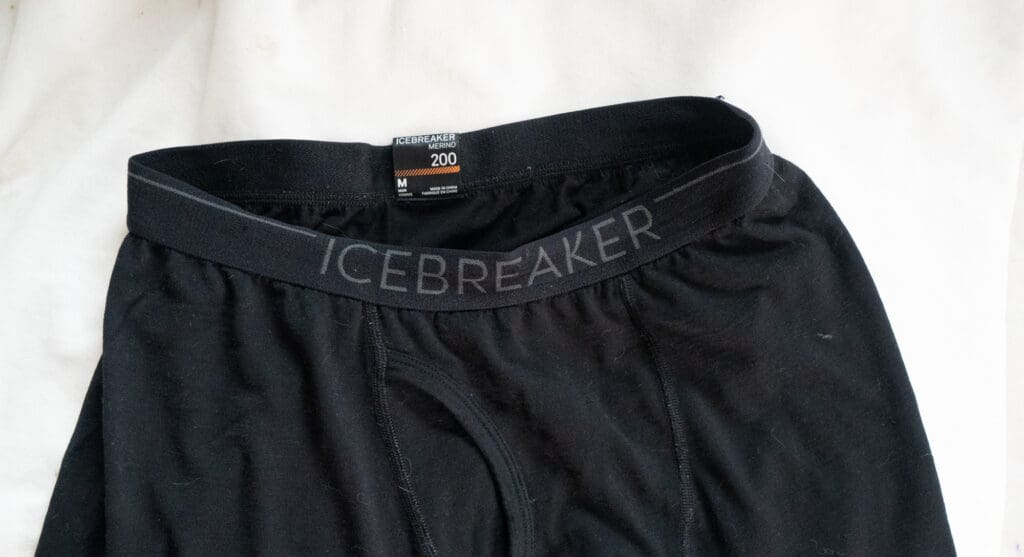
Final Thoughts
Icebreaker’s 200 Oasis merino baselayers are the thermals you want for performance, warmth, and sweat management. The company has been around for a while, and although was bought out, still seems to hold true to what made them valuable in the first place. I’m on my second season with these baselayers and no stitching has gone by the wayside, nor holes appeared, despite wearing them as much as possible.
If you’re not used to spending good coin on premium base layers, it might seem like a lot. But the return you get on warmth, sweat management, and quality is well worth it in the long run. Hope it works out for you!
And if this piece doesn’t really speak to you, check out our full review of the Best Base Layers and more gear reviews. Thanks for supporting independent media!