
One of the great joys of snowboarding vs. skiing is having soft boots. Of course, there are many more reasons in this author’s humble opinion… but we can stick to the boots being a major differentiator these days. And having soft boots may not be the most efficient way to travel, but it sure wins in the comfort department—something very important if you’re spending more than a few hours out in the mountains.
But the one differentiator between hard boots and soft boots has been the ability to reduce the stiffness for the ascent, giving more flexibility in what is commonly known as “walk mode”. That is, until now.
Big mountain legend Jeremy Jones has worked with his boot sponsor ThirtyTwo to develop a splitboarding-specific boot that has a proper walk mode that actually works. True, it’s not the first to try it, but the Jones MTB Lite is the first to succeed. You do have to pay a premium for the privilege though. This is a premium boot that commands a premium price. It may or may not be worth it, depending on what you are doing out there.
Hopefully by the end of this review, you’ll know if it’s right for you, or if it’s just too much for what you need a splitboarding boot to do.
Jones MTB Lite: First Impressions
Bottom Line: A premium boot with a premium price tag. If you are serious about splitboarding, it’s worth it. But you’d better be logging in some miles to make it worth it.
Meant For: Big mountain splitboarding and technical ascents
Weight: Approx. 1,200g per boot (depending on size)
Liner: ThirtyTwo Elite Liner (100% heat-moldable Intuition foam)
Special Features: Quick Release Walk Mode collar, Michelin Fiberlite Outsole, Zippered Storm Shield Gaiter, Recoil Flex Control.
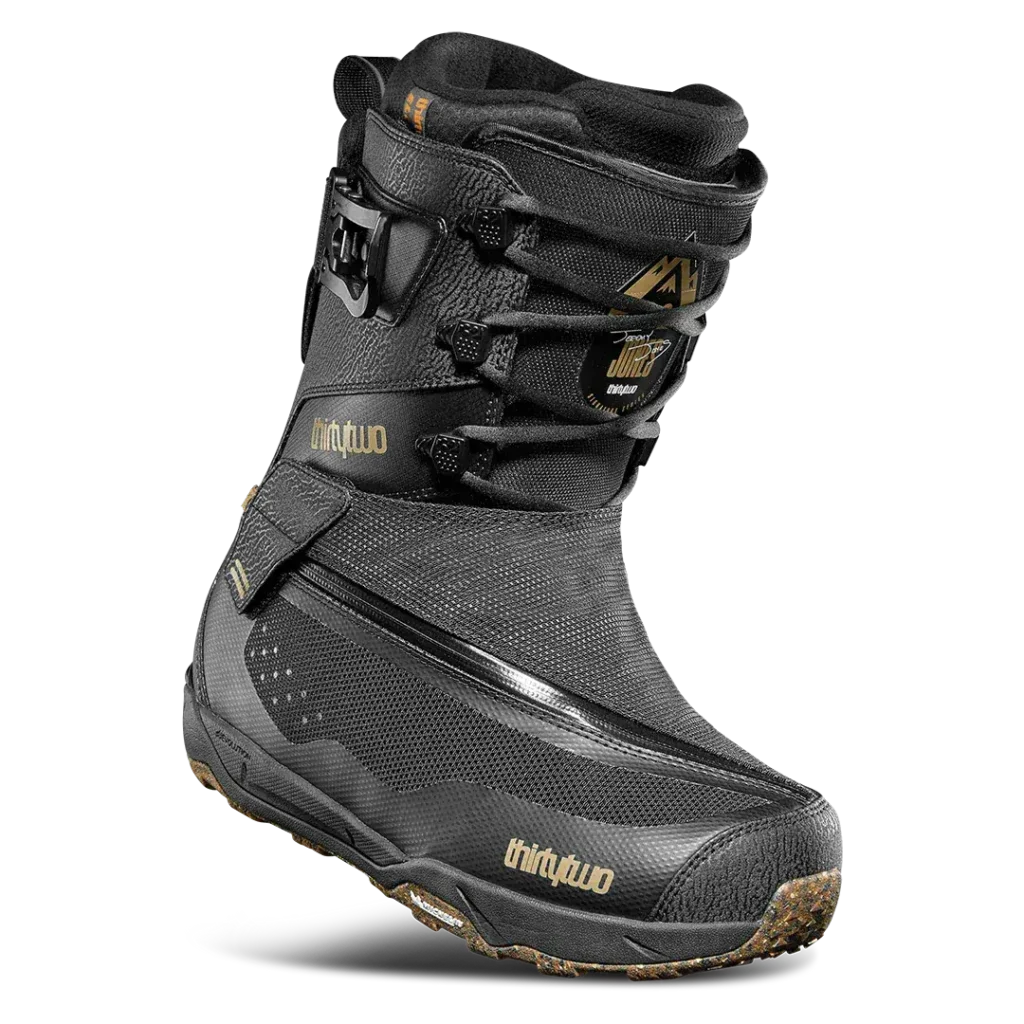
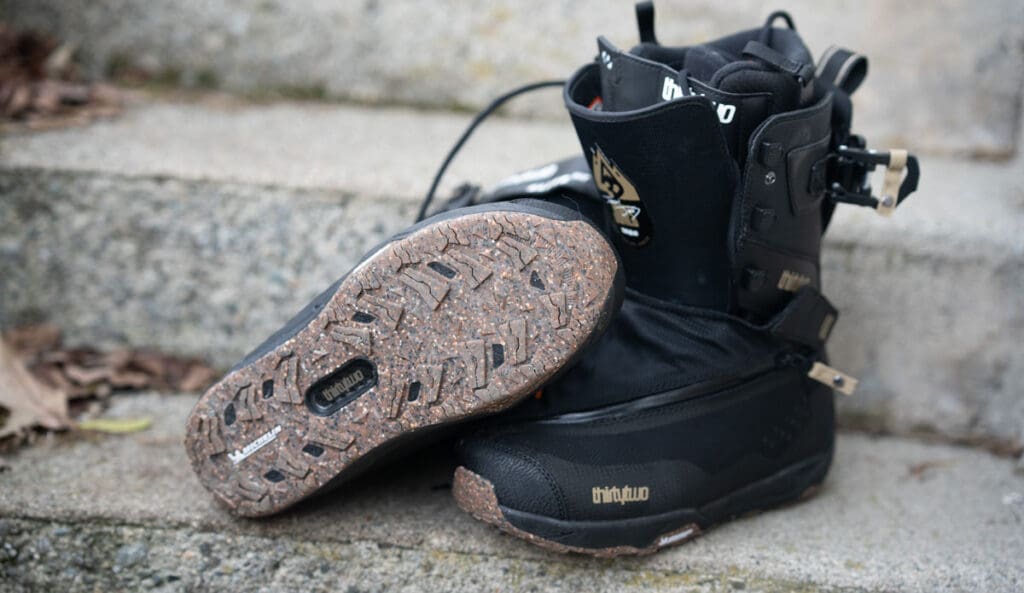
Pulling the Jones MTB Lite out of the box, the “lite” in the name stood out immensely in my hand. With as many features as I could see in front of me, the material was light enough to capture my attention. Previous iterations of the MTB were notorious for being absolute tanks. By transitioning to the Michelin Fiberlite outsole and utilizing an ultra-lightweight carbon shank, ThirtyTwo has managed to shave serious weight without sacrificing stifness or durability.
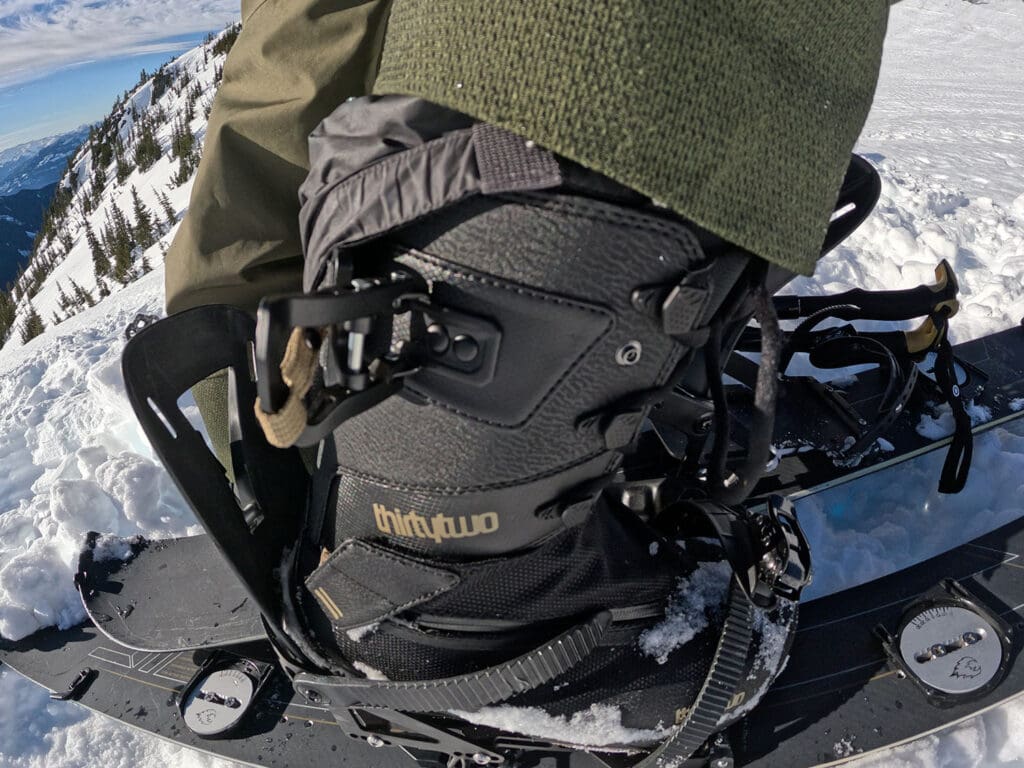
Flipping that quick-release collar on the back of the calf for the first time is a revelation. As someone who suffered through long ascents with whatever boots were in the closet, this is a major revelation for me. Having ski toured before, this was the main advantage that hard boots had, but now a stiff soft boot is, in this writer’s opinion, the way to go.
The Ascent: Does the Walk Mode Actually Work?
Disclaimer: As someone who has been splitboarding for nearly 20 years, this was my first pair of splitboard-specific boots. Until recently, I was as textbook of a snowboard bum as you could get. I even went up to Mount Logan (Canada’s tallest mountain at over 19,000 feet) in a pair of lace-up soft boots that were two years old. So I was a bit skeptical on the extra cost for splitboard-specific boots.
That all changed when I tried out the quick release on the walk mode. As someone who prefers stiffer boots, the ability to release the stiffness and ease up on the calfs while climbing is a literal game-changer. Gone are the awkward stances while climbing. OK, it still takes some effort, no doubt… but the energy saved by having a more natural movement is palpable.
The only criticism is that the button to lock it back into riding mode when you pull the lever needs some finesse. Maybe it gets better the more you do it but I needed to take my glove off to snap the button into place. A small detail, as it never flipped open anyway, even without the button engaged.
ThirtyTwo also has foam donut-shaped inserts to help keep your heel in place, and it really does work better than having nothing at all. If heel lift is a problem you face, these inserts are a little bit of magic to prevent unnecessary heel lift.
The Descent: Stiffness when/where it matters
As stated earlier, shifting into riding mode is a flick of a switch (and a snap of a button, and if you can do it with gloves on please teach me your trick). There are also side inserts to dial in the stiffness a bit more to your liking, or easily take them out if you want to for the ride up. I just left them in all the time and forgot about them.
The boots are rated a 10/10 for stiffness, but I’d say the Nidecker Kita boots are even stiffer… yet these perform exceptionally well and thanks to ThirtyTwo’s longstanding reputation for boots athat last, I anticipate that they will be holding the stiffness for a long time. These are probably my 10th pair of ThirtyTwo boots in the past 25 years, so I’ve got a bit of a frame of reference, and they just keep getting better.
So while I can’t comment on these boots specifically since it’s still season 1 with them, I can say that I’ve had multiple pairs of ThirtyTwo boots with 100+ days on them. So I anticipate the quality holding up for a while.
Notable Features of the MTB Lite Splitboarding Boots
These boots pull no punches – they are as elite as they come, and the price reflects that. But what you get for that is pretty extensive. Here’s a brief rundown of some of the best features that come from this boot:
- Intuition Elite Fit: Injection molded Intuition liner that is heat-moldable, with pockets for the heel hold inserts
Metal Grommets on the liner: The grommets on the liner laces are often the first to go. With these boots, that won’t happen (as easily). - Triple Velcro Tongue: Velcro thrice for less give on long days
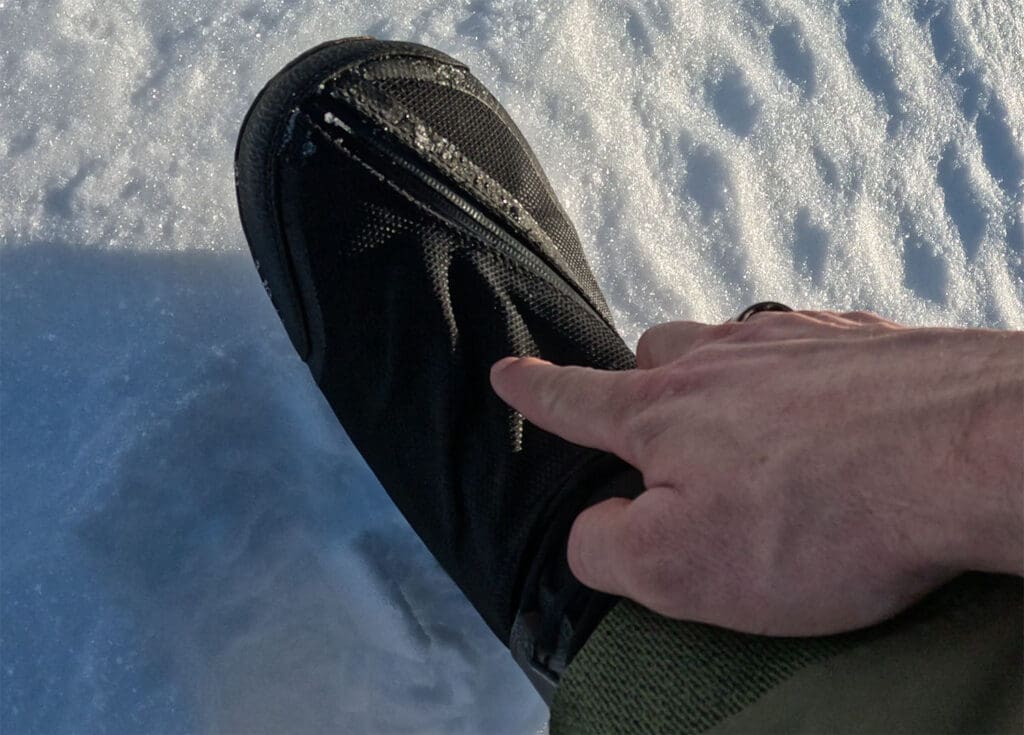
- Lace guard: Laces are the best fit possible, but are susceptible to icing up. This zip-up lace guard keeps that from happening
- Michelin Outsoles: After testing well over 100 pairs of boots and shoes, I have found Michelin outsoles to be the tackiest i’ve tested. These boots will keep you upright better than most when boot packing up a sketchy slope
- Quality throughout: I couldn’t find anything on the boot that I’d consider sub-par. Really, it is a premium boot and everything is as good as it gets.
Drawbacks
Because they are a stiffer boot, it takes a long time to break in. And unfortunately, the best way to break in boots is to go splitboarding in them. So you’ll have a few days of discomfort until it starts to feel a bit normal. Even still, if you have wider feet, it’ll be a bit tougher. This can be mitigated a bit by getting them properly heat molded at your favorite shop. If you don’t have a shop nearby, a hair dryer can do, but won’t be as good.
The big elephant in the room is the price. Old snowboard-bum me wouldn’t have even thought twice, and just laughed and moved on. But it really is a “buy once, cry once” type scenario since the added comfort, durability, and longevity of these boots will honestly add more vert to your days, weeks, months, and seasons over time. So it’s something to save for, but well worth it, in this humble splitboarder’s opinion.
Final Thoughts
The Jones MTB Lite splitboarding boots are as good as it gets. True, I haven’t tried a multitude of splitboarding boots, but with the walk mode, I’ve already become more efficient on the uptrack. I’ve tested a ton of snowboarding boots and can tell that these boots use top-notch materials every step of the way. That doesn’t change between regular boots.
What does change is the walk mode, and that creates a significant advantage going up. So all in all, if you have the cash (and the skill), and want to get more vertical in the day without sacrificing the quality of the ride down, these boots absolutely rip.

Thanks for reading! We have a ton of other gear reviews to share. Whether you need a new hardshell jacket, some good baselayers, or a great pair of glacier glasses, we’ve got you covered. We do use affiliate links to help offset costs, but aren’t making millions or anything. Check our our Gear Review Policy to know more.