
Alpine Islands is reader-supported. When you buy through links on this page, I may earn a small affiliate commission — at no extra cost to you. It never changes which gear earns a spot.
Exploring nature with nothing but your feet and a pack on your back is one of life’s great privileges. Hiking is a time-honoured tradition that dates back to prehistoric times, although these days it’s less about survival and more about remembering where we came from.
Hiking, to me, is an activity that builds character in the best way possible. It doesn’t take too long to get away from the masses if you just venture a little bit further than the crowd. Doing so rewards anyone who ventures out a connection to nature that isn’t as commonplace as it might have been before technology took over our daily lives.
But we humans need a lot to survive: food, water, and if going out for longer than a day trip, shelter. So a good backpack does more than just look good; it serves as your lifeline to stay out in nature for more than a brief outing. The following is a list of the best backpacks that the staff has had a chance to test out here in the Coast Mountains of British Columbia. As a trail runner, day hiker, and overnight solace-seeker, I’ve been lucky enough to be sent dozens of backpacks to demo in all seasons, conditions, and use cases.
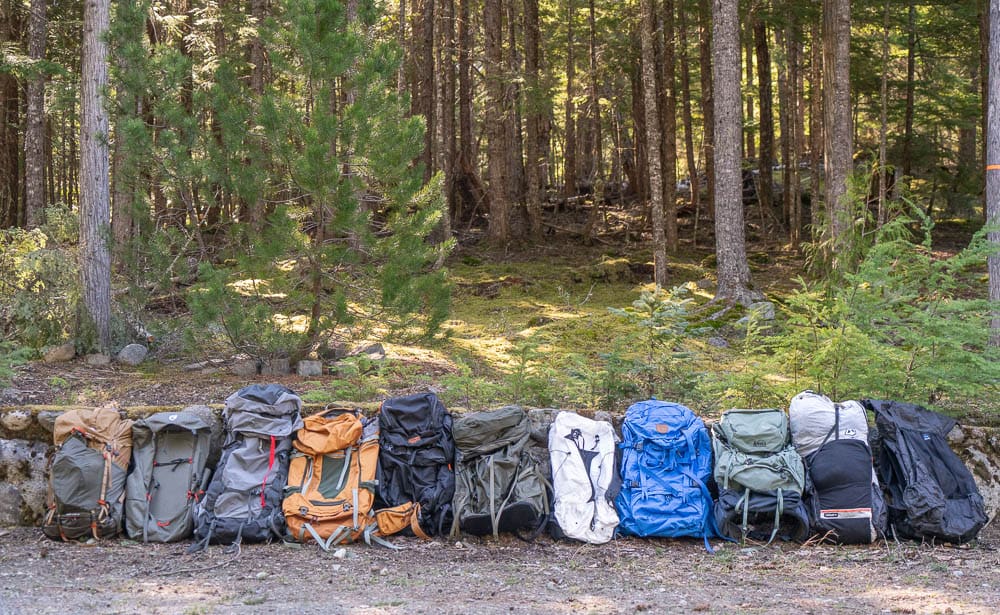
The Best Hiking Backpacks: Updated in June 2026
Best Overall: Yeti Skala 40L
Best Ultralight Pack That Doesn’t Sacrifice Support: Outdoor Vitals Shadowlight Carbon 60
Best Long-Haul Backpacking Backpack: Osprey Aether Plus 60
Best Backpack for Fast Hiking or Trail Running: Osprey Talon Velocity 30
| Pack | Capacity | Weight | Frame / Support | Ideal Load | ~Price |
|---|---|---|---|---|---|
| Yeti Skala 40L (Best Overall) | 40L (also 32/50/60L) | ~3.4 lb (1.54 kg) | AlumaLite aluminum, adjustable | 35–40 lb | ~$325 |
| Outdoor Vitals Shadowlight Carbon 60 (Best Ultralight) | 60L (~49L internal) | ~2 lb (31.5 oz) | CARBONFLEX twin carbon stays | up to ~40 lb | $299 |
| Osprey Aether Pro 75 (Best Long-Haul) | 75L | ~5 lb | LightWire peripheral frame | [*** confirm range] | ~$400 |
| Osprey Talon Velocity 30 (Best Fast/Trail Running) | 30L (S/M) / 32L (L/XL) | ~2 lb 2 oz (980 g) | Frameless, running-vest harness | 10–25 lb | $185 |
| Exped Lightning 50 (Honourable Mention) | 50L | ~2 lb 9 oz (1155 g) | T-Rex adjustable, aluminum stay | up to ~48.5 lb | $230 |
Best Overall: Yeti Skala 40L
Bottom Line: A burly, three-zip workhorse that hauls a heavy load without complaint.
Capacity: 40L (also 32L, 50L, 60L)
Weight: ~3.4 lb (1.54 kg)
Frame: AlumaLite aluminum, adjustable harness with load lifters
Material: 420D Guardcore HD nylon + 210D birdseye dobby reinforcement
Ideal Load: 35–40 lb range
Price: ~$325 (check current)
Pros: Tough as nails, excellent adjustability, fast RipZip access
Cons: Heavy for the ultralight crowd, premium price
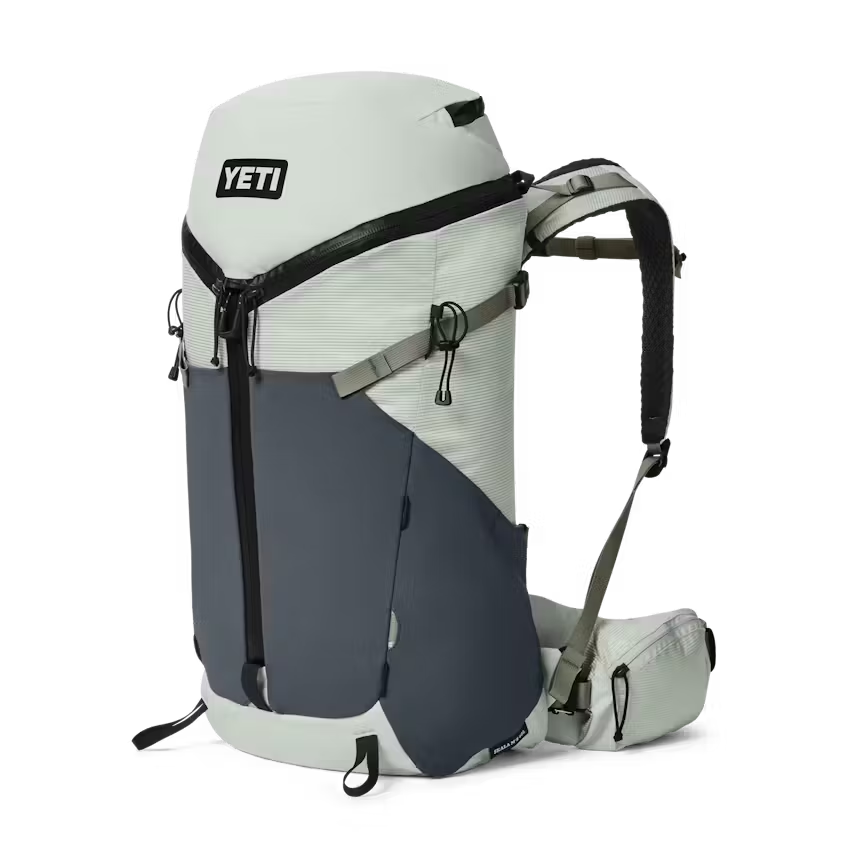
Yeti has spent a great deal of energy building their brand around durability, and their latest backpack offering takes that to a whole new level. Yeti recently acquired Mystery Ranch, a brand that has built some of the best backpacks for all use cases, and basically took their finest features into this newly built pack.
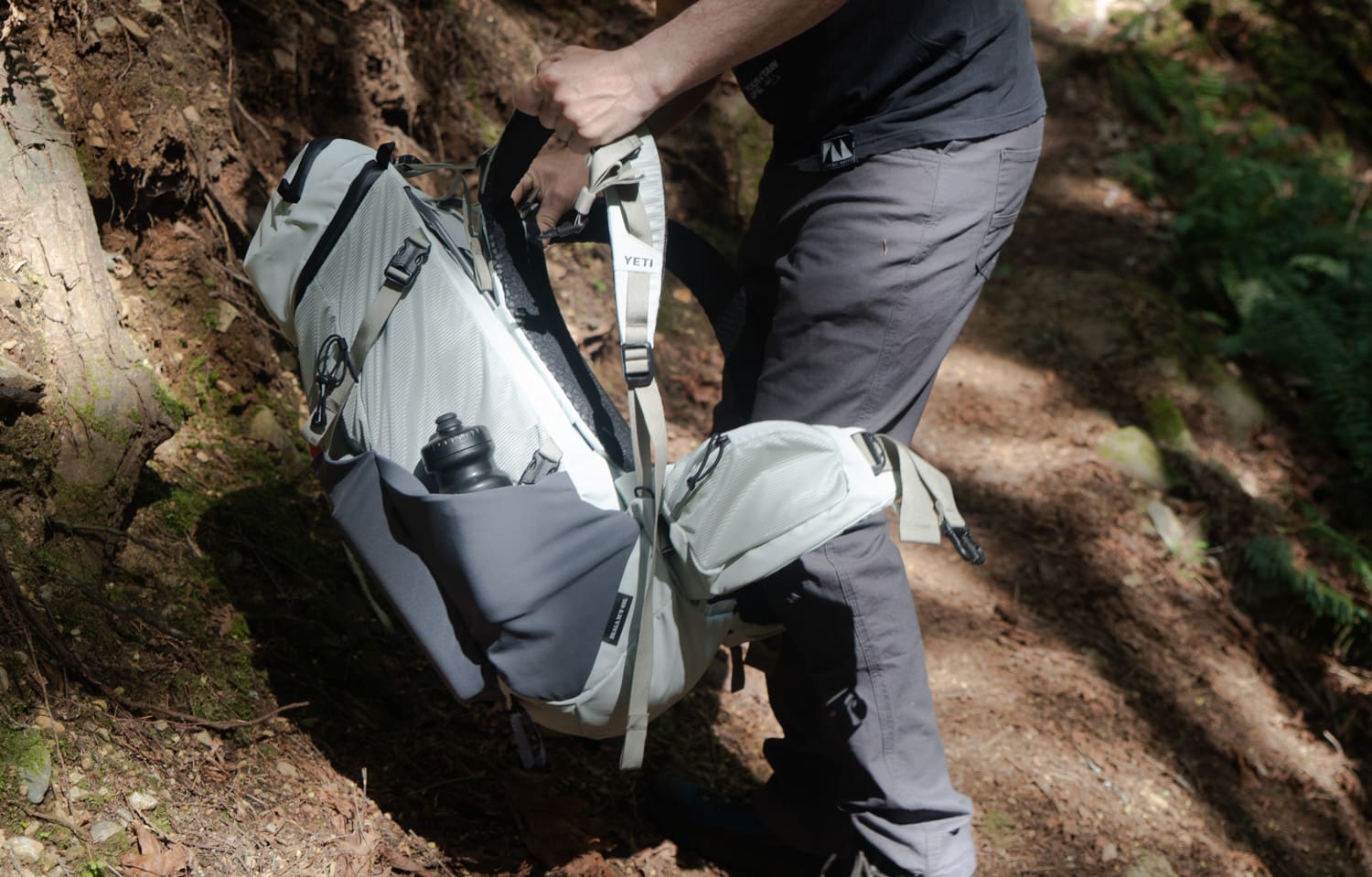
What I really like is the three zip design, allowing you to access even the nether regions of the pack in seconds, all while keeping the contents inside. Large loops make zipping quick and easy, and the zippers are shielded with rubber (YKK Aquaguard) to help with water resistance.
The frame is solid and adjustable, and helps make the pack hold a great deal of weight for a relatively small package. I have the 40L, which is perfect for a quick overnight, but there are also 50L and 60L versions for bigger missions.
It’s not the lightest pack out there, so ultralight folks may scoff at its weight. But the tradeoff is a solid construction that you can take through the weeds without fear of it ripping apart. It’s a pack built to last, and so far, it’s nothing but good things to say about it. If you tend to overpack, this is the one I’d point you toward.
If you want to know more about this pack, check out this in-depth review.
Best Ultralight Pack That Doesn’t Sacrifice Support: Outdoor Vitals Shadowlight Carbon 60
Bottom Line: A sub-2-lb pack that carries like something heavier — in a good way.
Capacity: 60L (~49L internal + 15L external)
Weight: ~2 lb (31.5 oz, size M)
Frame: CARBONFLEX — twin carbon-fiber stays + foam back panel
Material: Robic ripstop nylon [*** confirm exact denier]
Ideal Load: up to ~40 lb
Removable Hip Belt: Yes
Price: [*** confirm — sources say sub-$300]
Pros: Genuinely comfortable for UL, tons of external storage, quiet fabric
Cons: Not waterproof, front zipper is a wet-weather risk
I wasn’t always a big fan of Ultralight gear, simply because at the end of the day, a couple pounds isn’t as important (to me) as comfort. Most UL packs just simply didn’t fit the comfort level necessary. People may disagree, and that’s their right.
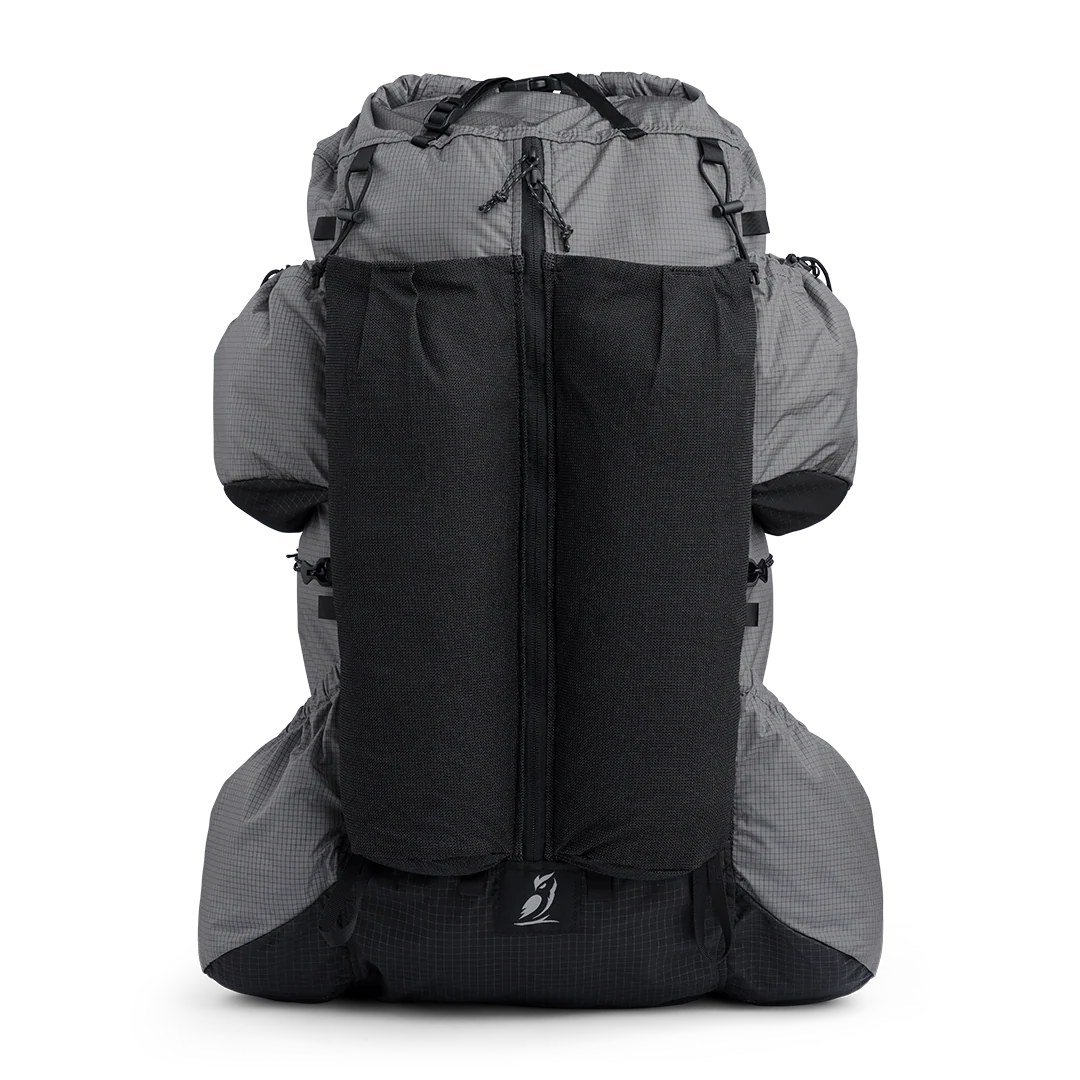
But I have been pleasantly surprised with how comfortable the Shadowlight 60 from Outdoor Vitals actually is. The pack sits just under 2 lbs, but feels great even with a non-ultralight load full of food and backcountry supplies.
The carbon frame gives the pack a much more solid feel than other UL packs I’ve tried, and the front-loading zipper makes getting stuff in and out on the fly nice and simple. With a roll-top that is now fairly standard in most ultralight packs, the pack can expand or compress depending on the load requirements. The two levels of side pockets and two front pockets make for tons of extra outside storage, and the hip pockets are removable in case you want to jettison some extra ounces.
Although not a technical term, I also appreciate how the bag isn’t as “crinkly” as other UL packs. The downside to it, though, is that it’s not fully waterproof… so you’ll need an extra rain cover if you’re out here in British Columbia for any stretch of time.
Learn more about the Shadowlight 60 in this in-depth review.
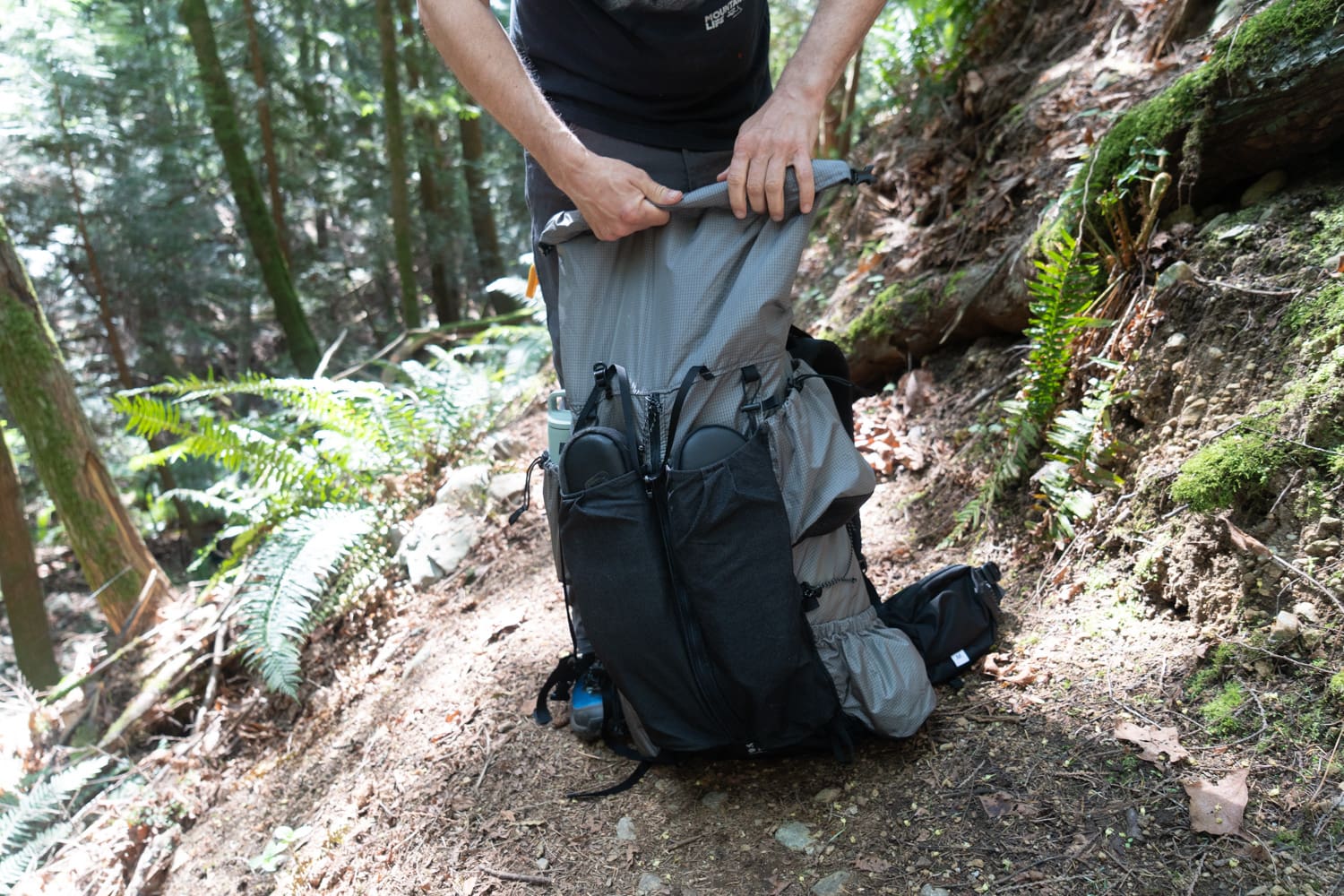
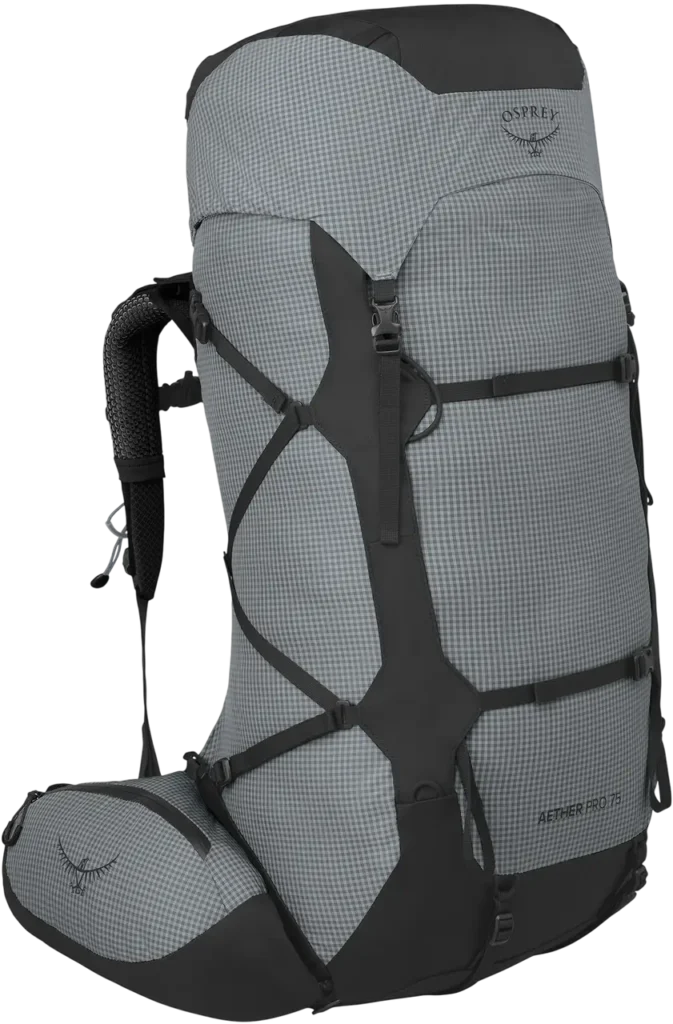
Best Long-Haul Backpacking Backpack: Osprey Aether Pro 75
Bottom Line: The serious expedition pack. Big capacity, pro-grade materials, built to carry heavy loads deep into the mountains.
Capacity: 75L
Weight: ~5 lb
Frame: 4mm LightWire peripheral frame + AirScape die-cut foam framesheet
Material: 210D NanoFly recycled nylon with UHMWPE ripstop (main); 500D recycled HT nylon (base)
Ideal Load: 40 lbs
Top Lid: Removable
Women’s: Osprey Ariel Pro
Sustainability: bluesign® approved, PFAS-free DWR
Price: ~$400
Pros: Premium durability, outstanding load comfort, strippable design
Cons: Heavy, large, overkill for casual trips
Before I go into this take, I know it’s controversial, because the ultralight fanboys and girls will rebuke what I have to say, and that’s fine. We all have different opinions and since this is my article, here’s mine:
Comfort is more important than weight if you’re hauling your meat and supplies up a mountain. And for that purpose, the Osprey Aether (or Ariel for the ladies) Pro is the Cadillac of backpacks to keep the shoulders happy.
It’s not the lightest pack out there, that’s for sure. It does have the best padding, in my opinion, which says a lot. I use it when guiding a group and need extras such as a first aid kit, extra water (because you can never have enough), and tools such as a mallet and rope rescue equipment.
All the materials are a step above in durability compared to Osprey’s non-pro models, and I haven’t seen another brand come close. But beyond the durability, it’s the comfort, which I have already stated but is worth reiterating.
Three years in and the pack is still working great, despite carrying at least a 40-lb load whenever I go out. Sometimes the ascent in the Coast Mountains is steep, but I’ve never felt bogged down. The pack can handle big ascents, scrambles, and still feels ergonomic. Knowing how to pack well is certainly part of that, but I feel that the pack does a lot of the heavy lifting.
Best Backpack for Fast Hiking or Trail Running: Osprey Talon Velocity 30
Bottom Line: A do-it-all vest-pack for when a hydration vest just isn’t quite enough.
Capacity: 30L (S/M) / 32L (L/XL)
Weight: ~2 lb 2 oz (980 g, S/M)
Frame: Frameless, running-vest harness, AirScape backpanel
Material: 100D x 210D recycled high-tenacity nylon (bluesign, PFAS-free DWR)
Ideal Load: 10–25 lb
Women’s: Osprey Tempest Velocity 30
Price: ~$215
Pros: Moves with you, vest-style pockets, sustainable materials
Cons: Not waterproof, too much pack for casual strolls
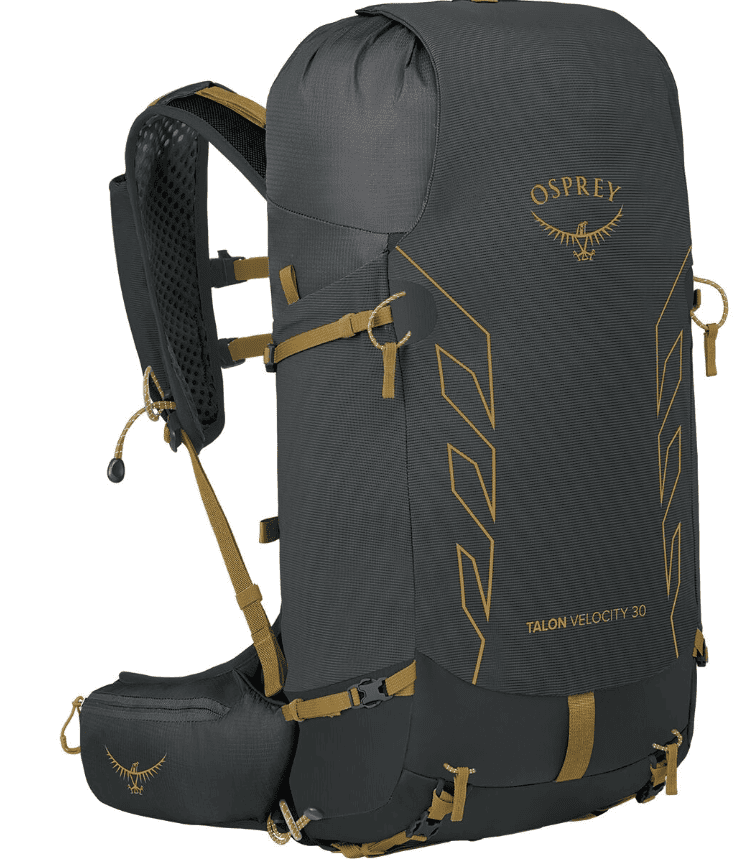
Trail running has been dominated by hydration vests but sometimes you need a little bit extra. I often ride my bike to the trails and need to pack a lock with me. And in the coast mountains, it’s unwise to go anywhere without a layer that will probably come off and on several times in a session if the weather is iffy. Not to mention food, snacks, or the gone-out-of-style-but-still-is-champ 2L bladder with a hose to keep you moving.
Bottom line, there are many reasons a backpack suits trail running, and Osprey’s Talon Velocity 30 has been my new best friend when wanting to move fast.
One might think I just got caught up in the marketing, gravitating toward a pack named “Velocity” would surely get me to run faster, wouldn’t it, you say? Well, although sounding nice, velocity is only defining the measurement, not speed. So although the model name sounds nice, it doesn’t actually mean you’ll run fast. However, the design does help you run faster thanks to the elasticity of the straps and low-profile it keeps. Plus, you can still use it like a hydration vest and put a couple flasks in the shoulder straps.
The double chest strap helps to keep the pack tight to the back, allowing for fast movement in three dimensions, without feeling like the pack is affecting performance in a negative way. I’m a big fan.
Honourable Mention: Exped Lightning 50
Bottom Line: An ultralight hauler with a brilliant compression system that keeps a big, awkward load tight to your back.
Capacity: 50L
Weight: ~2 lb 9 oz (1155 g, S/M) / ~2 lb 11 oz (1210 g, L/XL), min. weight
Frame: Height-adjustable T-Rex suspension — 6061-T6 aluminum stay + stiff cross top piece
Material: 210D ripstop nylon (HMPE), PU-coated; 600D recycled polyester base
Max Load: ~48.5 lb (22 kg)
Closure: Roll-top with top-zip quick access
Sustainability: bluesign® approved, PFAS-free, recycled materials
Price: [*** confirm current US price]
Pros: Outstanding compression and external haul capacity, light, rides close to the body
Cons: Single top opening (pack mindfully), not fully waterproof, lots of straps to dial in
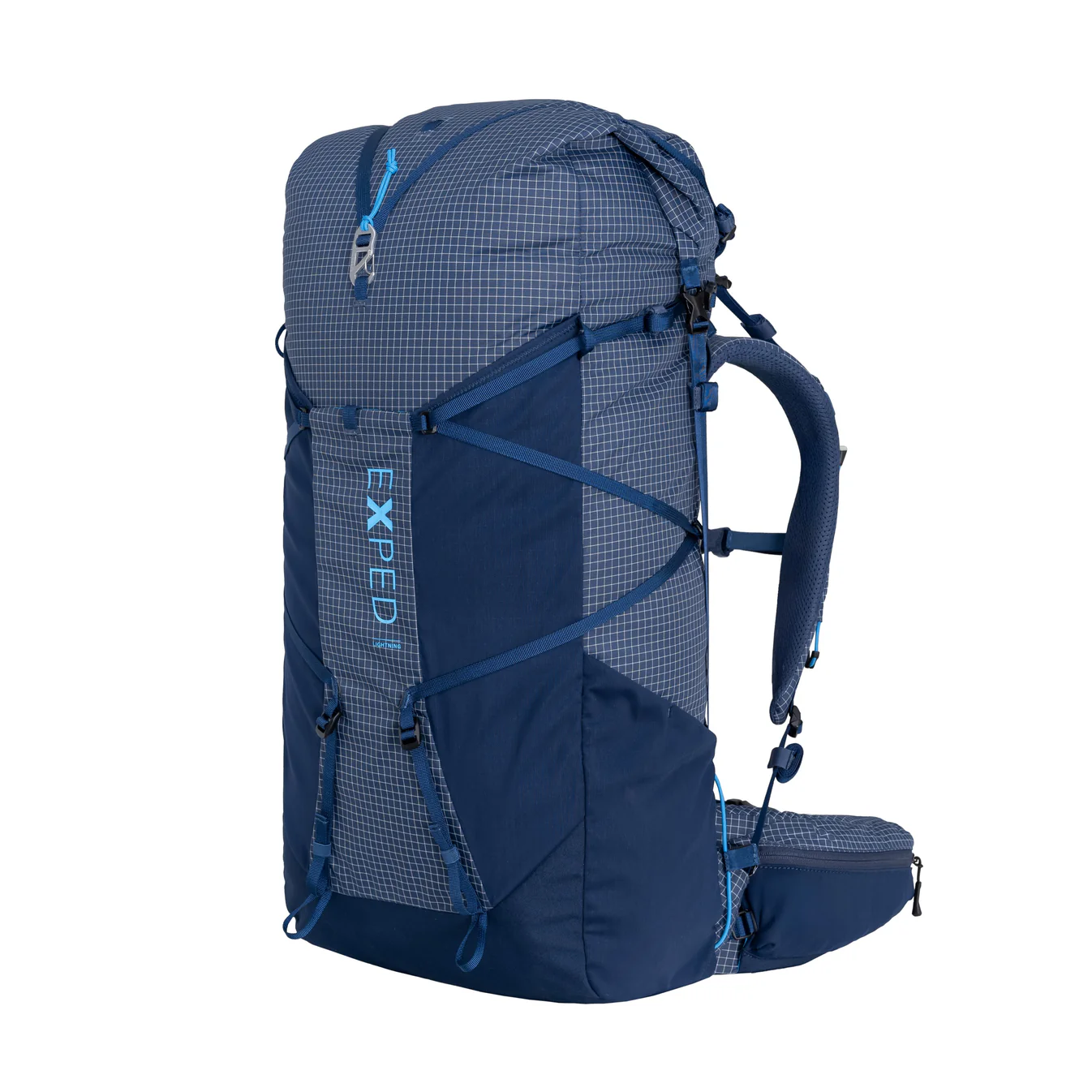
Exped has been engineering great camping equipment for the better part of this century, and entered the backpack game [***] years ago. Since then the Lightning pack has been redesigned [***] times, and the new redesign is well worth the upgrade. The big advantage to this pack over others is the cinch-ability of the exterior straps to add on even more than what the pack can handle on the inside.
The outside stash pocket has more than enough space for some wet rain gear or garbage to pack out without even really noticing what else is on there. Furthermore, the whole strap zigzags around to the top of the unit with a G-clip to cinch down the roll-top, allowing for a solid pack that didn’t feel too bulky for what you can put in there.
This pack is one of the best compromises for being lightweight and being able to pack in a ton of stuff, cinch it down, and have it stay close to the body. There is only one opening on the top, so it primarily suits people who pack mindfully — so that you’re not splaying out an item you need on the trail and having to pack everything again.
How I Tested The Best Hiking Backpacks
Testing backpacks the right way means actually living out of them, in a lot of different conditions. Thankfully, that’s something I get to do a fair bit of. I’m a CAA avalanche educator and ski guide based here in coastal BC, and between guiding, filming, and my own time in the Coast Mountains, a pack rarely gets a day off.
Over the past few seasons I’ve been lucky enough to be sent dozens of backpacks to demo across every use case I could throw at them: trail runs, full-day missions, overnights, and longer hauls with a heavy guiding load. The packs that made this list are the ones I kept reaching for once the novelty wore off.
My criteria are pretty simple, and they all start with one question: how does my body feel at the end of a long day? Comfort under load is the number-one filter. A pack can have every feature in the world, but if it leaves my shoulders or hips wrecked, it’s out.
From there I look at how the pack carries weight (frame, suspension, and fit), how durable the materials are when I push through brush and rock, and how well it sheds the wet — which matters a lot in this part of the world. Then come the secondary things: how easy it is to get at my gear on the move, the pocket layout, and whether the design earns its weight rather than just adding it.
What to Look for When Buying a Hiking Backpack
The “best” pack really depends on what you’re doing with it. Here are the questions I’d ask before buying, roughly in order of importance.
Capacity: How long are your trips? A day pack or fast-and-light vest lives around 20–30L, an overnight or weekend pack sits around 40–50L, and multi-day or gear-heavy missions push into the 60L+ range.
Fit & Torso Length: This matters more than almost anything. Does the pack match your torso length, and can you dial in the harness and hip belt? A correctly fitted 60L will feel better than a poorly fitted 40L every time.
Frame & Suspension: Does it have a frame that transfers weight onto your hips, where your legs can carry it? Frameless vests are great for light, fast days; for heavier loads you want real structure — aluminum or carbon stays.
Weight vs. Load: A lighter pack is nice until it can’t carry your load comfortably. Check the manufacturer’s recommended load range and be honest about how much you actually carry.
Access & Organization: Top-loader, panel zip, or roll-top? How easily can you reach the gear you need without unpacking everything? Hip-belt and shoulder pockets are a small thing that make a big difference on the move.
Water Resistance: Few packs are truly waterproof. If you hike somewhere wet (hello, BC), assume you’ll want a rain cover or a dry liner, and check whether one is included.
Durability & Materials: Higher-denier fabrics and reinforced high-wear zones last longer if you’re hard on gear. Bonus points for recycled or bluesign-approved materials and PFAS-free DWR.
Price & Warranty: Is the juice worth the squeeze, and how well does the company stand behind the pack? A solid warranty can make a pricier pack the cheaper option over time.
Frequently Asked Questions
What size backpack do I need for an overnight hike?
For a single overnight, something in the 35–50L range is the sweet spot. The Yeti Skala 40L is a great example — big enough for a sleep system, food, and layers, without tempting you to overpack.
Are ultralight backpacks worth it?
If you cover big miles and have your other gear dialed, yes — shaving pounds off your back adds up over a long day. The catch is that many ultralight packs sacrifice comfort and structure, which is exactly why a framed option like the Shadowlight Carbon 60 stands out.
What’s the difference between a hiking backpack and a trail running vest?
A running vest hugs your torso with soft straps and front pockets for flasks and snacks, prioritizing freedom of movement over capacity. A pack like the Talon Velocity 30 splits the difference — vest-style harness, but with enough room for a lock, layers, and water.
How much weight can a hiking backpack carry comfortably?
It depends on the frame. Vest-style packs are happiest under ~25 lb, framed ultralight packs handle up to roughly 40 lb, and a heavy-duty pack like the Aether Plus is built for 30–60 lb. A good rule of thumb is to keep your loaded pack under about 20% of your body weight.
Do I need a rain cover for my hiking backpack?
In a wet climate, almost certainly. Most packs are water-resistant but not waterproof, and exposed zippers can let water in. Some packs (like the Aether Plus) include a cover; for the rest, a cover or a dry liner inside the pack is cheap insurance.
Final Thoughts
The right backpack is the one that disappears on your back and lets you focus on where you’re going. If I had to pick just one, the Yeti Skala 40L earns the overall nod for the way it balances durability, comfort, and quick access. But the best pack here really comes down to your mission — fast and light, ultralight with structure, or hauling a heavy load deep into the mountains. Whatever you choose, get the fit right, take care of it, and it’ll keep getting you out there for years.

Steve Andrews is a lifelong adventurer since before he could walk. A skier since age 2, snowboarder since 11, he began his guiding career in 2007. He has a passion for teaching people how to fish, and helping them discover their own power in the mountians. He started Alpine Islands to give people a different take on achieving mastery in the wild (hint: you’re never a master of Mother Nature). He lives in Horseshoe Bay, British Columbia with his partner and two kids.