Tested by
Steve Andrews
Where
Whistler Blackcomb, the Sea to Sky backcountry, and Mount Logan
How long
Two years, plus 26 days on Mount Logan (-40º C)
Products tested
8
Photos
Steve Andrews and Lindsay Gough
In this guide
- How I tested
- At a glance
- Best heavy
- Best active
- Best high-output
- Best natural
- Best one-piece
- Best synthetic
- Most innovative
- Best solo layer
- How to choose
- FAQ
- The final word
This page uses affiliate links to help pay the bills. We only recommend products we’ve tested in the field and actually enjoy. Read our Gear Review Policy for more info.
A good thermal baselayer is truly worth its weight in gold. As someone who spent many years just getting the cheap 2-pack from Costco just to have something, I finally saw the light when trying a real base layer that didn’t stick to me and leave me cold afterward. Having a good baselayer (or thermals, or long johns, or whatever you choose to call them) can be the difference between enjoying the harsh conditions or being beaten by them.
Here’s a list of my favourite baselayers over the years, tested from sea level to a high-elevation expedition where it stayed attached to my body for 26 days. Each one serves a different purpose, and it’s wise to get a few different weights to match the conditions. Each of them, though, will be light years ahead of any cheapo model. It’s an investment, for sure, but a worthy use of money to stay warm and dry all winter.
Bottom Line: There’s no single best baselayer, only the best one for how hard you’re working. For cold days on the move, the Smartwool Intraknit Thermal Max is the one I’d grab; the Icebreaker 200 Oasis is the everyday workhorse; and if you sweat hard, Mammut’s Tree Wool tights breathe on another level.
How I Tested
Testing out the best baselayers for skiing or snowboarding isn’t exactly rocket science, but there is still some rudimentary science. I set out to replicate the same conditions for each garment, trying to ensure that there is little variation other than the different baselayers underneath.
This happened by getting into the mountains after a fresh dump of snow, both in the resort at Whistler Blackcomb and in the surrounding backcountry. The conditions for the week varied between -5º and -10ºC, which is probably the ideal range for comfort as well as good snow.
Both are important, because in a resort, you are sitting in a chair for 10-15 minutes at a time, waiting for the next run. This can be chilly without the right gear. The backcountry is a different story, as skinning up can be quite the workout. As such, you need something that can regulate the heat well and not trap it in.
Each day I tried to replicate the same runs – top to bottom laps in Whistler which involves over a mile of vert, and a trip up Sky Pilot mountain off the Sea to Sky Gondola. Doing it all in the same week allowed for notes to be fairly similar on conditions, which made the results fairly straightforward.
I also had a trip to Mount Logan, filming a documentary for National Geographic for 26 days at high altitude. The -40 temps were enough to know what is needed in a good baselayer. However, there wasn’t much testing beyond the binary yes/no, and I couldn’t pack too many garments along to make it objective.

The Mammut Tree Wool tights came later. So far I’ve worn them on fall hikes and for everyday cold-weather use around BC in 2026, and they’ll get the full winter treatment this season.
Testing Criteria
The main components for testing entailed:
- Comfort/Fit: How the base layer felt on the body
- Warmth: Did it keep the body warm? Was it too warm? How smooth was the fabric?
- Breathability: How did the base layer feel when the body was working in high gear?
- Mobility: How easy was it to move? This includes both skinning up and riding (hard) down.
- Craftsmanship: Did any seams feel out of place? Were there any loose threads?
Free · Preseason Starter Kit
Start the season right.
Four printable Field Cards and a six-week plan to get your fitness, gear, rescue skills, and crew dialled before the snow flies.
Card 01 lands in your inbox right away.
At a Glance
| Product | Award | Main fibre | Best for | Price |
|---|---|---|---|---|
| Smartwool Intraknit Thermal Max | Best Heavy Baselayer | Merino (97%) | Cold active pursuits | ~$160 USD |
| Icebreaker 200 Oasis | Best Active Baselayer | Merino (100%) | Go-getters who are moving more often than not | ~$105 USD · |
| Mammut Tree Wool Thermal FL Tights | Best High-Output Baselayer | Lyocell-merino blend | High-output activities in cold weather | ~$119 USD |
| Arms of Andes Half Zip | Best Natural Baselayer | Alpaca (100%) | People prioritizing sustainability and warmth | ~$135 USD · |
| Airblaster Ninja Suit | Best One-Piece Baselayer | Merino blend | Head-to-to seamless warmth | ~$260 USD · |
| Patagonia Capilene | Best Synthetic Baselayer | Recycled polyester | Ultralight fans who don’t overheat | ~$109 CAD |
| Paka Thermal Crew | Most Innovative | Alpaca-merino-Tencel blend | Moderate to lower activity | ~$145 USD |
| Arc’teryx Rho SV Zip Neck | Best Baselayer For A Solo Layer | Hollow-core polyester fleece | High-output activity where layering is optional | ~$140 USD |
Specs verified October 2026 against manufacturer and major retailer pages. Prices drift by retailer and region.
Best Heavy Baselayer: Smartwool Intraknit Thermal Max
Sometimes it’s hard to differentiate base layers in a sea of merino and other fibres claiming to be the best. But Smartwool has raised the bar with their Intraknit collection by creating a 3D pattern without tons of seams looking like patchwork to reinforce the high-use areas such as elbows, knees, and hips.
Despite feeling a bit bulkier than your average under layer, the stretch in the fabric is remarkably responsive, allowing for high-performance movement for all the spins, stomps, and spills that come with a day of shredding hard.
And while it performed well even in -10º C temperatures, I never felt overheated, even on long tours. They really seem to have cracked some type of code here for the perfect balance of warmth, stretch, and protection. Innovations in base layers don’t come every day but Smartwool’s Intraknit fabric is one to write home (or in a blog post) about.

Smartwool Intraknit Thermal Max Merino 1/4 Zip (Men’s)
~$160 USD
| Bottom line | Excellent movement, great protection in key areas, excellent warmth for both tops and bottoms make this a big contender. The bulk doesn’t feel bulky as it’s in the high-wear areas, but if you like slim outer garments it might feel constrictive. |
|---|---|
| Fabric | 97% merino wool, 2% polyamide, 1% elastane |
| Weight | 298 g (10.5 oz) |
| Features | Quarter zip (21 cm), terry-loop insulation with mesh venting, ribbed reinforced elbows, knit-in reflective details |
| Fit | Slim |
| Best for | Cold active pursuits |
| Tested | Whistler resort laps and Sky Pilot tours, −5 to −10°C |
Worked
- Warm and comfortable, yet breathable
Didn’t
- You need a lighter midlayer to balance it out.
Best Active Baselayer: Icebreaker 200 Oasis
Icebreaker’s 200 Oasis is everything you’d expect in a good thermal base layer. It is comfortable, breathable, and kept me warm in both active conditions and sitting still. It’s also remarkably thin for its warmth, which is a testament to good quality Merino wool. But on top of the materials, it’s the craftsmanship that stands out, and this has stood the test of time. Over 100 days wearing it, from cold storm days to spring hikes, and it’s still going strong.
Merino really does live up to the hype, and so does Icebreaker. Sure it’s gotten bigger but as far as I’ve seen, the quality hasn’t suffered. That just means better quality control and new product innovation. For a standard baselayer to keep you warm and dry while skiing and riding, this one hits all the right notes.
You can also check out an in-depth review of the Icebreaker 200 Oasis that gives you a bit more detail.
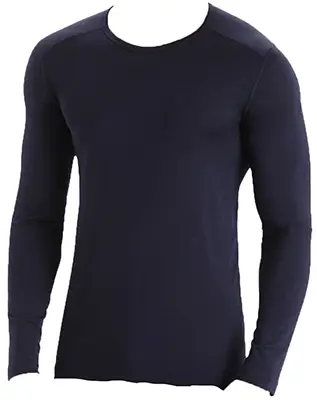
Icebreaker Merino 200 Oasis Long Sleeve Crewe (Men’s)
~$105 USD
| Bottom line | Icebreaker is and has been one of the top base layer brands for a while for a reason. The stuff is made well, holds up over time, and is comfortable. There’s not much that is bad to say about it, really. |
|---|---|
| Fabric | 100% merino wool jersey, 200 g/m² |
| Weight | 217 g (7.6 oz), size M |
| Features | Flatlock seams, offset shoulder seams for pack straps |
| Best for | Go-getters who are moving more often than not |
| Tested | Over 100 days, from cold storm days to spring hikes |
Worked
- All merino
- Well made
Didn’t
- Might be too cool for some instances
Best High-Output Baselayer: Mammut Tree Wool Thermal FL Tights
It’s the perfect blend of natural and synthetic, where the synthetic spandex gives the stretch, without being overbearing at only 6%. And the natural side of it has everyone’s favourite wool, merino, but also includes a fibre called lyocell.
Merino is generally a bit itchy, but the big standout was the near-cool feel of the material. I can only put it down to the lyocell, which I’ve never tried before but am an instant fan. As soon as I got active, I could tell that the breathability of the material was also on another level. Despite being active, they still felt cool to the touch. Honestly, I was kind of blown away.
Although I haven’t taken these into the backcountry yet, the fact that they kept me warm outside and didn’t collect sweat told me all I need to know. They work and are something unique. My guess is that you probably need to be active for it to be better than merino in the warmth department. But consider this one of the best endorsements from someone whose only benefit was getting a free sample, and who is stoked to take them on big climbs this winter.
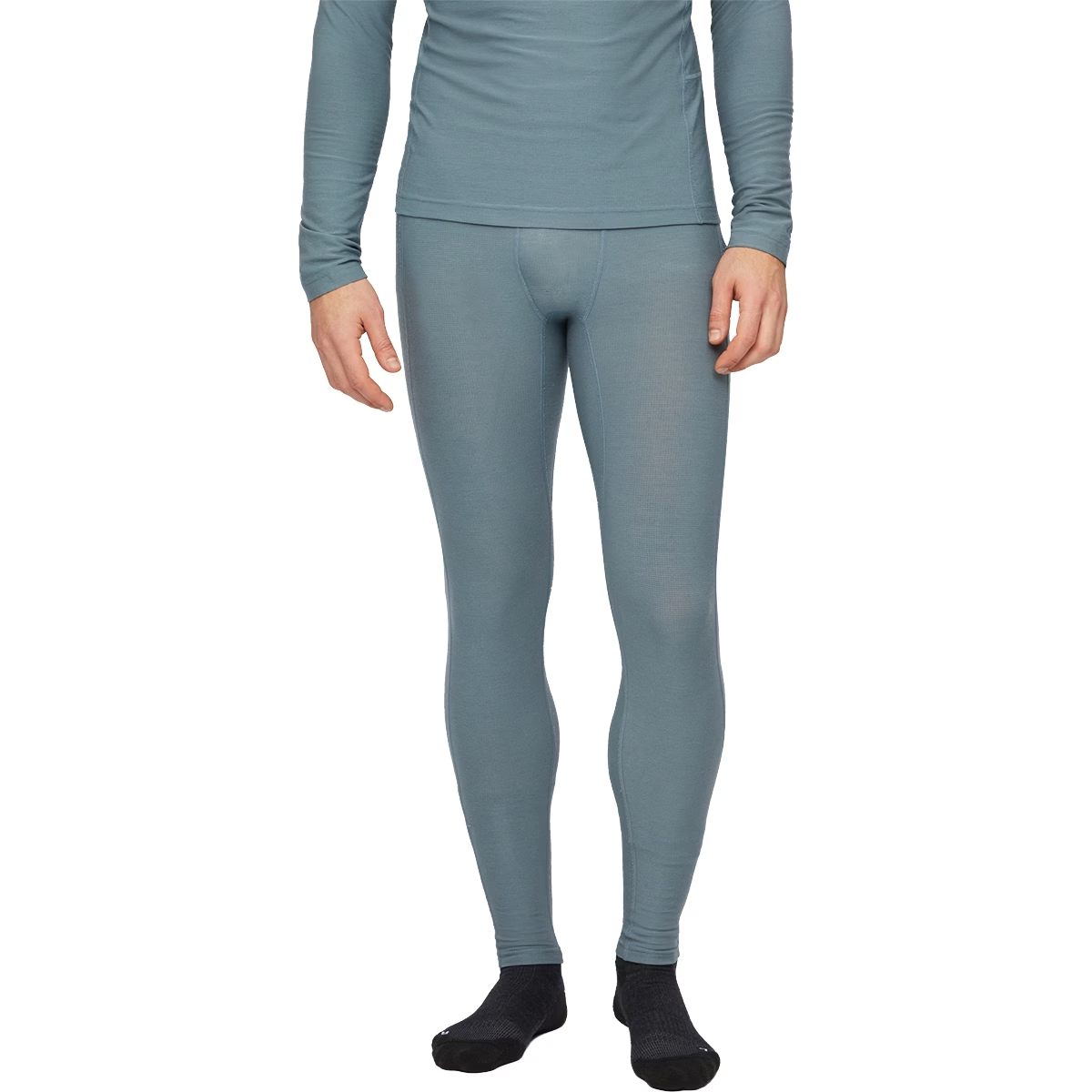
Mammut Tree Wool Thermal FL Tights (Men’s)
~$119 USD
| Bottom line | One of the most comfortable baselayers out there. |
|---|---|
| Fabric | 61% lyocell, 33% merino wool, 6% spandex, waffle knit |
| Weight | 170 g (size M) |
| Features | Gusseted two-seam crotch, seamless sides, flat elastic waistband with high-cut back |
| Fit | Tight |
| Best for | High-output activities in cold weather |
| Tested | Fall 2026, hiking and everyday cold-weather use in BC |
Worked
- Breathability and warmth had the best combo without feeling like I was cooking in them
Didn’t
- So far, I’m yet to find anything wrong with these.
Read the full Mammut Tree Wool Thermal FL Tights review →
Best Natural Baselayer: Arms of Andes Half Zip
Alpaca wool has been around forever, but only recently has it hit the mass-market consumer circuit in the west. But what hilltop villages in South America have known for centuries is now becoming more mainstream due to Alpaca wool’s outstanding properties. Merino has been the leader for quite some time, but companies pushing Alpaca are trying to give it a run for its money.
Arms of Andes is one of the leaders for manufacturing alpaca wool baselayers. I really enjoy wearing their half zip top and pants. They are warm, soft, and comfortable, with the smallest amount of stretch to allow for good movement without letting any air in. The softness is definitely a step above Merino, which can tend to get itchy, especially on the chest (at least for this reviewer).
There isn’t much in the negative side for Alpaca wool, only that perhaps you’ll find it a bit bulkier than Merino, and in some cases, a little too warm when really pushing yourself hard. But for cold weather, or lower activity that isn’t high-endurance mountaineering, the softness and warmth of Alpaca wool, as well as its low environmental footprint, makes it worth checking out.

Arms of Andes 300 Alpaca Wool Half Zip (Men’s)
~$135 USD
| Bottom line | Alpaca wool is super soft. It’s a bit on the thicker side, but the warmth is as good as it gets, and a touch warmer than merino. |
|---|---|
| Fabric | 100% alpaca wool, 300 g/m² |
| Features | Half zip |
| Best for | People prioritizing sustainability and warmth |
| Tested | Whistler resort laps and Sky Pilot tours, −5 to −10°C |
Worked
- Soft wool, very little lint
Didn’t
- On the bulky side
- Limited retail store options
Best One-Piece Baselayer: Airblaster Ninja Suit
Of all the different products tested for winter gear, Airblaster’s Ninja Suit ranks high in terms of utility, warmth, and sheer cool factor. Of course, it’s not exactly cool in the fashion sense, being that very few people will actually see you wearing it (at least in its full entirety). It’s also not exactly cool in the warmth sense, being that it’s meant to keep you warm. Dad jokes aside, the Merino version actually does a great job in the temperature regulation department.
It’s all the little things that make the Ninja Suit stand out as a must-have. The full-width butt zipper for easy evacuation is a welcome feature, as is the drawstring in front to keep everything tidy. Thumb holes help the sleeves from bunching up, and the hood keeps your head warm even if that’s all you’re wearing.
Now that it’s been out a few years and is popular as ever, the Ninja Suit offers a few different options in both materials and styles. They even have a kids version for the little rippers to stay warm as well. But there will be something that speaks to you, no doubt. And you might want to get a few pairs because you will want to have one while the other is in the wash… I made the mistake of only having one and prolonging the wash interval because I didn’t want to not have it available. Pee-you!

Airblaster Merino Ninja Suit (Men’s)
~$260 USD
| Bottom line | Although very few people will actually see you in this, those who do will admire it. But those who don’t will admire how comfortable you are all day as it’s the perfect onesie for getting rowdy in. |
|---|---|
| Fabric | 55% merino wool, 37% nylon, 8% elastane |
| Features | 350° waist zip, full-length front zip, waist drawcord, fitted hood, thumb loops |
| Best for | Full body seamless warmth |
| Tested | Whistler resort laps and Sky Pilot tours, −5 to −10°C |
Worked
- Full-width butt zip and front drawstring
- Thumb holes and a hood that keeps your head warm
Didn’t
- You’ll want two, because one is always in the wash
Best Synthetic Baselayer: Patagonia Capilene
Synthetic is a broad term, but for the most part, we’re talking polyester here. And polyester is just a fancy word for plastic fibres woven together to make all kinds of textile materials. Especially when talking the outdoor industry, it’s pretty much out there ubiquitous these days.
Patagonia’s brand has become synonymous with environmental responsibility. They have led the industry for decades with innovations in textile manufacturing, and continue to do so. With their Capilene series, the brand expands on their environmental responsibility to offer baselayers that are fair trade certified, and whose polyester is 100% recycled, both good things for our planet.
I’m not a huge fan of synthetic base layers due to the breathability factor. But Patagonia did in fact use some innovations to make it a bit better. Polyester has a reputation for trapping in sweat, and while the capilene series is no different, it does have the HeiQ antimicrobial treatment to keep the smell at bay.
The upside to polyester is how lightweight it is. Indeed, it barely feels like there’s anything there, coming in at only 6 oz. So for ultralight purists, this is a good option. Still, polyester is polyester, but if you choose to go the synthetic route, you might as well do as little environmental impact as possible.

Patagonia Capilene Midweight Crew (Men’s)
~$109 CAD
| Bottom line | [DRAFT — review] Featherlight and responsibly made, but polyester is polyester: it won’t breathe like wool. |
|---|---|
| Fabric | 100% recycled polyester diamond-grid knit, 147 g/m², with HeiQ odour control |
| Weight | 176 g (6.2 oz) |
| Features | Thumb loops, raglan sleeves, underarm gussets, Fair Trade Certified sewn |
| Fit | Slim |
| Best for | Ultralight fans who don’t overheat |
| Tested | Whistler resort laps and Sky Pilot tours, −5 to −10°C |
Worked
- Lightweight
Didn’t
- Not as breathable as Merino/Alpaca
- Microplastics
Most Innovative: Paka Thermal Crew
We’ve already stated that Alpaca wool is a good thing, but it’s worth stating again. It really is warmer, ounce-for-ounce, than anything else and probably one of the most sustainable fibres on Earth. Paka is a brand with a bunch of US money behind it but from everything we have seen from them, they are one of the good ones out there.
The blend of alpaca wool, merino, and a fibre called Tencel which uses wood pulp primarily from eucalyptus trees, you can tell they care about sustainability. Their supply chain is a bit more complicated though which can always muddy the waters for vetting the claims though, so more research would be needed to verify before doing their PR work for them. But it’s a comfortable pair of long underwear, no doubt.
I found this to get pretty warm when hiking, so this is the type of base layer that does well in a resort setting where you might be idle for a few minutes (or longer) at a time. It’s breathable though, even when warm, but you will definitely get a sweat on if exerting yourself for a long time in these or if the temperature outside is above freezing.

PAKA Thermal Crew (Men’s)
~$145 USD
| Bottom line | This is a warm, functional base layer that uses sustainable materials. It’s well made and insulates well for its weight. |
|---|---|
| Fabric | 40% royal alpaca, 40% merino wool, 20% Tencel lyocell, 2×2 rib knit |
| Features | Thumb holes, raglan sleeves, flat coverstitch seams |
| Fit | Slim |
| Best for | Moderate to lower activity |
| Tested | Whistler resort laps and Sky Pilot tours, −5 to −10°C |
Worked
- Fast warmup time
- Environmentally responsible materials
Didn’t
- Expensive
- Limited in-store options
- Shrinks in the dryer
Best Baselayer For A Solo Layer: Arc’teryx Rho SV Zip Neck
While we tend to shy away from synthetic materials due to microplastics, we have to give the Arc’teryx Rho SV a mention because it functions as a great baselayer, no doubt… but can also be used as the only layer if need be. This is great for long alpine ascents in the springtime when you’re absolutely cooking. The thicker weave allows for some wind blocking, which simply didn’t happen on any of the other base layers we tested.
So, there is definitely a time and place for synthetics. And when only wearing one layer, it’s nice to have a small pocket to hold small items like your sunglasses, sunscreen, a neck tube, or something else that may need to come and go as the sun comes out and/or retreats.
Plus, you get the added benefit of using the top for other activities such as running or hiking in colder weather, with the ability to zip down and flush some cool air throughout, especially when moving. Moisture management was fine, and there was minimal stink – especially compared to the Patagonia synthetic material. All in all, a solid (albeit expensive) choice if you don’t like the itch of wool.

Arc’teryx Rho SV Zip Neck (Men’s)
~$140 USD
| Bottom line | A synthetic I’ll actually reach for: it breathes, blocks a bit of wind, and works as the only layer on hot spring climbs. |
|---|---|
| Fabric | Hollow-core polyester fleece |
| Weight | 260 g (9.2 oz) |
| Features | Zip neck with extended collar, chest pocket |
| Best for | High-output activity where layering is optional |
| Tested | The North Shore, 20km from Arc’teryx HQ |
Worked
- Very breathable for a synthetic layer
- Zip pocket on chest
Didn’t
- Microplastics

How to Choose
Picking the right base layer isn’t just about grabbing the first Merino wool shirt you see (though that’s a solid start). It depends a lot on your own personal preferences, activity level, and budget. Here’s what to look for:
Material
The fabric you choose will determine how well your base layer performs in different conditions. Here are the main contenders:
- Merino Wool – Naturally breathable, moisture-wicking, and odour-resistant. It’s great for both high-output activities and cold chairlift rides. If you want a premium Merino option, Icebreaker 200 Oasis is a classic, and Smartwool Intraknit Thermal Max takes it up a notch with strategic reinforcements.
- Alpaca Wool – Less common but ultra-soft, warm, and sustainable. It has better warmth-to-weight than Merino, but it’s a bit bulkier. Arms of Andes Half Zip is a great example if you want something unique.
- Synthetic (Polyester/Blends) – Quick-drying, lightweight, and durable. These often have added tech for moisture control, like Patagonia Capilene Midweight, which uses HeiQ odour protection to combat stink. The tradeoff? Less breathability than wool, and it tends to hold onto sweat longer.
- Blends (Wool + Synthetic) – Some brands mix Merino with a touch of elastane or nylon for extra stretch and durability. If you want something with reinforced movement, Smartwool Intraknit is a great pick.
Weight & Warmth
Base layers come in different weights depending on how much insulation you need:
- Lightweight (150-200gsm) – Best for high-output activities like ski touring. These wick sweat fast but don’t add much warmth. The Icebreaker 200 Oasis is a solid example.
- Midweight (200-300gsm) – The most versatile choice for all-around resort and backcountry use. If you want warmth without bulk, Smartwool Intraknit hits a sweet spot.
- Heavyweight (300gsm and above) – For the coldest days when staying warm is the top priority. The Arms of Andes Alpaca Half Zip is an excellent choice if you want max warmth.
Fit & Mobility
A good base layer should fit snugly but not restrict movement. Here are some examples of a good fit:
- Stretch Panels & Articulation – Some base layers, like Smartwool Intraknit, have targeted reinforcements in high-movement areas.
- Seam Placement – Flatlock seams reduce chafing, which is crucial when layering under a jacket.
- One-Piece Options – If you want the ultimate in warmth and convenience (plus ninja vibes), the Airblaster Ninja Suit offers full-body coverage with a well-placed zipper for easy bathroom breaks.
Durability & Stitching
Since base layers take a beating, good construction makes a difference. You want to see:
- Flatlock Stitching – Prevents irritation and is essential for comfort.
- Reinforced Zones – Areas like elbows, knees, and shoulders tend to wear out first. The Smartwool Intraknit has extra durability in these spots.
- Odour Resistance – If you’re wearing the same layer for multiple days (hello, backcountry trips), wool naturally resists smells, while synthetics like Patagonia Capilene use antimicrobial treatments.
Moisture Management & Breathability
Sweating is inevitable, but staying wet will ruin your day. A good base layer should wick sweat away from your skin and dry quickly.
- Merino & Alpaca Wool – Naturally regulates temperature and keeps you dry even when damp.
- Synthetic Blends – Polyester dries the fastest but can feel clammy (and begin to stink really fast) if it doesn’t breathe well. Patagonia’s Capilene has improved breathability over older synthetic layers. But nobody has cracked the code compared to natural fibres. Plastic ain’t porous, no matter what you call it.
Extra Features
- Thumb Loops – Keeps sleeves from bunching up when layering. Found in some Icebreaker and Smartwool models, as well as the Ninja Suit.
- Zippered Necks – Great for ventilation. The Smartwool Intraknit Thermal Max and Arms of Andes Half Zip offer this feature.
- Hoods – Provide extra warmth and can replace a balaclava. The Airblaster Ninja Suit has one built-in.
Frequently Asked Questions
What is the best baselayer for skiing?
It depends on how hard you’re working. For cold days on the move I reach for heavier merino like the Smartwool Intraknit Thermal Max, and for high-output touring something more breathable, like the Icebreaker 200 Oasis or Mammut’s Tree Wool tights.
Is merino or synthetic better for skiing?
For me, merino or alpaca. Natural fibres breathe better and resist odour on their own, while polyester dries fast but holds onto sweat and stink and sheds microplastics. Synthetics still have a place as a solo layer, like the Arc’teryx Rho SV.
Is alpaca warmer than merino?
In my experience, a touch warmer and softer, but bulkier. That makes alpaca great for cold days and lower-output skiing, and sometimes a little too warm when I’m really pushing.
How should a ski baselayer fit?
Snug against the skin without restricting movement. A baselayer can only move sweat if it’s touching you, so skip anything baggy, and look for flatlock seams where your pack and jacket press.
Can you wear cotton as a baselayer for skiing?
Bad idea. Cotton soaks up sweat and holds it against your skin, which is exactly how you end up cold on the chairlift after a hard run.
The Final Word
A good base layer is the foundation of your layering system, and picking the right one can make or break your day on the mountain. Whether you go for a premium Merino layer like Icebreaker, an eco-friendly Alpaca option, or an ultralight synthetic like Patagonia Capilene, make sure it fits well, wicks sweat, and keeps you comfortable in all conditions.
Want to see more? Check out our Gear Review page for more in-depth reviews that aren’t bought and paid for by big companies. Support independent media! Cheers!

Steve Andrews is a lifelong adventurer since before he could walk. A skier since age 2, snowboarder since 11, he began his guiding career in 2007. He has a passion for teaching people how to fish, and helping them discover their own power in the mountians. He started Alpine Islands to give people a different take on achieving mastery in the wild (hint: you’re never a master of Mother Nature). He lives in Horseshoe Bay, British Columbia with his partner and two kids.