
Alpine Islands is reader-supported. When you buy through links on this page, we may earn a small commission at no extra cost to you. We only write about gear we’ve actually tested in the field. Read more about the Gear Review Policy here.
There are a multitude of hiking boots out there claiming they are the best. That’s marketing, for you. But each of us have our own unique style, needs, and fitness level, so the best hiking boots really depend on whose feet they are supporting.
But still, there are pairs that rise above the rest, outshining the competition in quality, comfort, and abillity to go the distance. As someone who grew up in the Coast Mountains of BC, I’ve been hiking since a very small age, when “going for a hike” was just exploring the backyard. Since then, I’ve worked as a guide, filmer, and photographer in mountain environments for over 20 years. I’ve also been testing hiking boots since 2022, and have tried well over 50 pairs thoroughly at this point.
The following is a list of what really shined above all else. I’m aware that everyone’s feet are different, and everyone has a different definition of what going for a hike may mean. So I tried to stick to the facts, and offer something that can help everyone from the casual day hiker to the overnight trekker. Take a look and hopefully there is something that will become your new best friend out on the trails.
The Best Hiking Boots of This Decade: Updated July 2026
Best Overall Hiking Boot: Lowa Renegade Evo GTX
Best Budget Hiking Boot: Merrell Moab 3 Mid Waterproof
Best Trekking Boot: Zamberlan Vioz GTX
Best All-Day Hiking Shoe: Danner Trail 2650
Best Lightweight Hiker: Arc’teryx Kopec GTX
Best Fast Hiking Shoe: Zamberlan Exotrail GTX
Best Barefoot-Style Hiking Boot: Vivobarefoot Tracker Forest ESC
Best Barefoot-Style Trail Running Shoe: Xero Scrambler Low EV
| Boot | Price | Best For | Weight | Upper Material | Outsole | Heel Drop |
|---|---|---|---|---|---|---|
| Lowa Renegade Evo GTX | ~$280 | All-day trekking, heavy loads | 590g | Nubuck leather | Vibram Rene Trac | 15mm |
| Merrell Moab 3 Mid WP | ~$150 | Budget / all-purpose | 495g | Pig suede leather + mesh | Vibram TC5+ | 11.5mm |
| Zamberlan Vioz GTX | $390 | Backpacking / trekking | 715g | Full-grain leather | Vibram 3D | 12mm |
| Danner Trail 2650 | ~$170 (~$190 GTX) | All-day hiking | 340g | Suede + textile | Vibram Megagrip | 8mm |
| Arc’teryx Kopec GTX | $180 | Lightweight, fast miles | 312g | CORDURA mesh | Vibram Megagrip (LITEBASE) | 7.7mm |
| Zamberlan Exotrail GTX | ~$240 | Speed hiking | 360g | Recycled mesh | Vibram Bayu Megagrip | 9mm |
| Vivobarefoot Tracker Forest ESC | $280 | Barefoot-style hiking | 525g | Wild Hide leather | Michelin ESC | 0mm |
| Xero Scrambler Low EV | ~$150 | Barefoot-style trail running | 261g | Synthetic mesh | Michelin Fiberlite | 0mm |
Best Overall Hiking Boot: Lowa Renegade Evo GTX
Bottom Line: A supportive, bombproof leather hiker built for long days and heavy miles — comfortable early, and better every season.
Weight: 590g per shoe
Upper: Heinen Terracare nubuck leather
Waterproofing: GORE-TEX lining
Outsole: Vibram Rene Trac
Made in: Slovakia
Price: ~$280
Pros: Comfortable early, superb traction, extremely durable
Cons: Stiff for casual use, leather needs upkeep
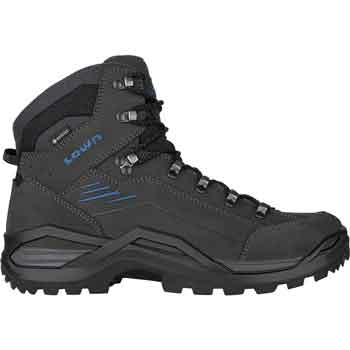
The Renegades are the best overall because it does pretty much everything pretty well. They are comfortable from day one, and only gets better. Two years in on mine and they’re still improving with every trip out. The GORE-TEX waterproofing holds. I’ve submerged these for minutes at a time without a drop getting through. The Vibram Rene Trac outsole is second to none for traction, even shedding mud in a downpour. The nubuck upper is built with fewer seams than the original Renegade, meaning fewer pressure points and fewer places to wear through.
These are closer to trekking boots than day hikers; rigid, and probably more than a casual hiker needs. The leather also asks for a bit more care than synthetic. But for serious hikers who want to go the distance with real ankle support on rough, uneven terrain, nothing else I’ve tested compares.
Read more about the Lowa Renegade Evo GTX in this review.
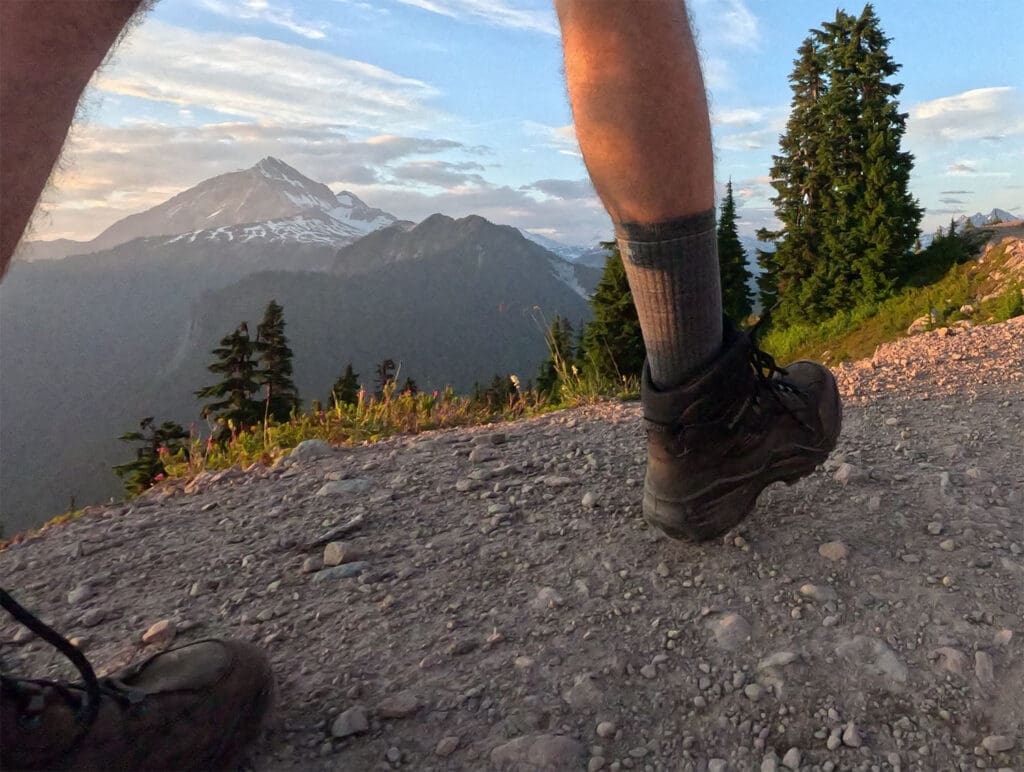
Best Budget Hiking Boot: Merrell Moab 3 Mid Waterproof
Bottom Line: A comfortable, waterproof do-it-all boot that punches well above its price. It’s equally at home on the trail or in the garden.
Weight: 495g per boot
Upper: Pig suede leather + recycled mesh
Waterproofing: Merrell proprietary membrane (not GORE-TEX)
Outsole: Vibram TC5+
Heel-to-toe drop: 11.5mm
Price: ~$150
Pros: Out-of-the-box comfort, grippy Vibram, hard-to-beat value
Cons: Slow to dry once soaked
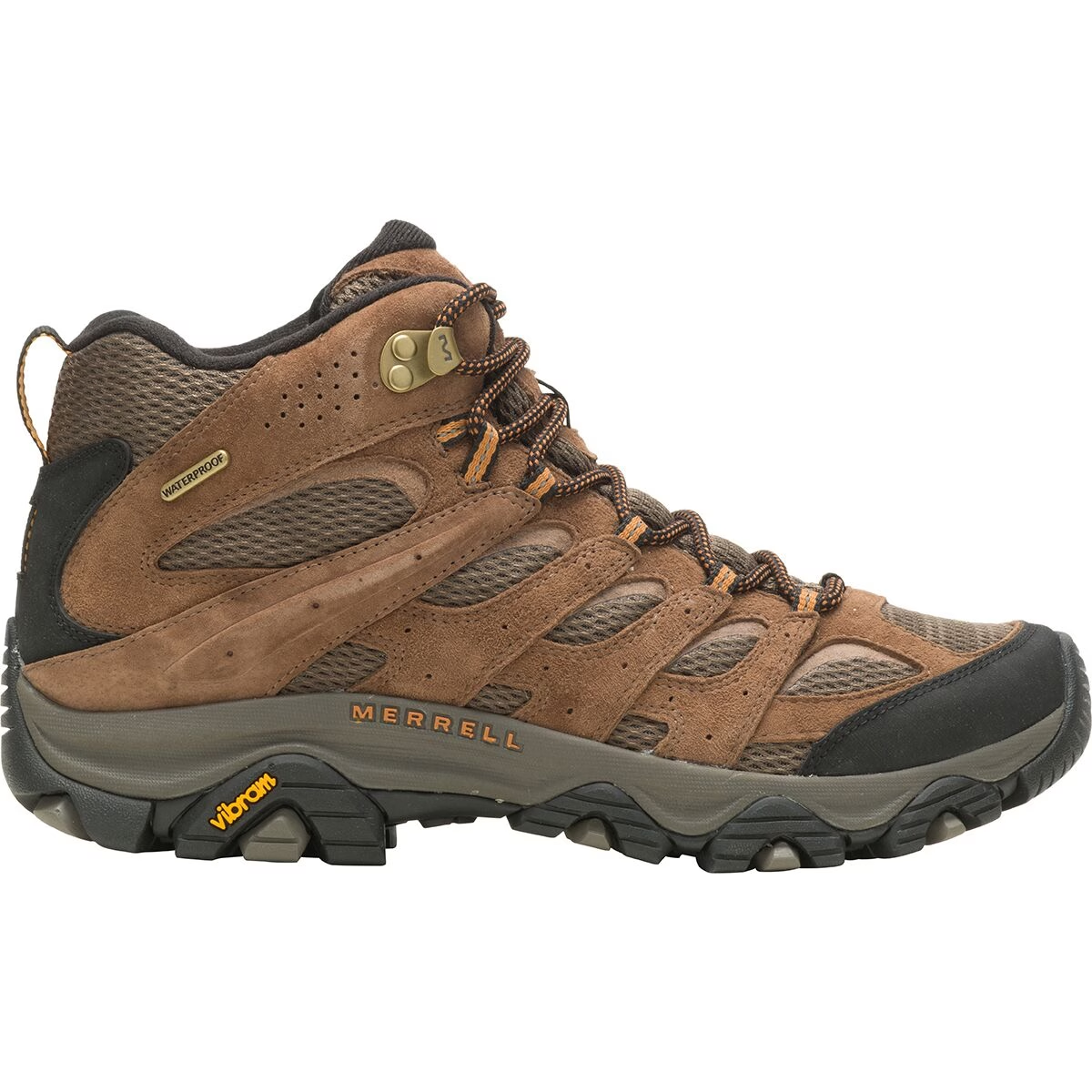
I once heard the Moab 3 Mid called “The Ultimate Dad Shoe.” Now that I’m a dad, I see the light. Nothing to notice pulling these on — no pinch, no stiff spots, no hot heel, no break-in period needed. The Vibram TC5+ outsole holds up well in the wet Coast Mountain climate, and the laces, webbing, and mesh lining are all 100% recycled. It’s small stuff on paper, but the kind of detail I like seeing on an entry-priced boot.
The waterproofing is Merrell’s own membrane, not GORE-TEX, and it holds water for a while once it’s soaked. It’s worth knowing if you’re camping and won’t get a chance to dry them out. But for people who value comfort and value over bells and whistles, and want a boot that pulls double duty in the yard, this is hard to beat.
If you want to read more about the Moab 3, check out this in-depth review.
Best Trekking Boot: Zamberlan Vioz GTX
Bottom Line: [DRAFT — needs your take] Zamberlan’s best-selling boot, built for rugged, steep backpacking terrain.
Weight: 715g per boot
Upper: Hydrobloc full-grain leather
Waterproofing: GORE-TEX Performance Comfort
Outsole: Exclusive Vibram 3D
Made in: Italy
Price: $390
Pros: Durable and Comfortable
Cons: Too much boot for most people
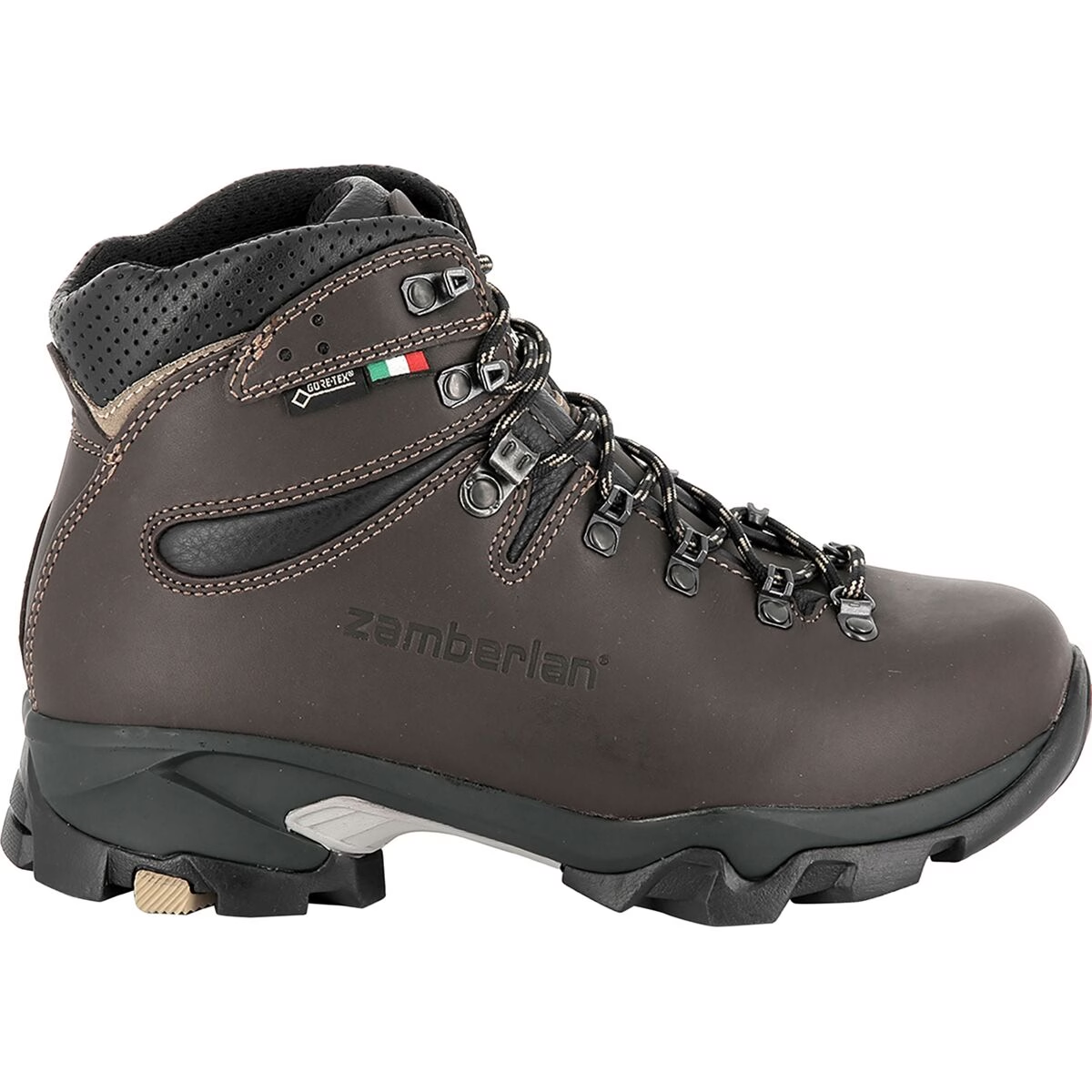
Italian leather has a reputation for a reason. Same with their craftsmanship. So Italian leather boots that were made in Italy speak for themselves. And the Vioz does just that… it shuts up and gets you hiking.
The boot has a natural camber underfoot that makes you want to keep moving. It’s a bit to get used to initially, but with a heavy pack it saves a ton of energy as it rocks you into the next step. Add in the premium comfort adn thick sole, and you can go the distance in these boots without much complaining. Just be sure you break them in before doing anything crazy, it takes a good 50 miles or so before you can really feel them start to wear in.
While the Vioz is an amazing hiking boot, it can also be too much boot for many people. In fact, I’d say most people won’t get the benefits of what these offer and should stick to something lighter. But for those who carry heavy packs and like to spend days, if not weeks in the mountains…you’re welcome.
Best All-Day Hiking Shoe: Danner Trail 2650
Bottom Line: A lightweight, comfortable trail shoe that is also great for wearing around town.
Weight: 340g per shoe (24oz/pair)
Upper: Suede + textile
Waterproofing: Non-waterproof (GTX version available, ~$20 more)
Outsole: Vibram Megagrip
Heel-to-toe drop: 8mm
Price: ~$170 (~$190 GTX)
Pros: Lighweight, long lasting Cons: Cushioning is on the thicker side for a fast shoe
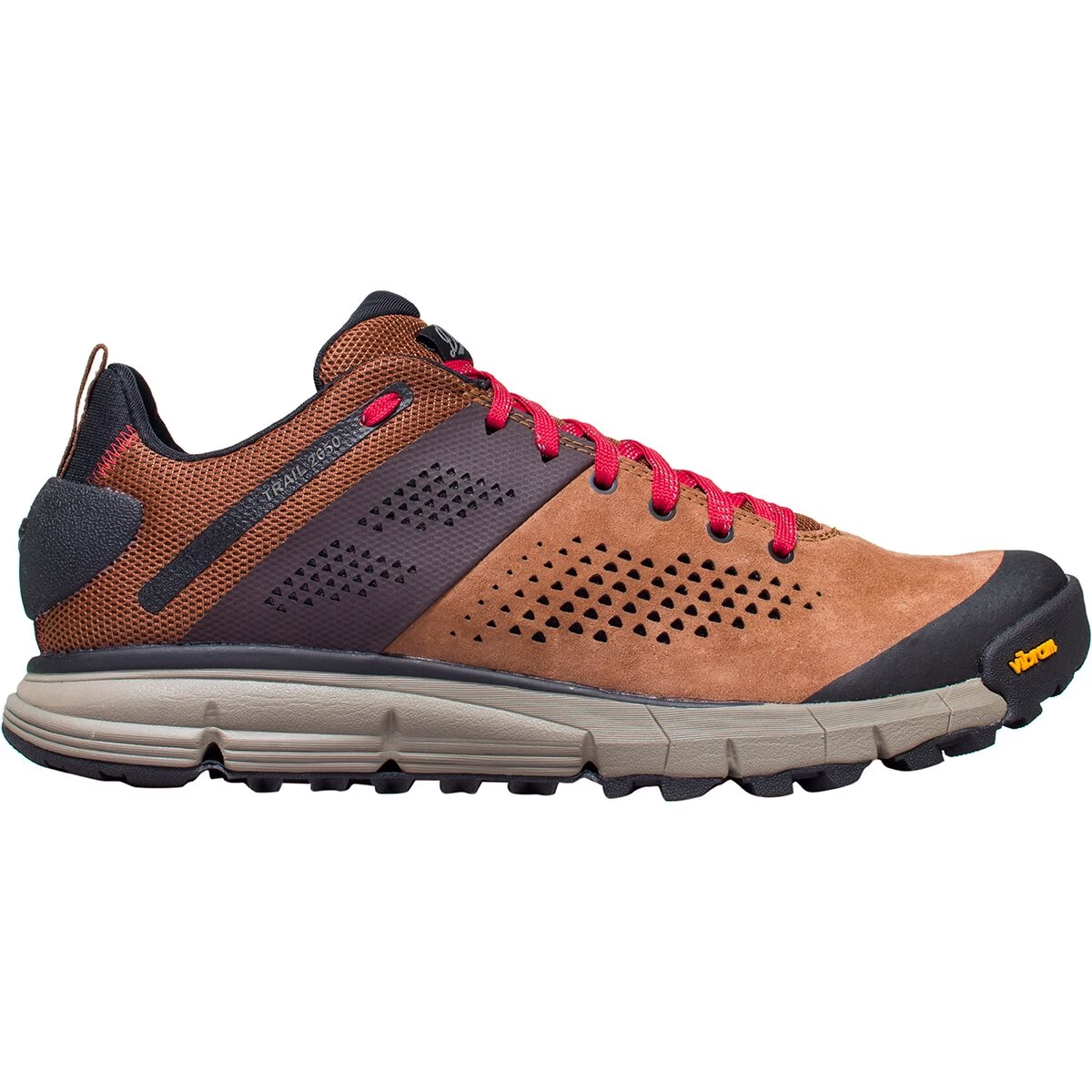
This shoe has quickly become a favorite for wearing anywhere, and anytime. It’s remarkably great on the trails, and is built to go the distance. With enough cushioning to help with the fatigue yet not feel overbearing, it does sometimes feel like it’s got a bit too much for serious hikers. But let’s face it, most of us aren’t really that serious as in crushing major thru-hikes for months at a time. But even some thru-hikers do swear by these shoes. However, when the time comes where you do want a thicker midsole, this one is a great option.
I have the ventilated kind because I wear so much Gore-Tex in the other pairs. Some people aren’t fans, though, but there is in fact a Gore-tex version out there too. So it’s really up to you.
Best Lightweight Hiker: Arc’teryx Kopec GTX
Bottom Line: [DRAFT — needs your take] A featherweight, waterproof low-top hiker that trades some protection for pure agility.
Weight: 312g per shoe
Upper: CORDURA mesh
Waterproofing: PFAS-free GORE-TEX
Outsole: Vibram Megagrip with LITEBASE
Price: $180
Pros: Lightweight and grippy Cons: Insole needs replacement before being comfortable
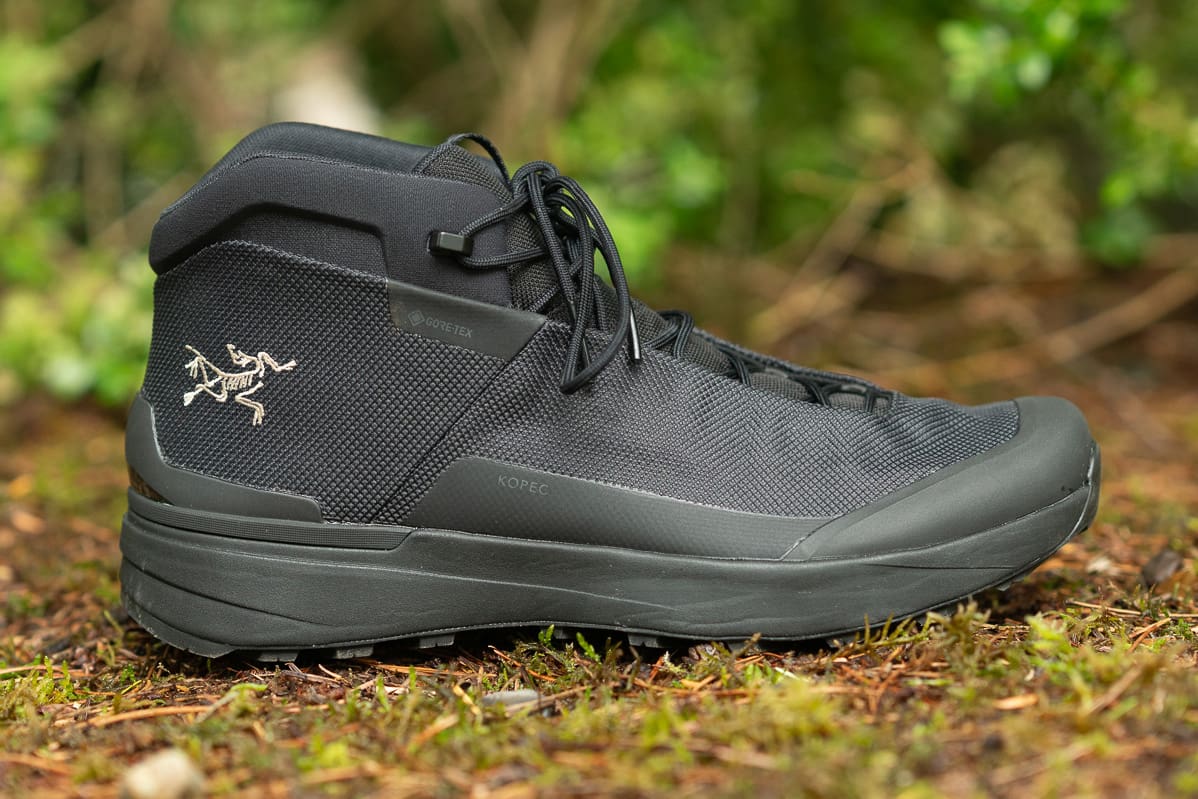
These aren’t exactly hiking boots, but the closest shoes I found to be a bridge between lightweight and supportive. Arc’teryx earns their premium price tag with a waterproof, super light, and grippy shoe that is right at home in the Coast Mountains that I have been testing them in. I also used them on a sound job in whistler where we had 12 hour days in the elements, and my feet stayed dry the whole time. But hiking is where it shines, and it’s light enough to be a go-to for big hikes like Wedgemount Lake if you’re doing it in a day, but the support will still help on the downs without holding one back on the ups.
The biggest drawback to these is that there isn’t much on the insole. I replaced the insoles with some SOLE cork footbeds and then they soon became one of my favourite shoes to wear in any conditions. It’s an easy fix, but adds a good $60 to an already high price tag. The trick here is to buy it on sale at the Arc’teryx outlet, which it does pop up from time to time.
Best Fast Hiking Shoe: Zamberlan Exotrail GTX
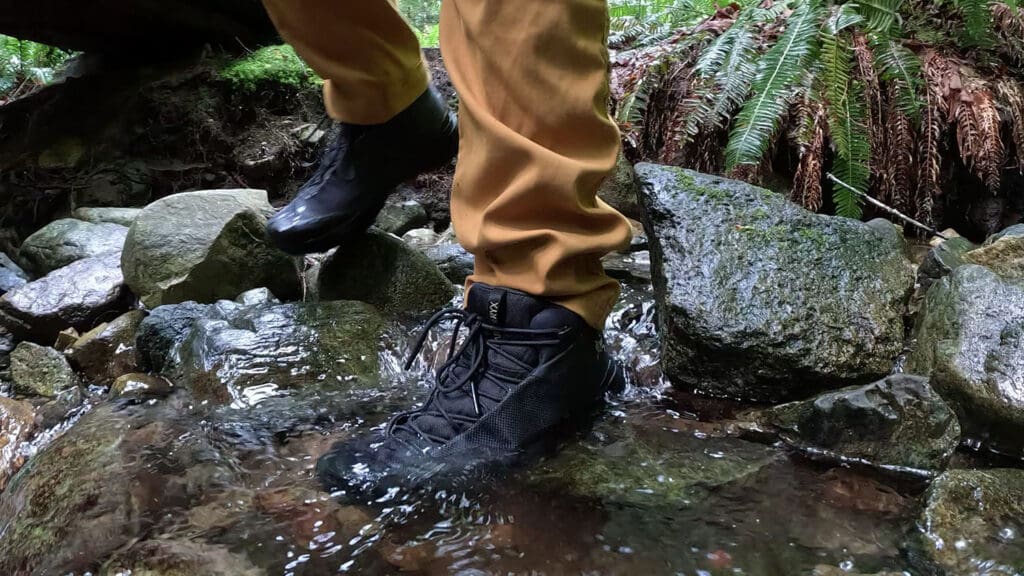
Bottom Line: The optimal Grouse Grind shoe. It’s featherlight and waterproof, with a midsole that gives you rebound without the marshmallow squish.
Weight: 360g per shoe
Upper: Recycled engineered mesh
Waterproofing: GORE-TEX ePE Invisible Fit
Outsole: Vibram Bayu Megagrip
Price: ~$240
Pros: Featherlight, grippy Vibram, fully waterproof
Cons: Limited support, laces won’t cinch down tight
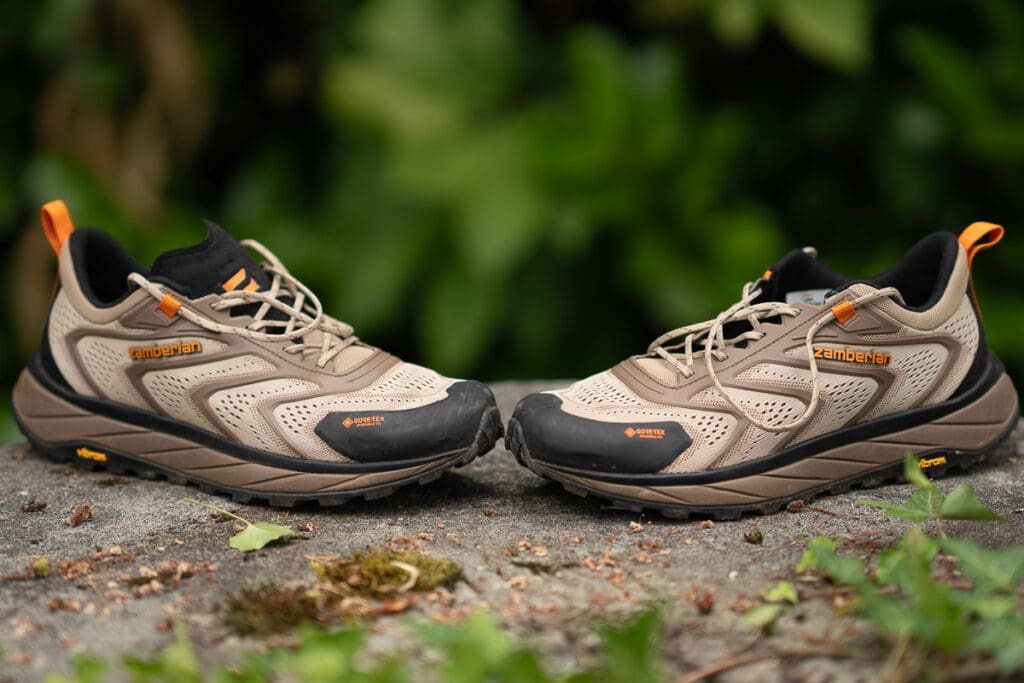
Incredibly light — I hardly feel them on. Living next to the North Shore Mountains, the Grouse Grind is a rite of passage for a good workout, and these are what I consider the optimal Grind shoe. The PU exoskeleton frame wraps the mesh upper for structure you won’t get from a straight-up trail runner, and the GORE-TEX ePE membrane is bonded right to the mesh rather than sitting as a loose bootie, so it stays waterproof without the sloppy feel some GTX shoes have.
There isn’t much support, and the laces won’t cinch down tight no matter how hard you try. For long treks or heavy packs, look elsewhere. But for people chasing a personal record on their local grind rather than hauling gear for days, this is my go-to.
Read more about the Zamberlan Exotrail GTX in this in-depth review.
Best Barefoot-Style Hiking Boot: Vivobarefoot Tracker Forest ESC
Bottom Line: A zero-drop, foot-shaped boot for hikers who still need good traction and support.
Weight: 525g per boot
Upper: Wild Hide leather
Waterproofing: Water-resistant, not waterproof (natural leather + Renapur balsam treatment)
Outsole: Michelin ESC (2.5mm base, 7mm lugs)
Heel-to-toe drop: 0mm
Made in: Vietnam
Price: $280
Pros: Excellent comfort, thick enough sole to keep you protected
Cons: Leather gets pretty scratched up
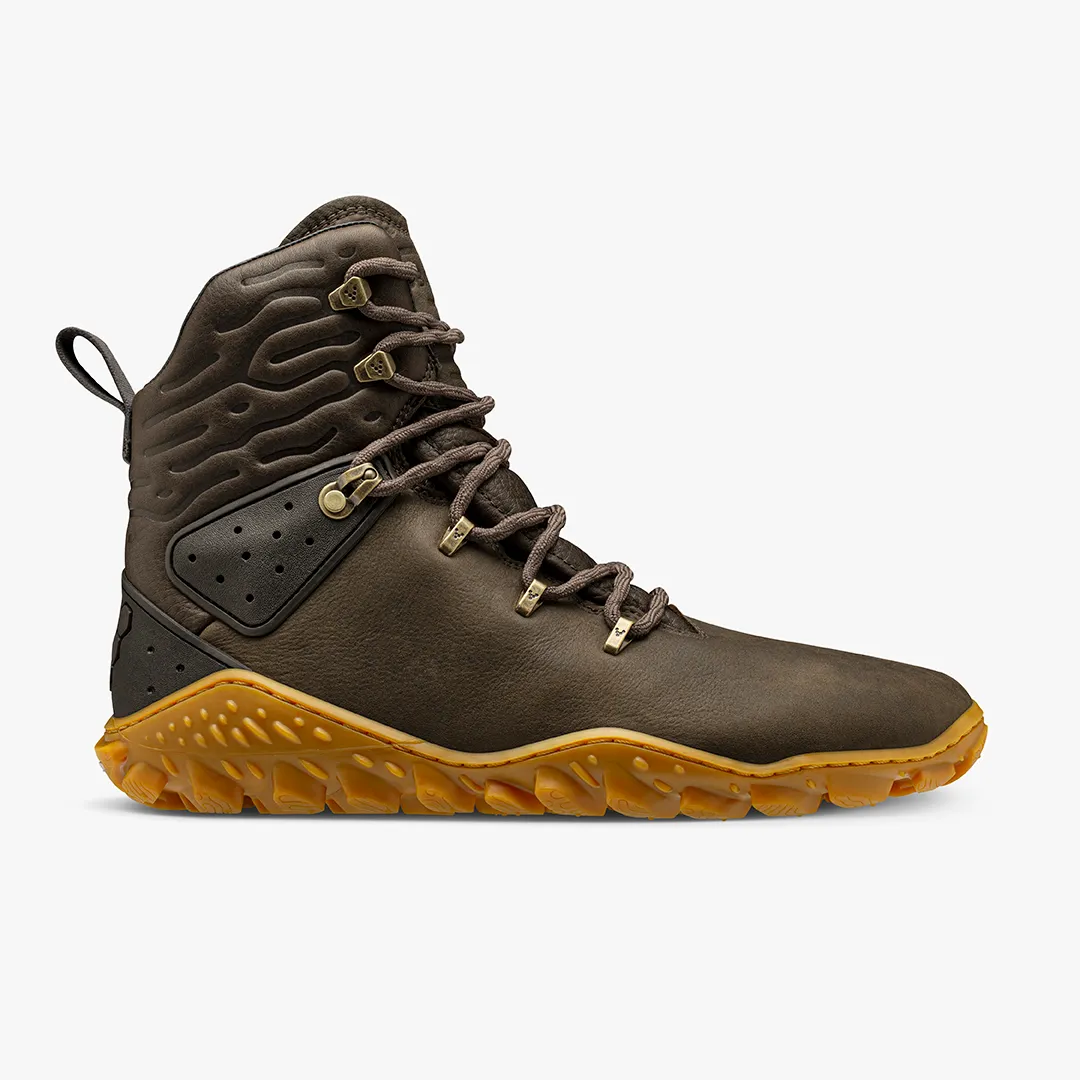
Hiking boots can be notoriously rigid, and more people are finidng out that a thick sole goes against how much of humanity wandered the Earth for thousands of generations. While evolution has done some really good things for us, the argument for barefoot-style shoes is that we need to go back to more movement in the foot.
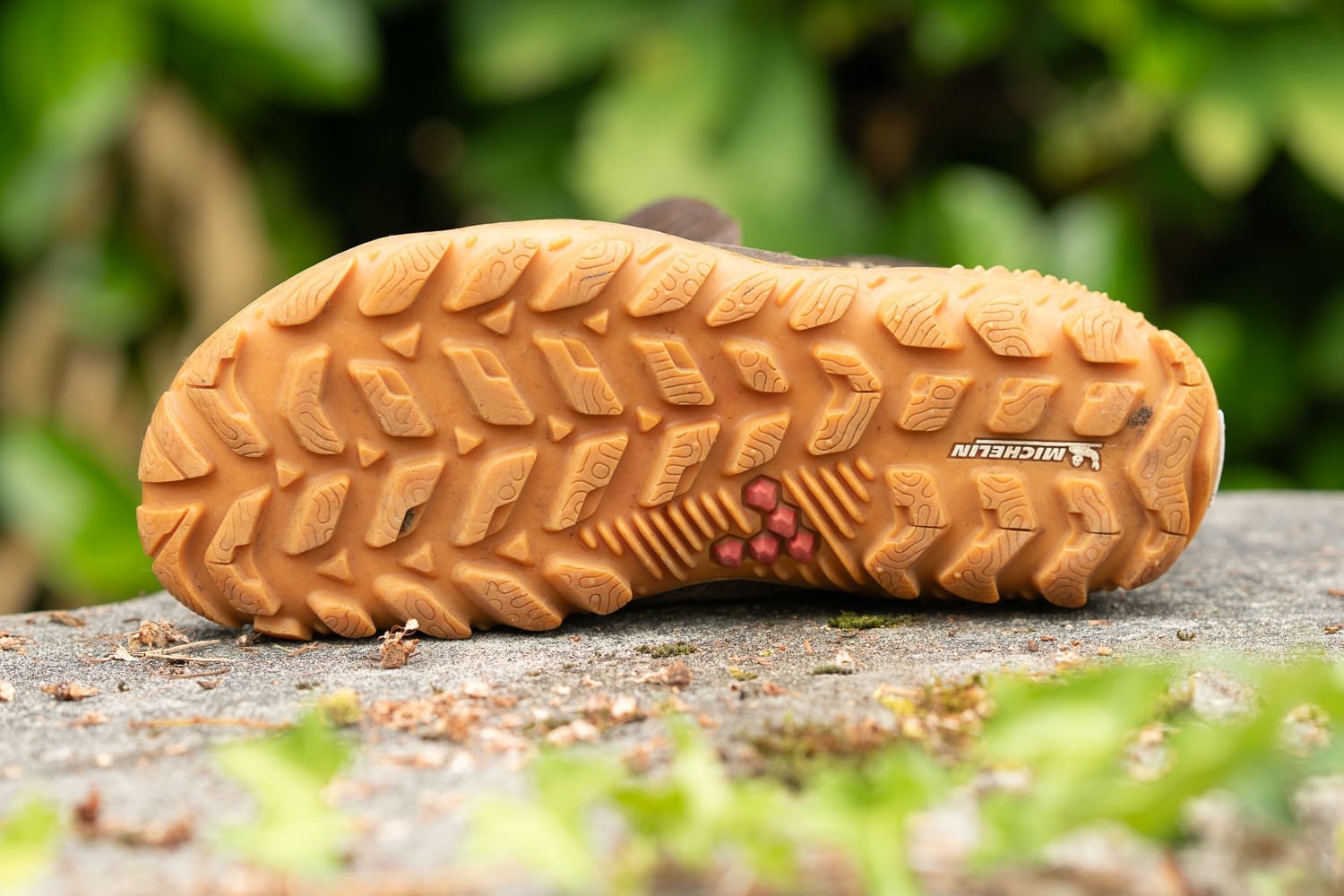
VivoBarefoot isn’t the first company to offer barefoot-style shoes, but I’d argue they are one of the best. The Forest Tracker ESC is one of the more premium models they offer, and the amenities that come with it are worth checking out. The thick michelin outsole is grippy, the thick lugs will dig into the soil, yet it is flexible enough to help the micro fascia and small muscle movements in your foot really respond to the ground underneath.
The Wildhide leather material is some soft and durable, but does get scratched up pretty easily. It’s an aesthetic I appreciate, however it probably isn’t for everyone. Then again, if you’re worried about scratches on our hiking boots, you’re probably not interested in what we have to offer anyway.
Read more about the Tracker Forest ESC in this in-depth review.
Best Barefoot-Style Trail Running Shoe: Xero Scrambler Low EV
Bottom Line: A shoe that punches far above it’s ultralight weight class. Excellent traction and quick maneuvers make this a trail running favorite.
Weight: 261g per shoe
Upper: Synthetic mesh
Waterproofing: Non-waterproof (WP version available separately)
Outsole: Michelin Fiberlite with TrailFoam
Heel-to-toe drop: 0mm
Price: ~$150
Pros: Super lightweight, excellent traction Cons: Not much support
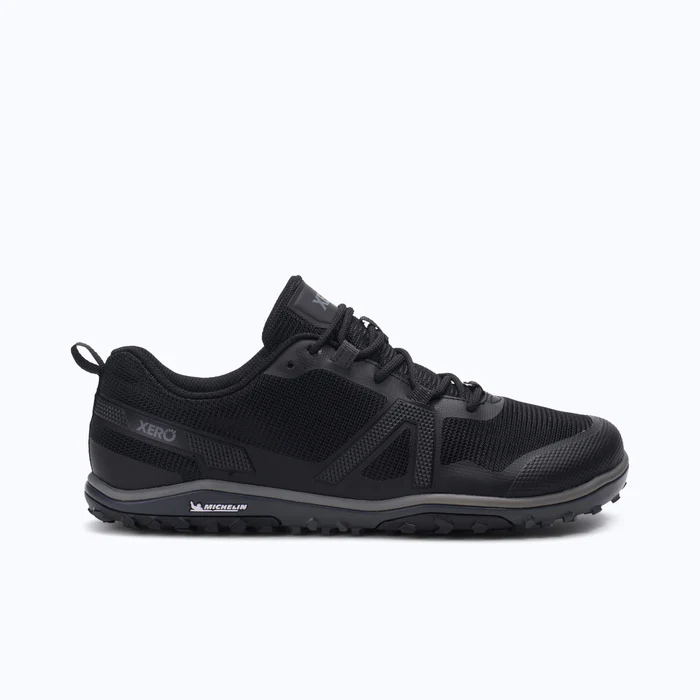
You don’t get too many barefoot shoes that have a mountain bike tire for their outsole, and yet this is just what the Xero scrambler offers. I can attest to the grippiness and it does feel like a step above most. Now that I’m using it more for good trail runs, I’m feeling the difference in the calves.
The downside to that is that you lose the support of a proper hiking boot, which is why I’m recommending this more for trail running. But it’s a winner for sure if you want fast, light, and grippy.
How I Tested The Best Hiking Boots
There is only one good way to test hiking boots. You guessed it—going for a hike. But more than that, you need to break the boots in and really see what they are made of, so that means hiking, a lot.
Thankfully, as a nature photographer, filmer, and sound recordist for documentary and commercial work, I specialize in outdoor mountain environments, so I am naturally testing out the boots as they come in. Sometimes, I wish I didn’t have so many pairs to go through, because the break-in period is a bit of a pain.
As Alpine Islands grows, there is more time spent outside creating content, so that is certainly a bonus. The courses and workshops naturally need to cover ground, so wearing and testing out the boots is a natural extension of the work I’m doing here. Previously to this, I was a gear editor for The Inertia where hiking boots was one of the beats, and I’m carrying that legacy into Alpine Islands to have a more independent take, free of the limits of Private Equity ownership (IYKYK).
What to Look for When Buying Hiking Boots
Waterproofing: Do you need it? GORE-TEX and other membranes keep water out but trap some heat and moisture in. If your trails run dry, a non-waterproof shoe breathes better and dries faster.
Weight: Lighter boots save energy over long miles but usually trade off some protection and support. Heavier boots protect better but tire your legs faster.
Ankle Support: Mid and high-cut boots add stability for heavy packs and technical terrain. Low-cut shoes save weight and let your ankle move naturally — better for day hiking on maintained trails.
Traction: Look at the outsole compound and lug pattern, not just the brand name. Vibram and Michelin both make excellent soles, but lug depth and spacing matter more for how a boot handles mud versus dry rock.
Break-In Period: Leather boots typically need more break-in than synthetic ones, but often reward you with better long-term durability and comfort once they’ve molded to your foot.
Materials: Recycled content, responsibly sourced leather, and PFAS-free waterproofing are becoming more common — worth checking if that matters to you.
Frequently Asked Questions
What is GORE-TEX?
GORE-TEX is a waterproof, breathable membrane built into a boot’s lining. It blocks liquid water from getting in while still letting sweat vapor escape, which is why GORE-TEX boots stay drier than a non-waterproof boot without feeling like a plastic bag on your foot.
What is a heel-to-toe drop?
It’s the height difference between the heel and the forefoot of the shoe. A higher drop (10-12mm) shifts more work to your calves and can feel more familiar if you grew up in traditional footwear. A zero-drop shoe keeps your foot level, which some hikers find more natural but takes adjustment time.
What’s better, leather or synthetic?
Neither is universally better — it’s a tradeoff. Leather is more durable and often more water-resistant on its own, but heavier and slower to break in. Synthetic materials are lighter, more breathable, and need no break-in, but generally wear out faster.
Why do some boots have ankle support and some don’t?
It comes down to what the boot is built for. Mid and high-cut boots add stability for heavy packs and technical, uneven terrain. Low-cut shoes skip that support to save weight and let your ankle move naturally, which works fine on maintained trails without a heavy load.
Is a cushioned midsole better than a barefoot style? When should each be used?
It depends on your feet and your miles. A cushioned midsole absorbs shock and protects your joints over long distances or with a loaded pack. A barefoot-style, zero-drop shoe builds foot and ankle strength over time and gives you more ground feel, but takes an adjustment period and offers less protection on sharp, technical terrain. If you’re new to barefoot-style shoes, ease in gradually rather than jumping straight to all-day miles.
Final Thoughts
There really are a multitude of options for hiking boots, and that’s a good thing. The more thoughtful you are about how you want to show up in the mountains, the more you can get a pair that are tailored to your needs. One thing is for sure, though, and that is anything on this list will hold up well as long as you take care of it.
Hiking is less about the gear you wear and more about the attitude you bring. Good gear helps, but you don’t need them to be brand-spanking new or have the latest and greatest. New tech in hiking isn’t a year-to-year thing, but it certainly does evolve. That’s why we are focusing more on the hiking boots that have been at the top for the decade, not just for this year alone. Chances are you’ll be using them far longer.
So get out there, enjoy, and bring some friends along the way. Time in nature is always a good idea.
See you out in the Alpine!

Steve Andrews is a lifelong adventurer since before he could walk. A skier since age 2, snowboarder since 11, he began his guiding career in 2007. He has a passion for teaching people how to fish, and helping them discover their own power in the mountians. He started Alpine Islands to give people a different take on achieving mastery in the wild (hint: you’re never a master of Mother Nature). He lives in Horseshoe Bay, British Columbia with his partner and two kids.