
Arc’teryx just came out with news that could quite possibly change the outdoor apparel industry going forward.
I come from the same town as its headquarters, North Vancouver, BC. So I have seen the company grow from a niche brand offering technical climbing and outdoor gear to a billion dollar mega corporation owned by an even bigger mega corporation in the past few decades. I have seen their gear migrate from alpine summits to the city streets of New York, London, and Tokyo. I’ve even seen knockoff jean jackets bedazzled with their logo (I wish I now took a photo because it was certainly one-of-a-kind).
As the brand grew in popularity, I became more and more surprised at the fact that a $900 technical jacket could be a fashion statement. But then again, most fashion statements are a bit baffling, to be honest. This is gear known for its ability to withstand the harshest storms and keep people warm and dry in the most absurd conditions out there, while achieving incredible feats. To see the masses flock to a dead bird logo (among other high-end outerwear brands) is an interesting study with plenty of documented research, and even a new term coined for the genre: “Gorpcore“.
The paradox of outdoor gear
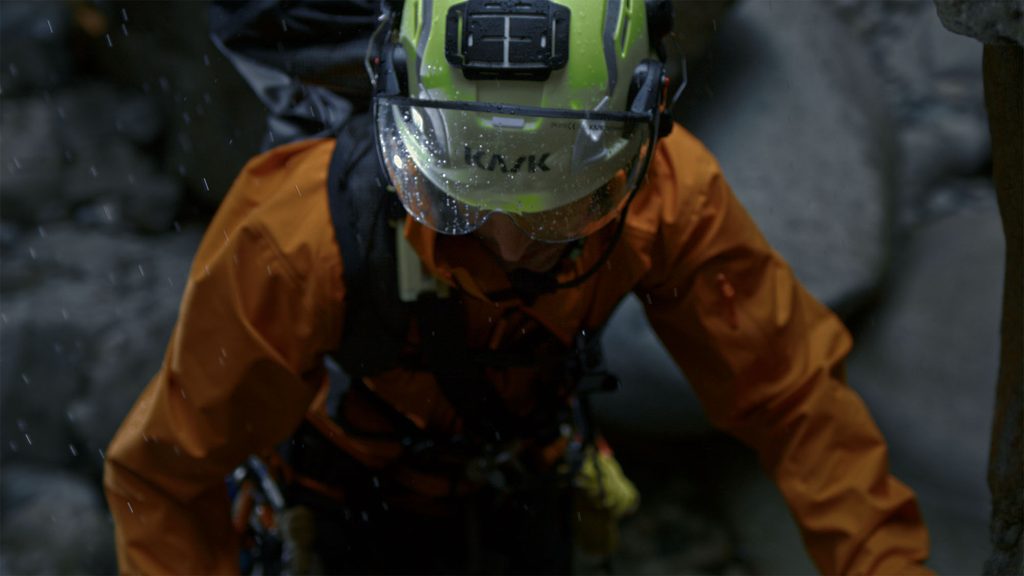
Whether for city slickers or serious mountaineers, a major holdback for outdoor apparel has been the conundrum that to make gear for people to access the environment around them, the gear extracts from it. Technical outdoor apparel has traditionally relied heavily on the oil industry, using petrochemicals to produce waterproof gear. While recent advancements such as the move away from PFAS coatings are a positive step, there is still the question of what to do with the jackets when they reach the end of their usable life.
A peer-reviewed study found that 87% of discarded textiles end up in a landfill, even though more than 90% of them are theoretically reusable or recyclable. The fibers are difficult to separate and sort by type, which can hinder the reintroduction to the supply chain.
So knowing this, can Arc’teryx rise beyond the opinions, for better or worse, and influence the industry positively? Their entire image has been to make the mountains accessible, selling people on the notion that their gear helps people have a better experience outdoors. Interestingly enough, the leadership knows this, and has been dealing with this conundrum for a long time.
And now, it seems as though they have come up with a solution: System Zero.
What is the System 0 Initiative?
People can be wary of press releases these days. Trying to frame a new drop in apparel as revolutionary is a PR tactic as old as the industry itself. The Simpsons did it perfectly on the episode about Malibu Stacey’s new hat. And as someone who has spent the better part of this decade as a gear editor combing through thousands of PR pitches that offer nothing of true substance, I can tell you with full sincerity that this time, it’s different.
System 0 is their design system that focuses on not only a complete lifecycle of their apparel, but what happens after. Starting with the brand-new Sperro SV jacket, they have designed something that not only functions as people have come to expect Arc’teryx to, but can be broken down and repurposed after it’s used beyond its practical ability.
How System 0 Works
Circularity in fashion is nothing new, and something that consumers are demanding more and more as the response to fast fashion strengthens. Circular fashion is already valued at US $8.3 billion, and expected to grow over 9% year over year and be worth $15 billion by 2033. But greenwashing is also a thing, so how does this differ?
The big innovation here is the infrastructure around the product. How I saw it unfold goes like this:
- Preferred Inputs: Materials are deliberately chosen for their recyclability and repairability. Recycled GORE-TEX Pro is the gold standard, and they didn’t sacrifice sustainability for performance.
- Extreme Durabilty: Arcteryx is known for their durability and the Sperro jacket takes it a step even further (According to their claims—I haven’t tested it personally but tested the Sabre SV, and it’s excellent).
- Repair and Take-Back: Their ReBird program has been around for a while, so this is just including it in the product’s life cycle.
- Digital Passport: Being able to trace the origin and lifecycle of the jacket through all its iterations, owners, repairs, and resales.
- Disassembly: Not every component is recyclable, but the key here is that the components that aren’t can easily be removed so that as little as possible is wasted.
- Recycling: Finally, when the jacket is fully spent, it can be recycled into a new material. Whether that becomes another jacket or not is still undetermined.
So when you hear “System 0”, it’s more to do with systems thinking, not a product. But is a system designed to be circular the same as a jacket that has been?
The Sperro SV
Exhibit A for System 0 is a brand-new jacket to their line, meant to be the only outdoor jacket you need. It’s designed for skiing, alpine climbing, dog walking, and rainy day tomfoolery. It’s a jacket meant to be taken anywhere and everywhere, and hopefully everywhere means really cool places out in nature, rain or shine.
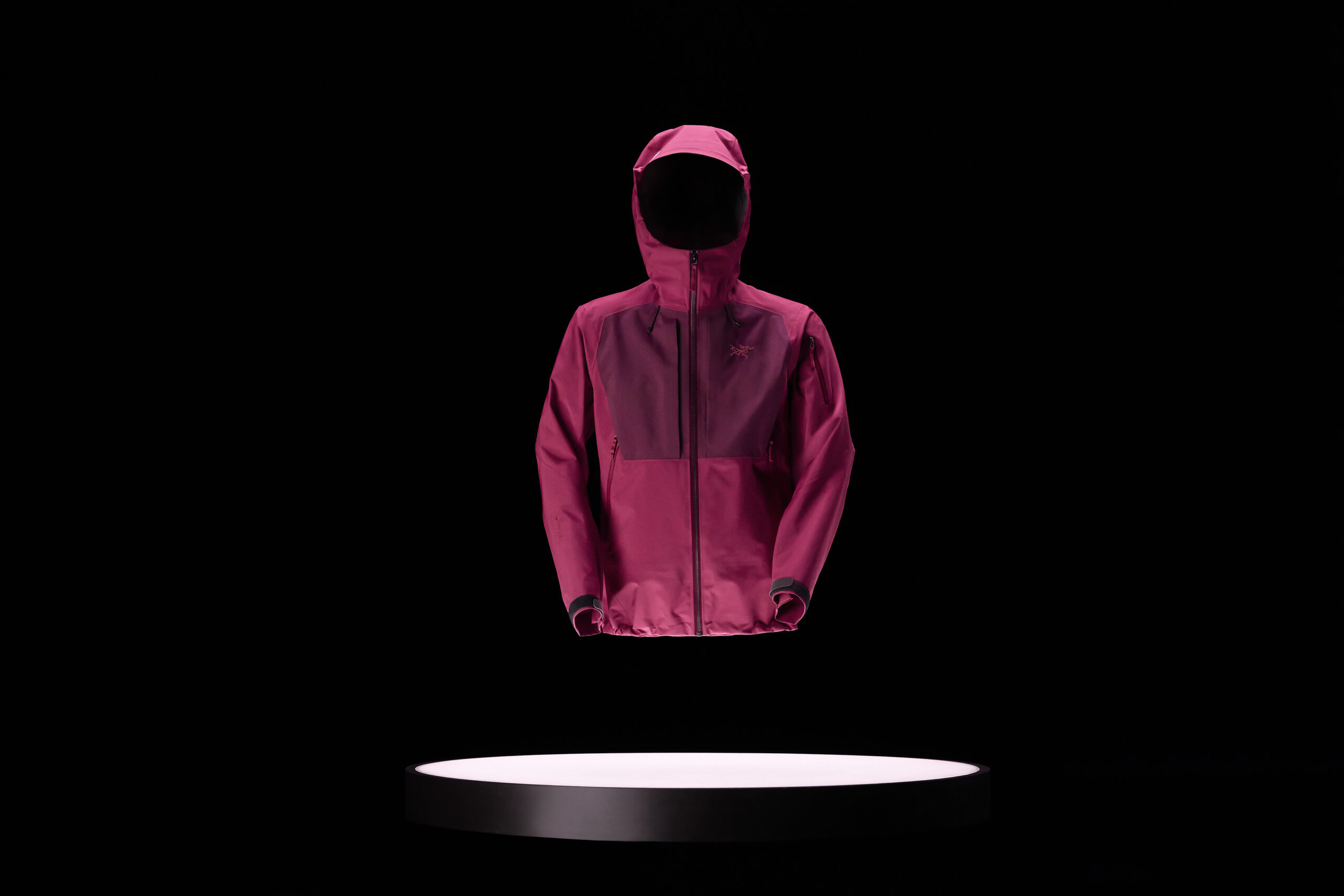
The Sperro SV is a brand-new model, designed pretty much from scratch to incorporate the ability for it to be repaired, resold, and reincarnated. It was built for those who push it further, having worked with the team athletes to make sure the chest pockets could fit a medical kit and radio, along with whatever else you’d need in a pinch. It’s got a zipper garage that’s actually built into the fold of the jacket, making it easier to repair without being troublesome. And the watertight zippers run all the way to the edge, and are able to be repaired tooth-by-tooth. The top-stop is removable, too, meaning the slider can be taken off and serviced either at home or at a ReBird center.
Sperro SV Specs
Price: $1200
Weights: Women’s 450 g, Men’s 506 g.
Face fabric 70D. Face + backer both nylon-6 (ECONYL recycled yarn).
Sizing: Women’s XS–XXL; Men’s S–XXXL.
Pockets: helmet-compatible StormHood; baffled chest pocket; harness-compatible hand pockets.
Once they settled on the design, they put the Sperro through the ringer in the best way possible: getting it onto people who would use it the most. North Shore Rescue got outfitted to take on their missions, which can last anywhere from two hours to 20, in all weather, any time of year. As a local to the North Shore and someone who spends time in the Coast mountains as much as possible, I can tell you that conditions can change in a heartbeat. Just last weekend, we had one of the most severe lightning storms on record. People got stranded on the Howe Sound Crest Trail when their tent got ripped to shreds by the wind. North Shore Rescue came in. If there was any time that the Sperro SV would fail, that would be it. I don’t have any reports of how it did up there, but just wanted to mention it to illustrate how these jackets are in the hands of some reallly capable people who will push it to its furthest limit.
I’m excited for some of these features, particularly the large chest pockets. As an avalanche educator and guide, you need to have critical tools right next to you, and seconds count. I have a small trauma kit for the pack, but will modify it to be within quick reach of the jacket, should I be able to test one out this winter.
I managed to get a sneak peek of this jacket, hence the timely posting. The jacket looked great, and differed from the usual minimalist fare. Seems as though that’s the trend with all their gear to shift away from the monochromatic look that has been present for the past few years. It’s still unapologetically Arc’teryx, but it has its own unique look that perhaps signifies a shift in design toward a bit more experimentation. As of now I haven’t tried it on, so I can’t comment on anything but aesthetics at this point. But once I do, I’ll be sure to update with a proper review.
Materials
If you follow outdoor gear at all, you know that the materials are the part that nobody wants to admit. Even Patagonia, the brand widely regarded for their environmental commitment, uses materials that sheds microplastics and until only recently included PFAS, the “forever chemicals” that plague the industry.
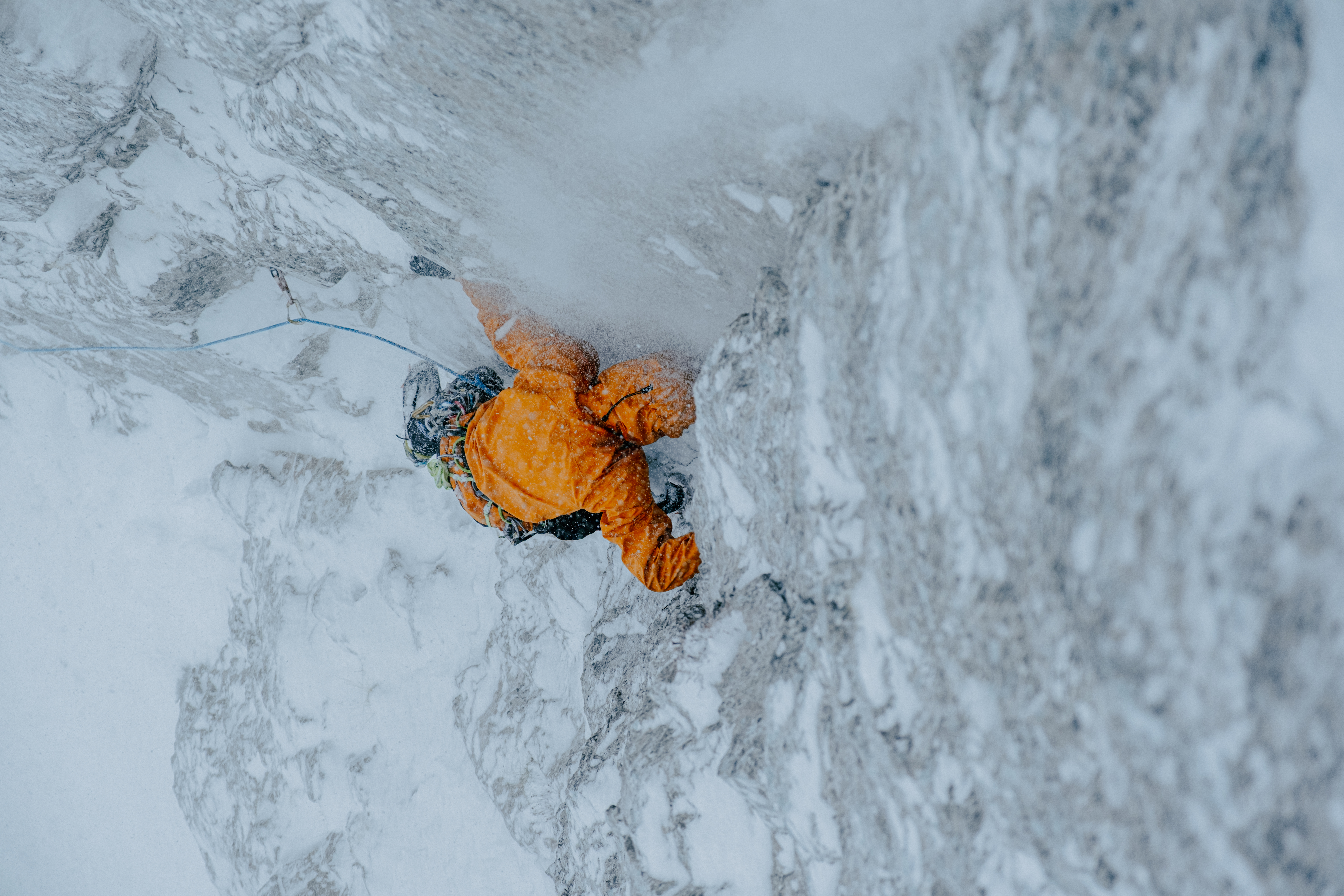
With the Sperro jacket, they use recycled nylon 6, which comes from post-consumer fishing nets and carpets to build a 3-layer GORE-TEX ePe membrane, free of PFAS.
The easiest way to explain why this is an innovation is to understand chemical vs. thermomechanical recycling. The latter is the traditional way to recycle garments, but it never comes back to the way it was. The best analogy of this is when you melt ice cream and re-freeze it. It’s never the same.
Chemical recycling depolymerizes nylon back to its building blocks, and then rebuilds it to pretty much its original state. That’s the main innovation here, especially for technical outerwear.
Nylon 6 is nothing new, and Arc’teryx is sourcing the material from someone else who does the process and will presumably do the same when it’s time to recycle it. But what is new is the fact that this will be the first textile-to-textile recovery of a finished multi-material garment. That is pretty exciting.
Built to Come Apart
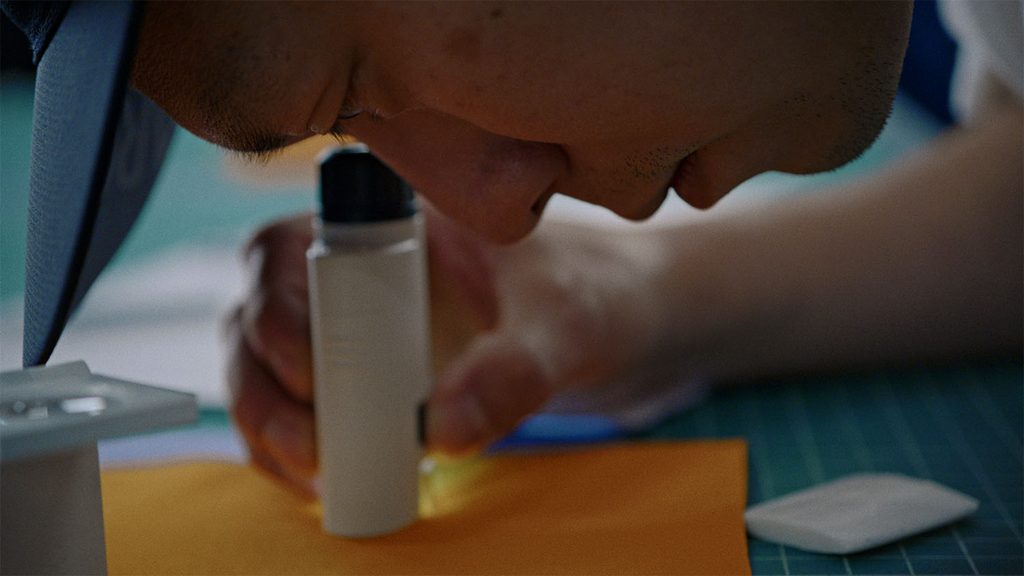
Most jackets are designed to be durable and withstand a beating. Very few are designed for being disassembled later in their life. That is a true differentiator here, reminding me of the difference between using screws and nails when building a backyard project. That analogy is fresh in my mind as I’m assembling a play structure for my kids that I want to take apart and move whenever we build our dream cabin in the mountains.
For a jacket, that means that the parts can come apart easily, and be repurposed elsewhere. Components like zippers, RECCO reflectors, and Arc’teryx’s signature storm hood are yet to be recyclable. So they can easily come out and let the rest of the material go to the recycling plant while those can be put into something new.
Sure, you can take any jacket apart and try to re-use the materials, but the effort would be much more than it would be worth, especially at a global scale with a company as large as Arc’teryx. So for them to design with the end in mind (and not have that end be the landfill) shows a massive change in a giant apparel brand building something with focus for the long haul.
Repairability
The biggest feature that stood out for me was actually in the zipper. I have never heard of a zipper where you could repair tooth by tooth. Indeed, this is an innovation worth celebrating. Zipper repair is a common weak spot of jackets, and if you need to repair it then you have to replace the entire thing. Simply being able to repair a tooth and keep the rest of the zipper means less waste.
And the whole ReBird program seems to be picking up steam, available in the Arc’teryx retail stores to have them do the dirty work of repairing, washing, trading in, or buying used (and fixed). This isn’t exclusive to Arc’teryx, but another notch in the belt to the circularity argument. ReBird is a repair program that has been improving and with new retail shops opening all the time, it becomes more accessible. Right now it’s only available in North America, but that is evolving and their plans are to expand it worldwide.
Arc’teryx System 0 & Sperro SV: At a Glance
What is the Arc’teryx System 0 initiative?
System 0 is Arc’teryx’s new comprehensive framework for circularity. It reimagines how technical outerwear is designed, manufactured, repaired, and ultimately regenerated, shifting away from the traditional linear model of extraction and disposal to keep gear out of landfills.
When does the Arc’teryx Sperro SV jacket release?
The Sperro SV jacket will be available globally starting September 4, 2026, through Arc’teryx retail stores and online.
What materials are used in the Sperro SV?
The jacket utilizes a 3-layer GORE-TEX ePe membrane (which is PFAS-free) bonded with recycled nylon 6 face fabric and backer. Through a partnership with Aquafil, these materials are intentionally chosen for their ability to undergo chemical recycling and be regenerated into new ECONYL® yarn at the end of the jacket’s life.
Can the Sperro SV jacket be easily repaired?
Yes. The Sperro SV is built for extreme modular repairability. It features reinforced common failure points and a replaceable zipper slider that can be serviced tooth-by-tooth. It also includes three years of unlimited out-of-warranty repairs via the ReBIRD™ program.
The Digital Passport: A QR Code Inside The Jacket For Traceability
Inside the Sperro SV jacket is a laser-etched QR code that shows the material content, ownership, and repair history for the entire life of the jacket. It also replaces the adhesive label that is not recyclable.
This has been legislated from the EU to include traceability in consumer goods. As we all know, government rollouts can take time, and this won’t even be a thing for at least a couple seasons if other priorities don’t get in the way (and they probably will). Arcteryx is doing this globally, now, even though they don’t have to. As a North American who is used to seeing companies comply only when forced to (exhibit A: the iPhone and its USB cable), it’s nice to see that they are rolling it out globally, even though they don’t have to. I’m not sure whether that was purely out of goodwill or economics, but either way, it’s a cool feature.
This video explains it a bit more:
Final Thoughts
So right now the whole “System 0” concept is a press release, a new jacket introduced as of today (August 26, 2026), and a release date for the Sperro on September 4. What’s unknown at the moment is when these jackets will reach the end of their usable life, and what will happen to the materials when that day comes. If all goes to plan, it won’t be for many years.
But let’s take a moment of sober realization: recycled plastic is still plastic. It’s a good thing that they are using materials from out of the waste ecosystem instead of pulling them from the ground. Is it worth the premium price tag? I have a feeling that many people will sign on and want to be a part of the new movement. Arc’teryx doesn’t seem to have any issues in the sales department. But for more than the already expensive price of their top-of-the-line jackets, it’s going to be hard to get mass adoption. They might have been better off subsidizing the jackets to get more adoption. I guess we’ll find out soon enough if they sell enough to keep the operation running. I know that I’d personally wait until they are available in the outlet before forking over the price of a season pass. But there are many who want to be trend-setters, and more power to you—but if the jackets are as bomb-proof as they say they are, it might be worthwhile to wait for someone to trade in a perfectly good version for a new colourway, which always seems to be the case in the gorp-core fashion world.
So they have a design philosophy implemented, and a track record of repairing and reselling gear through ReBird, and a yet-unproven recycling-at-scale concept that, given their financial backing and commitment to quality, will presumably succeed. I can’t say whether it will or it won’t, only that this development is a massive step in the right direction, and a step that will hopefully have other outdoor companies following suit—er… jacket (Couldn’t help myself).
Learn more about System 0 here
About Alpine Islands
Alpine Islands is an inclusive club of people wanting to step out further into the mountains. We offer online information such as gear reviews (including other hardshell jackets) and learning backcountry skills, as well as in-person meetups. We use a martial-arts style of progression to help our members achieve higher heights. To learn more, check out the homepage or get in touch.

Steve Andrews is a lifelong adventurer since before he could walk. A skier since age 2, snowboarder since 11, he began his guiding career in 2007. He has a passion for teaching people how to fish, and helping them discover their own power in the mountians. He started Alpine Islands to give people a different take on achieving mastery in the wild (hint: you’re never a master of Mother Nature). He lives in Horseshoe Bay, British Columbia with his partner and two kids.