
Alpine Islands is reader-supported. When you buy through links on this page, we may earn a small commission at no extra cost to you. We only write about gear we’ve actually tested in the field. Read more about the Gear Review Policy here.
I’ve had the Vivobarefoot Tracker Forest ESC on my feet for about nine months now. I did an unboxing and first-impressions video on these and the Primus a while back, so consider this the follow-up. This is what actually happens to a barefoot boot after nine months of being used for everything.
I’m not someone who lives in a building off the ground. I’m in British Columbia, and live at the foot of the Coast Mountains, a range that stretches from my backyard all the way to Alaska. I’ve taken these hiking in pretty much every condition. But honestly, even more than hiking, I’ve used them around the house: gardening, yard work, chores, lugging heavy things from one end of the property to the other. That’s where the hours have gone.
The short version: this is the most durable barefoot shoe I’ve tried, and one of the most comfortable period, even compared to all the other hiking boots I’ve tested over the past few years. It was comfortable the day I put it on, and it’s only gotten better since. They’re like a really nice pair of gloves that you wear in until they form to your hand. That’s exactly what’s happened here. It took Best Barefoot-Style Hiking Boot in my roundup of The Best Hiking Boots of This Decade, and nine months on I haven’t changed my mind.
Vivobarefoot Tracker Forest ESC: First Impressions
When most people think about barefoot shoes, they don’t picture something this substantial. But these are boots. They come up over the ankle, they lace all the way, and they’ve got a sole with real tread on it. That combination is unusual, and it’s the whole reason I wanted to live with them for a while before saying anything.
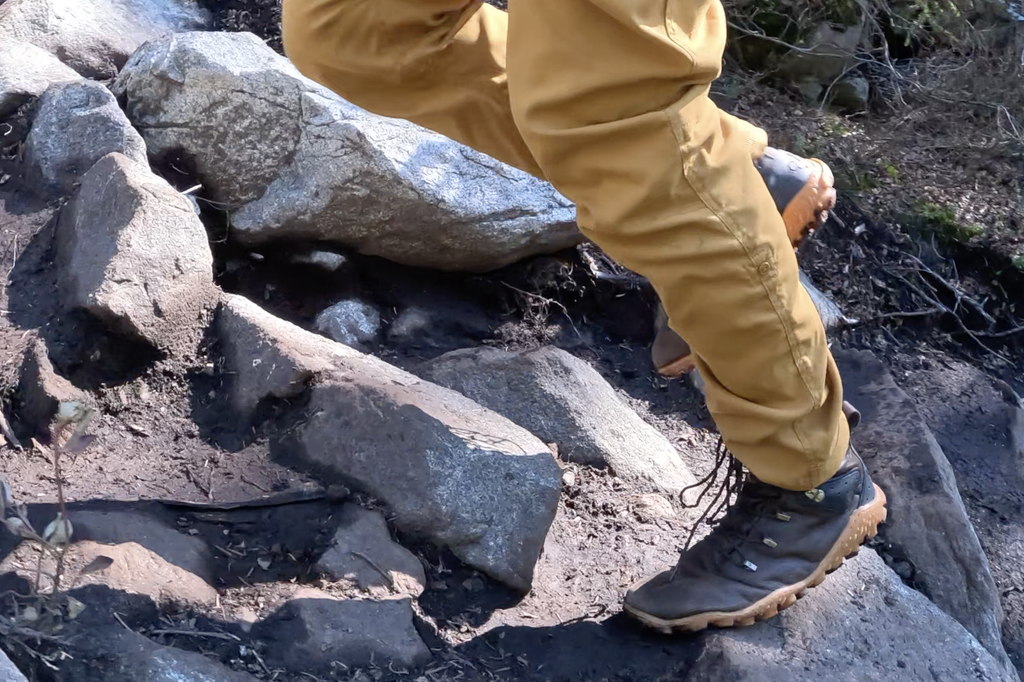
I knew I’d like them when I first tried them on. What I didn’t expect was how much I’d like them for hauling heavy loads. I’d assumed a stiffer, more traditional hiking boot would be the better tool for that. Instead I found muscles in my calves and along the sides of my feet engaging in ways normal hiking boots never ask for. That’s the barefoot argument in a nutshell, and carrying weight is where I actually felt it.
I didn’t clean or polish these beauties for the review. They’re a little under the weather, and that’s on purpose. I’d rather show you what a nine-month-old pair really looks like instead of cleaning it up for looks.
Bottom Line: The most durable and most comfortable barefoot boot I’ve worn. A genuine hiking boot’s tread and grip on a zero-drop, fully flexible platform, if you’re willing to condition the leather and let your legs adapt.
Upper: 100% Wild Hide leather; overlays 100% synthetic rubber
Lining: RPET sandwich mesh
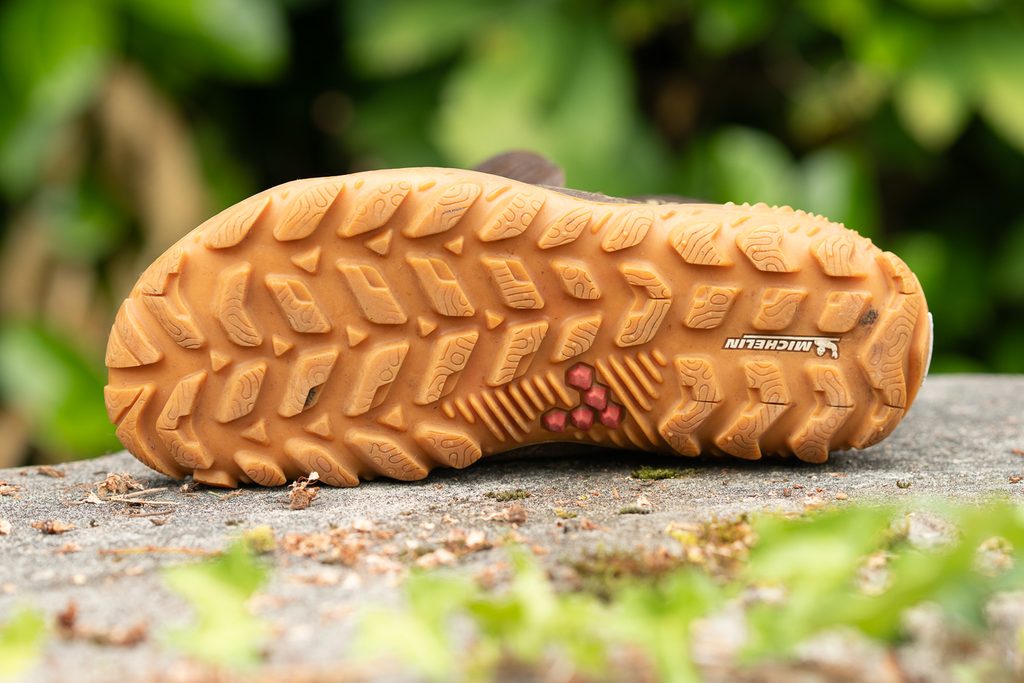
Outsole: Outdoor ESC Michelin (52% synthetic rubber, 48% additives)
Tread: 7 mm lug depth on a 2.5 mm sole base
Drop: Zero
Weight: 525 g per boot (EU 42 | UK 8 | US 9)
Insole: Removable Ortholite, 98% recycled polyurethane foam
Water resistance: No membrane. Naturally water-resistant leather, treated with Renapur Leather Balsam.
Sizing: EU sizing; brand says true to size
Repairability: Laces and insoles replaceable; ReVivo resale programme
Made in: Vietnam
Price: ~USD $260 / ~429 CAD
Pros: Deepest tread I’ve seen on a barefoot shoe, outstanding Michelin grip, flexible despite the thick sole, gets more comfortable with age, replaceable laces and insoles
Cons: Runs warm, laces work loose, EU sizing runs slightly big, leather needs conditioning, not a quick on-off boot, expensive
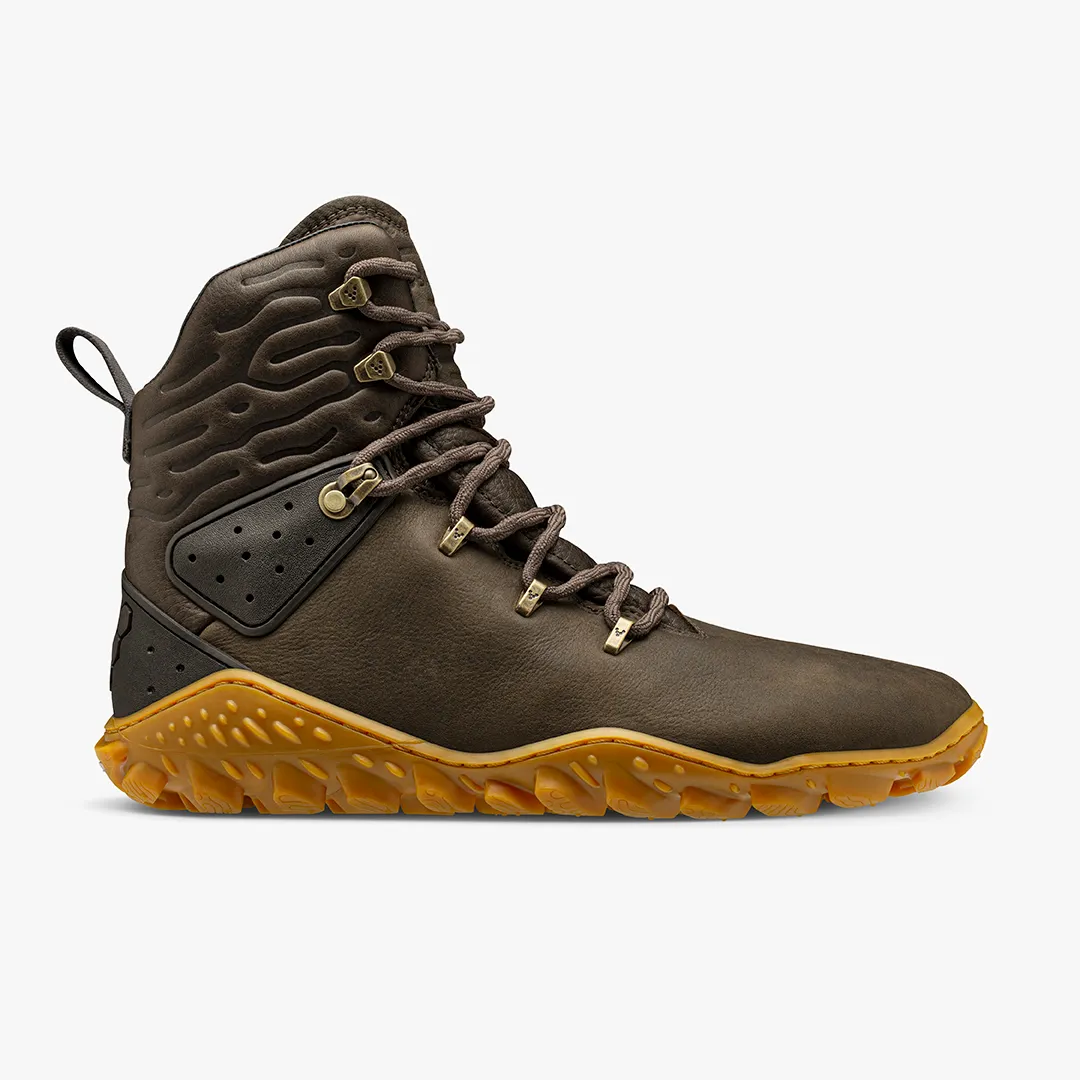
Specs verified August 2026 against Vivobarefoot’s product page. Prices drift by retailer and region — check before you buy.
Notable Features of the Tracker Forest ESC
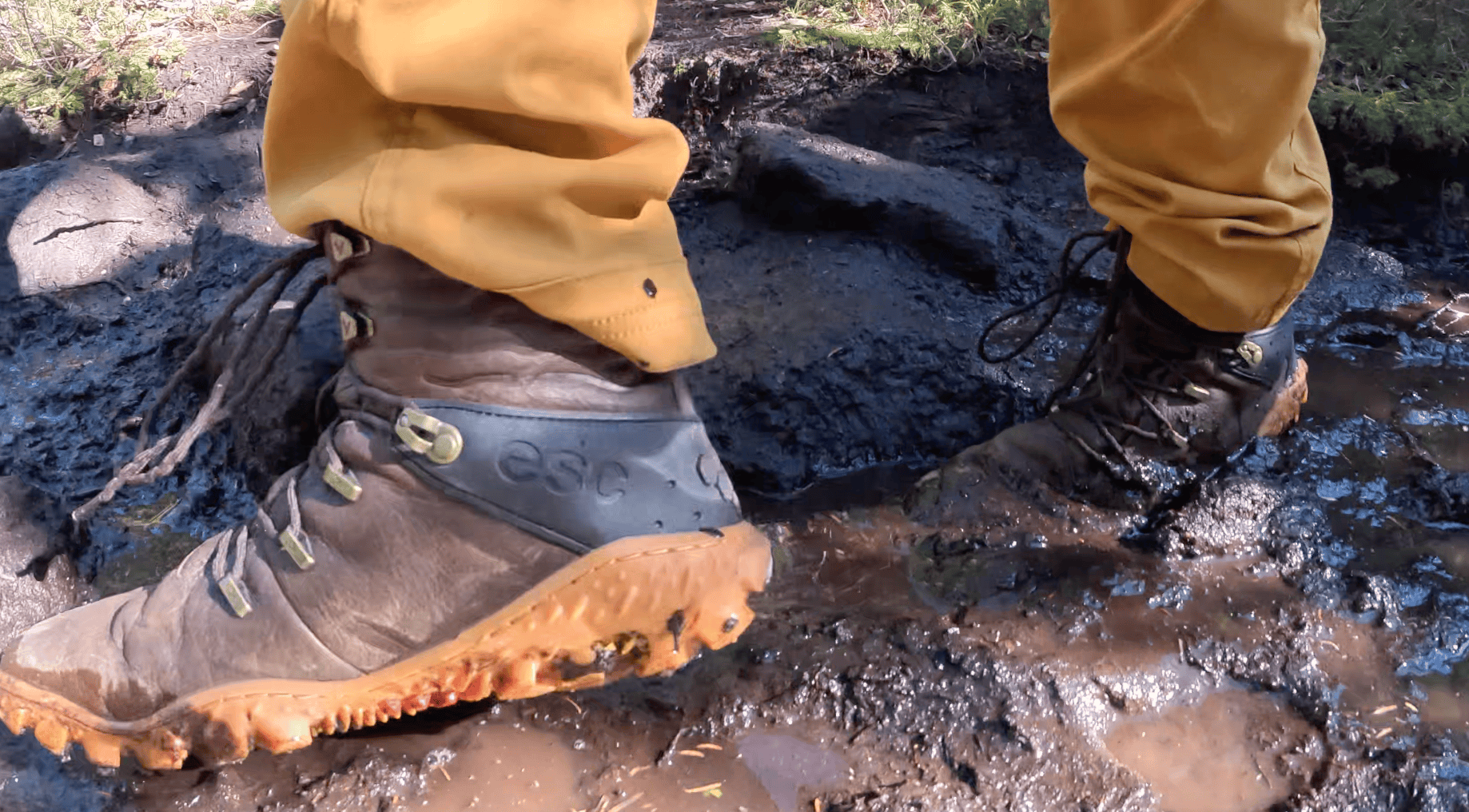
Tread depth that belongs on a hiking boot: This is the number one thing that separates the Tracker Forest ESC from other barefoot shoes. Most barefoot soles are pretty slight in the amount of tread they carry. These have 7 mm of lug depth on a 2.5 mm base, and you can feel every bit of it when the ground turns to mud and slick roots.
Michelin, not Vibram: Sometimes the brand name on a sole really doesn’t matter. This is not one of those times. People seek out Vibram, and But Michelin has something special. I’ve found more grip here than on the Vibram-soled shoes I’ve used. I can lean into a rock and push, and nothing happens. The traction is second to none.
Flexible despite a thick sole: You’ve got a substantial, protective outsole, and it still bends. That flex is what keeps the barefoot benefit intact. Your foot works instead of riding along inside a rigid shell, and it’s why your calves and the sides of your feet get recruited on a load carry.
Leather that improves with wear: The upper is Wild Hide leather, and it’s leather all through the inside too. It was comfortable out of the box and it’s only gotten better. It forms to your foot the way a well-worn glove forms to your hand. Nine months of being trashed around and the soles are still in excellent shape.
Ankle reinforcement and textured laces: There’s an extra reinforcement up top that really helps lock in a nice tight fit when you cinch it down. The laces are textured rather than smooth. Vivobarefoot’s stated reason is grip, and it does help them hold better than a slick lace would. (
Built to be kept going: Laces and insoles are replaceable, the insole is 98% recycled polyurethane foam, the lining is recycled PET, and Vivobarefoot runs a resale programme for boots that outlast their first owner. At this price I want a boot I can keep, not replace, and this one is built on that assumption.
Drawbacks
They run warm. There’s no waterproof membrane here, but it’s leather, so it isn’t fully breathable either. I find these get pretty warm. If you live somewhere genuinely hot, that’s worth thinking about before you spend the money.
The laces come loose. The textured, corrugated edges are good for keeping tension in place, but they still work loose on me. Always double-tie. It’s a small thing, but it’s the one part of the boot I’d change.
EU sizing, and it runs slightly big. I’m a 43, which is usually a 10. I could probably fit a 42 — but I’ve had 42 in Vivobarefoot’s workout shoes and found it just a little too tight. For big hikes, where your feet swell with heat and distance, I’d rather be slightly big than slightly small.
Leather asks for maintenance. Mine are scuffed and a bit ragged-looking, and that’s entirely my fault. With two toddlers at home, conditioning boots is not high on the list. If you’re not someone who wants to spend time cleaning and conditioning leather, these probably aren’t for you.
Toe wear shows up. Looking at mine now, the toe is starting to wear. It’s a bit of looseness rather than anything actually coming apart. It looks like it could become a point of concern down the road. Right now it isn’t, and the water resistance still works. Treat them once in a while and I expect them to keep going.
They’re boots, and they cost like it. Taking them on and off isn’t a chore exactly, but it’s a lace-up boot. You won’t be using these as kick-around slip-ons. And they’re expensive. My view is that they last, which is the only thing that makes that number make sense.
Best Uses for the Tracker Forest ESC
Hiking in mud, slop, and everything else the coast throws at you.. that’s what the tread and the Michelin compound are for. Gardening, yard work, and projects around the house, which is genuinely where I’ve put the most hours. Carrying heavy loads, where the flex recruits your calves and feet in a way a stiff boot won’t. And, more broadly, anyone who wants to train their legs to be stronger than usual while they’re out walking anyway.
There is definitely a break-in period, but it isn’t the boots. It’s you. Your body needs time to adapt to all the undulation underfoot that a flexible sole lets through. Ease into it.
Skip If You…
Skip these if you’re a casual hiker who just wants a comfortable boot to walk in. This isn’t that, and there are cheaper ways to get there. Skip them if you live somewhere hot, because they run warm. Skip them if you don’t want to clean and condition leather, because they’ll look rough fast and won’t last the way they should. And skip them if you’re after a shoe you can kick on and off at the door, because these lace up properly and want to be treated like boots.
Frequently Asked Questions
Are the Vivobarefoot Tracker Forest ESC waterproof?
No. There’s no waterproof membrane. The Wild Hide leather is naturally water resistant and comes treated with Renapur Leather Balsam, and Vivobarefoot rates the boot 4 out of 5 for water resistance. After nine months mine still shed water fine, but you have to re-treat the leather once in a while to keep it that way.
Do Vivobarefoot Tracker Forest ESC boots run big or small?
Vivobarefoot says true to size, and they’re sold in EU sizing. I wear a 43 (usually a 10 in North American sizing) and I’d say they run slightly big; I could probably manage a 42. I’d still take the 43 for long hikes, because feet swell with heat and distance and there’s no fixing a boot that’s too tight.
Is a Michelin outsole better than Vibram?
In my experience with this boot, yes. Sole branding often doesn’t mean much, but I’ve found the Michelin ESC compound grippier than the Vibram-soled shoes I’ve used, and it stays flexible despite being thick. That’s my own comparison from wearing them, not a lab result.
Are barefoot boots good for carrying heavy loads?
That was the surprise for me. I assumed a stiffer boot would win, and instead I found my calves and the sides of my feet engaging in ways a conventional boot never asks for. If you want your legs doing the work, it’s a feature. If you want the boot doing the work, it isn’t.
How long do Vivobarefoot Tracker Forest ESC boots last?
I can only speak to nine months of hard use so far. The soles are still in excellent shape, the toe is showing some wear, and the uppers could use some love. Laces and insoles are replaceable, so with proper conditioning I expect to have these for a very long time.
Final Thoughts
The three things I keep coming back to are the tread depth, the grip, and the comfort. The tread is closer to a hiking boot than a barefoot shoe, but you still get zero drop and real flex, which means your muscles work more. The Michelin grip is the best I’ve used. And the comfort is the glove thing: worn in, formed to your foot, and better every month.
These aren’t for the casual hiker. They’re for someone who wants stronger legs and calves out of the deal, and who’s fine with their body doing a break-in period rather than the boot. If you’ve been curious about barefoot shoes but don’t want to go straight to something ultra-minimalist, this is a great place to land. It’s a pair of boots you can hike in, garden in, and generally cause a ruckus in.
If you’re weighing this against the Magna Forest ESC, they share the important parts: same Wild Hide leather, same Michelin ESC outsole, same 7 mm lugs on a 2.5 mm base. The Magna trades the Tracker’s leather collar for a knit wool blend, comes in 30 g lighter per boot (495 g against 525 g), and lists about forty dollars cheaper. I haven’t worn a pair, so I can’t tell you how that knit collar holds up to a wet coastal winter — but if the Tracker’s warmth is what’s putting you off, that’s the one I’d go look at.
I’ll make a promise to the Vivobarefoot folks here: I’ll take better care of these and actually condition them, because they don’t have to look as ragged as mine do. But if what you want is a boot that gets better with age, this is the one I’d point you at. It’s what I reach for. For everything else I’ve had on my feet this year, the full Best Hiking Boots roundup is where the comparisons live.
Thanks for reading! If you’d like to check out some other great hiking boots, check out some other reviews of the Lowa Renegade Evo GTX, Merrell Moab 3, and the Zamberlan Exotrail GTX. They are all very different, so there will surely be one out there that speaks to you. Happy hunting!

Steve Andrews is a lifelong adventurer since before he could walk. A skier since age 2, snowboarder since 11, he began his guiding career in 2007. He has a passion for teaching people how to fish, and helping them discover their own power in the mountians. He started Alpine Islands to give people a different take on achieving mastery in the wild (hint: you’re never a master of Mother Nature). He lives in Horseshoe Bay, British Columbia with his partner and two kids.